

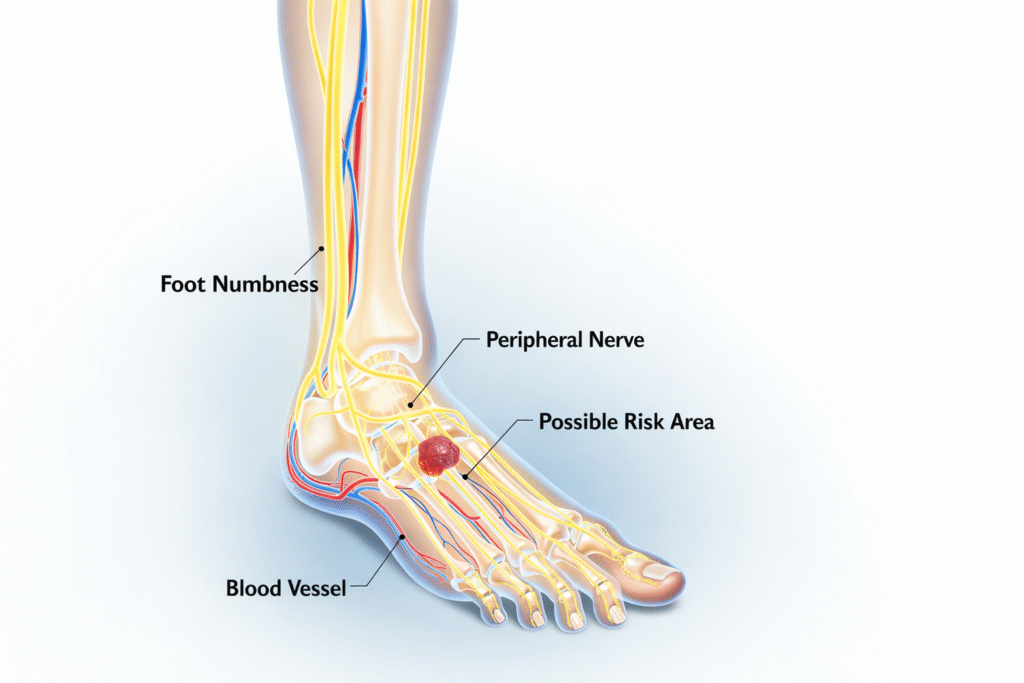
What Is Foot Numbness?
Foot numbness is that strange “pins and needles” feeling you get when your foot falls asleep—but sometimes, it’s much more than that. It refers to a loss of sensation in the feet, often accompanied by tingling, burning, or even weakness. You might notice it after sitting cross-legged for too long, or it could creep in gradually over weeks or months. The real question is: how do you know when it’s harmless and when it’s something serious?
Think of your nerves like electrical wires. When everything is working properly, signals travel smoothly between your brain and your feet. But when something disrupts those signals—whether it’s pressure, poor circulation, or nerve damage—you start to feel numbness. In many cases, it’s temporary and resolves quickly. However, persistent numbness is your body’s way of waving a red flag.
Here’s where things get interesting: numbness doesn’t always mean pain. In fact, the absence of feeling can be more dangerous than pain itself. Why? Because you might not notice injuries, cuts, or infections in your feet until they become severe. That’s why understanding this symptom is crucial—not just brushing it off as something minor.
What Causes Foot Numbness?
Nerve-Related Causes (Neuropathy)
One of the most common causes of foot numbness is peripheral neuropathy, a condition where the nerves are damaged. This damage disrupts communication between your brain and your feet, leading to numbness, tingling, and sometimes burning pain. According to research, peripheral neuropathy affects about 2.4% of the population, increasing to 8% in older adults .
Neuropathy can develop slowly, often going unnoticed until symptoms become severe. Diabetes is the leading cause, but it’s not the only one. Alcohol abuse, vitamin deficiencies, and infections can also damage nerves. Imagine slowly losing the ability to feel your feet—it’s like walking on autopilot without feedback.
Circulation Problems
Poor blood flow is another major culprit. Your feet rely on a steady supply of oxygen-rich blood. When circulation is compromised, nerves don’t get the nutrients they need, leading to numbness. Conditions like peripheral artery disease (PAD) can restrict blood flow and trigger symptoms.
You can think of it like a garden hose. If the water flow is blocked, the plants (your nerves) start to suffer. Over time, this can lead to more serious complications like tissue damage or ulcers.
Lifestyle and Temporary Causes
Not all numbness is scary. Sometimes, it’s just your body reacting to temporary pressure. Sitting in one position for too long, wearing tight shoes, or even sleeping awkwardly can compress nerves and cause that familiar tingling sensation.
These cases are usually harmless and resolve quickly once you move or adjust your position. However, if numbness keeps coming back, it’s worth paying attention. Your body might be trying to tell you something deeper is going on.
Is Foot Numbness Always Dangerous?
When It Is Harmless
Let’s be honest—everyone has experienced temporary numbness. You sit awkwardly, your foot goes numb, and after a few minutes, it’s back to normal. This type of numbness is usually harmless and caused by short-term nerve compression.
If the sensation disappears quickly and doesn’t return frequently, there’s typically no need to worry. It’s your body’s way of saying, “Hey, maybe don’t sit like that for too long.”
When It Signals Serious Issues
Now, here’s where things get serious. Persistent or recurring numbness can indicate underlying health problems. Studies show that neuropathy is often underdiagnosed and can lead to serious complications like falls, infections, and even amputations if left untreated .
If your numbness doesn’t go away, worsens over time, or comes with other symptoms like pain or weakness, it’s not something to ignore. Think of it as an early warning system—your body trying to prevent bigger problems down the road.
Serious Conditions Linked to Foot Numbness
Diabetes and Diabetic Neuropathy
Diabetes is one of the biggest contributors to foot numbness. High blood sugar levels damage nerves over time, leading to diabetic neuropathy. In fact, up to 50% of people with diabetes may develop this condition .
Here’s the scary part: many people don’t even realize they have nerve damage until complications arise. Loss of sensation can lead to unnoticed injuries, which may develop into ulcers or infections. Research shows that about 1 in 4 people with diabetes will develop a foot ulcer.
Peripheral Artery Disease (PAD)
PAD reduces blood flow to the legs and feet, causing numbness, pain, and weakness. It’s often linked to atherosclerosis, where arteries become narrowed due to plaque buildup. Over time, this can lead to tissue damage and slow healing.
Neurological Disorders
Conditions like multiple sclerosis, stroke, and spinal cord injuries can also cause numbness. These disorders affect the nervous system directly, disrupting signals between the brain and the body. In some cases, numbness may be one of the earliest warning signs.
Warning Signs You Should Never Ignore
Sudden Numbness
If numbness appears suddenly—especially on one side of the body—it could indicate a serious condition like a stroke. This is a medical emergency and requires immediate attention.
Numbness with Pain or Weakness
Numbness combined with sharp pain, burning sensations, or muscle weakness is another red flag. It often points to nerve damage or a progressing condition that needs evaluation.
Risks of Ignoring Foot Numbness
Falls and Injuries
When you can’t feel your feet properly, your balance is affected. This increases the risk of falls, especially in older adults. Even a minor slip can lead to serious injuries like fractures.
Foot Ulcers and Infections
Loss of sensation means you might not notice cuts, blisters, or pressure sores. These can quickly turn into infections. In severe cases, untreated infections can lead to amputations.
Statistics highlight the severity—foot complications from neuropathy can significantly increase mortality risk and reduce quality of life.
Diagnosis of Foot Numbness
Diagnosing the cause of foot numbness involves a combination of medical history, physical exams, and tests. Doctors may check your reflexes, muscle strength, and sensitivity to touch. Blood tests can identify underlying conditions like diabetes or vitamin deficiencies.
In some cases, imaging tests or nerve conduction studies are used to evaluate nerve function. The goal is simple: find the root cause and treat it before complications develop.
Treatment Options
Lifestyle Changes
Sometimes, small changes can make a big difference. Improving your posture, wearing comfortable shoes, and staying active can help reduce symptoms. For people with diabetes, controlling blood sugar levels is crucial.
Medical Treatments
Treatment depends on the underlying cause. Medications may be prescribed to manage pain or inflammation. In cases of severe nerve damage, physical therapy or specialized care may be needed.
The key is early intervention. The sooner you address the problem, the better your chances of preventing long-term damage.
How to Prevent Foot Numbness
Daily Habits
Simple habits can go a long way. Avoid sitting in one position for too long, stay hydrated, and maintain a healthy diet rich in vitamins. Regular exercise improves circulation and keeps your nerves healthy.
Foot Care Tips
Taking care of your feet is essential, especially if you’re at risk. Check your feet daily for cuts or sores, keep them clean, and wear proper footwear. Prevention is always easier than treatment.
When to See a Doctor
If your foot numbness is persistent, worsening, or accompanied by other symptoms, it’s time to seek medical help. Early diagnosis can prevent serious complications and improve your quality of life.
Conclusion
Foot numbness isn’t always dangerous, but it’s never something you should ignore completely. While temporary numbness is usually harmless, persistent or recurring symptoms can signal underlying health issues like nerve damage, poor circulation, or chronic diseases. The real danger lies in ignoring these warning signs and allowing the condition to progress.
Understanding the causes, recognizing the symptoms, and seeking timely treatment can make all the difference. Whether it’s a simple lifestyle adjustment or medical intervention, taking action early can prevent complications and keep you on your feet—literally.
FAQs
1. Can foot numbness go away on its own?
Yes, temporary numbness caused by pressure or posture usually resolves quickly. Persistent numbness requires medical evaluation.
2. Is foot numbness a sign of diabetes?
It can be. Diabetes is one of the most common causes of nerve damage leading to numbness.
3. When should I worry about numb feet?
If numbness is constant, worsening, or accompanied by pain, weakness, or balance issues, seek medical attention.
4. Can poor circulation cause numbness?
Yes, reduced blood flow can lead to numbness and tingling in the feet.
5. How can I prevent foot numbness?
Maintain a healthy lifestyle, stay active, manage chronic conditions, and take good care of your feet.