
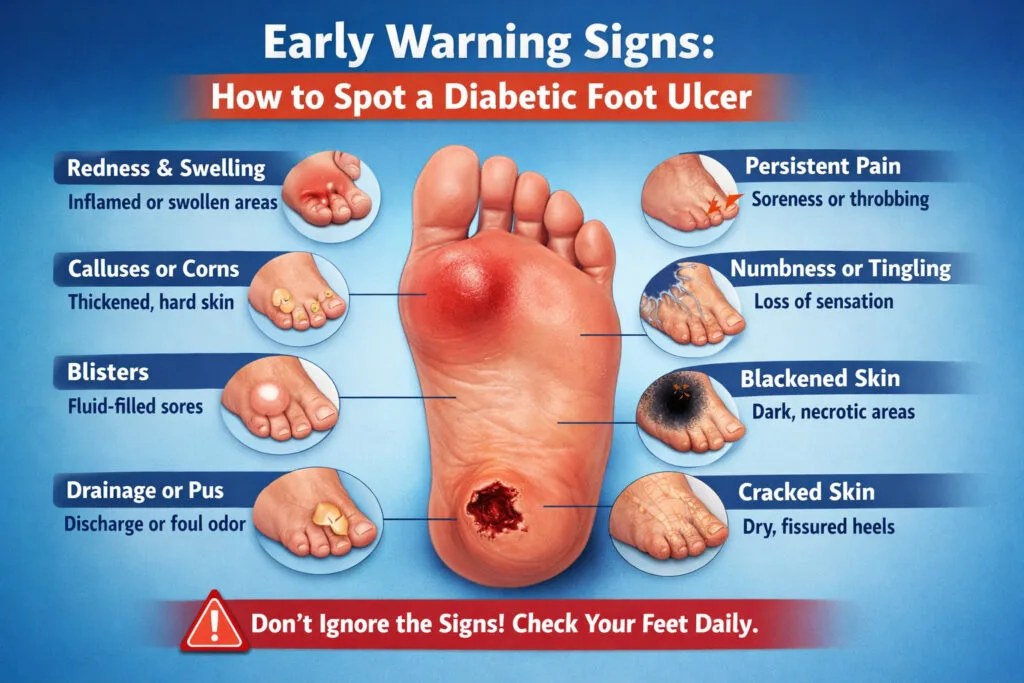
If you or someone you love is living with diabetes, foot health deserves the same attention as blood sugar readings. A diabetic foot ulcer rarely appears overnight — it builds quietly, often without pain, until a small wound turns into a serious complication. The good news is that early signs are almost always visible if you know what to look for. Watch for skin discoloration, unusual dryness or cracking, swelling, warmth, foul odor, or any break in the skin that isn’t healing within a few days. Catching these changes early — and acting on them — is the single most effective way to prevent infection, hospitalization, or amputation.
Why Diabetic Foot Ulcers Develop Silently
People with diabetes often experience two conditions that work together to hide a developing ulcer: peripheral neuropathy and poor circulation. Neuropathy dulls nerve sensation in the feet, so a blister, cut, or pressure sore may not hurt at all. Meanwhile, reduced blood flow slows the body’s natural healing response, allowing minor skin damage to progress into an open wound. This combination is why routine self-checks matter so much — by the time pain shows up, the ulcer has often already reached a more advanced stage.
Who Is Most at Risk
- People with diabetes for 10+ years
- Those with poorly controlled blood sugar (high HbA1c)
- Individuals with a history of previous foot ulcers or amputation
- People with foot deformities, calluses, or improper footwear
- Smokers and those with peripheral vascular disease
How Fast Can an Ulcer Progress
A minor skin break can progress to a deep, infected wound within one to two weeks if left unnoticed, especially in someone with reduced sensation. This is why daily foot inspection is recommended for every diabetic patient, regardless of how “fine” the feet may feel.
The Science Behind the Silence
Neuropathy typically develops in a “stocking” pattern — it affects the toes first, then gradually spreads up the foot and ankle over months or years. This means the areas most likely to be injured (the ball of the foot, the heel, the tips of the toes) are often the same areas where sensation is weakest. At the same time, diabetes thickens and narrows the small blood vessels that supply the skin and underlying tissue, a process known as microvascular disease. Less blood flow means fewer oxygen and immune cells reach the site of an injury, so even a minor scrape heals far more slowly than it would in someone without diabetes. Combine numbness with sluggish healing and you get the classic diabetic foot ulcer pattern: an injury that goes unnoticed, doesn’t heal on its own, and quietly worsens over days or weeks.
The Early Warning Signs You Should Never Ignore
1. Changes in Skin Color
A patch of skin turning red, purple, or darker than the surrounding area can indicate inflammation, pressure damage, or reduced blood supply underneath. Redness around a specific spot — especially one that doesn’t fade after removing pressure — is often the earliest visible clue.
2. Persistent Swelling
Localized swelling in one foot, or a foot that suddenly looks puffier than the other, can point to inflammation, infection, or fluid buildup beneath the skin. Swelling that doesn’t reduce with rest and elevation should be checked promptly.
3. Skin That Feels Warm to the Touch
Increased warmth in one area of the foot, compared to the rest of the foot or the other foot, is frequently one of the first signs of infection or an ulcer forming beneath the surface — even before a wound is visible.
4. Dry, Cracked, or Peeling Skin
Diabetes can reduce the skin’s natural moisture and oil production, leading to cracks — particularly around the heels. These cracks can deepen and become entry points for bacteria if not moisturized and monitored.
5. Calluses and Thickened Skin
While calluses may seem harmless, thick, hardened skin often forms over areas of repeated pressure — exactly the spots where ulcers are most likely to develop underneath. A callus with a dark spot in the center can indicate bleeding beneath the skin.
6. Foul Odor
An unusual smell from the foot, even without a visible wound, can signal an infection developing under a callus or within a sock or shoe that’s rubbing against the skin.
7. Drainage or Discharge
Any moisture, pus, or staining on socks — even in the absence of pain — is a clear sign that skin has broken down somewhere on the foot and needs immediate attention.
8. Numbness or Tingling
While ulcers themselves may not hurt, the neuropathy that makes them dangerous often announces itself first through tingling, burning, or numbness in the toes and soles. This is a signal to increase the frequency of foot checks.
9. A Wound That Isn’t Healing
Any cut, blister, or sore that hasn’t visibly improved within 3–5 days should be treated as a medical concern, not something to “wait and watch.”
10. Changes in Foot Shape
A foot that suddenly looks flatter, wider, or has a visibly shifted arch — sometimes with redness and warmth but little pain — can be an early sign of Charcot foot, a serious diabetes-related condition where weakened bones fracture and shift under normal walking pressure. Because it’s often painless, Charcot foot is frequently mistaken for a sprain or minor swelling until real damage has already occurred.
11. Ingrown Toenails or Nail Discoloration
Nails that curve into the surrounding skin, thicken, or change color can create small entry points for infection, especially at the nail edges. In diabetic feet, what looks like a routine nail problem can progress into a paronychia (nail-fold infection) that spreads to deeper tissue if untreated.
Understanding the Stages of a Diabetic Foot Ulcer
Not every ulcer looks the same, and understanding severity helps explain why “watching and waiting” is risky. Clinicians commonly use the Wagner classification system to describe how deep and serious a wound is:
- Grade 0 — Skin is intact, but there are pre-ulcer signs such as redness, callus, or deformity in a high-risk area
- Grade 1 — A superficial ulcer affecting only the top layers of skin
- Grade 2 — The ulcer extends deeper into tendon, ligament, or joint capsule, without reaching the bone
- Grade 3 — Deep ulcer with abscess, bone infection (osteomyelitis), or joint infection
- Grade 4 — Localized gangrene, usually affecting a toe or part of the forefoot
- Grade 5 — Extensive gangrene involving most of the foot
The earlier a wound is identified — ideally at Grade 0 or Grade 1 — the simpler, faster, and less invasive the treatment. By the time an ulcer reaches Grade 3 or beyond, treatment often requires surgical debridement, prolonged antibiotics, or reconstructive procedures to save the limb. This is the core reason Divyam- RDFC emphasizes early screening: catching a Grade 0 warning sign can mean the difference between a course of offloading and moisturizing versus months of complex wound management.
Common Myths About Diabetic Foot Ulcers
“It doesn’t hurt, so it can’t be serious”
This is the most dangerous myth in diabetic foot care. Pain is often the last symptom to appear, not the first, because neuropathy blunts sensation long before a wound becomes visible. Absence of pain should never be read as absence of a problem.
“A small cut will heal on its own, just like any other wound”
Diabetic wounds do not follow the same healing timeline as wounds in people without diabetes. Reduced circulation and immune response mean that what would close in 3–4 days for most people can remain open for weeks in a diabetic foot, quietly inviting infection the longer it stays unhealed.
“Only people with severe or long-standing diabetes get foot ulcers”
While ulcer risk does increase with disease duration, ulcers can and do occur in people diagnosed relatively recently, particularly if blood sugar has been poorly controlled or if neuropathy has developed early. Risk should be assessed individually, not assumed based on how long someone has had diabetes.
“Home remedies are enough to treat a foot wound”
Turmeric paste, honey, or over-the-counter antiseptics may be used as adjuncts under medical guidance, but they are not substitutes for professional wound assessment. Self-treating a wound that is actually infected can delay necessary care and allow the infection to spread deeper.
How to Perform a Daily Foot Self-Check
What You’ll Need
A well-lit room, a hand mirror (for checking the soles), and two minutes of undivided attention — ideally at the same time every day, such as after a bath.
Step-by-Step Inspection
Look at the top, sides, soles, and between each toe for any of the warning signs above. Feel the temperature of both feet with the back of your hand and compare them. Check that shoes and socks are free of seams, stones, or damp spots that could cause friction. If you cannot bend easily to inspect your soles, a mirror placed on the floor or a family member’s help works just as well.
Keeping a Simple Foot Log
Many patients find it useful to note anything unusual in a small notebook or phone app — even something as simple as “small red patch, left heel, April 12.” This creates a timeline that’s genuinely useful if you do need to see a specialist, since it helps distinguish between a change that appeared overnight and one that’s been slowly developing over weeks.
Choosing Footwear That Protects Your Feet
Footwear is one of the most common — and most overlooked — causes of diabetic foot ulcers. Shoes that are too tight, too loose, or have internal seams can create friction points that break down skin over just a few hours of wear. When choosing footwear:
- Shop for shoes later in the day, when feet are naturally slightly swollen, so the fit remains comfortable throughout the day
- Look for a wide, deep toe box that doesn’t compress the toes or rub against bunions or hammertoes
- Avoid shoes with prominent internal seams, and check new shoes by running a hand along the inside before wearing them
- Break in new shoes gradually — an hour or two at a time — rather than wearing them for a full day immediately
- Consider diabetic-specific or custom orthotic footwear if you have any foot deformity, prior ulcer, or high-pressure area identified during a plantar pressure assessment
- Never go barefoot, even indoors, and check inside shoes for small stones, seams, or debris before every wear
Socks matter too — seamless, moisture-wicking socks in a light color make it easier to spot early drainage or bleeding, and reduce friction compared to thick cotton socks with prominent seams.
The Role of Blood Sugar Control and Lifestyle
While footwear and daily inspection address the external risk, long-term ulcer prevention depends heavily on internal factors. Consistently elevated blood sugar accelerates nerve damage and further narrows blood vessels, compounding both the causes of ulcers described earlier in this article. Patients who maintain their HbA1c within the range recommended by their physician typically see meaningfully lower rates of neuropathy progression and wound complications over time. Alongside blood sugar management, quitting smoking is one of the highest-impact steps a patient can take, since smoking directly constricts blood vessels and further reduces the circulation needed for wound healing. Regular, doctor-approved physical activity — such as walking in proper footwear — also supports circulation, provided the feet are inspected before and after activity for any new pressure points.
When to See a Diabetic Foot Care Specialist
Self-checks are essential, but they are not a substitute for professional evaluation. You should book an appointment with a specialist if you notice any of the warning signs above, if you have diabetes and haven’t had a formal foot examination in the last year, or if you have known neuropathy or circulation issues. At Divyam- RDFC’s diabetic foot examination service, our team combines structural assessment, nerve sensation testing, and vascular evaluation to catch problems long before they become ulcers.
What a Professional Foot Exam Involves
A thorough diabetic foot exam typically includes a sensory test to check nerve function, a vascular assessment of blood flow, and a plantar pressure assessment to identify high-risk zones before skin breakdown occurs. These tests take only a short clinic visit but provide a clear picture of your personal risk level.
What Happens If an Ulcer Is Already Present
If a wound has already formed, timely intervention makes the difference between simple healing and a prolonged, complicated recovery. Under Dr. Sumitra Gantayet’s care, treatment plans are built around the specific wound — combining advanced wound care, infection control, and, where needed, offloading strategies that take pressure off the healing area. With 15+ years of experience and over 5,000 patients treated, RDFC’s approach focuses on healing the wound while protecting the rest of the foot from further damage.
Prevention: Reducing Your Risk Going Forward
Daily Habits That Protect Your Feet
- Wash and dry feet thoroughly every day, especially between the toes
- Moisturize the tops and soles, but avoid lotion between toes
- Trim toenails straight across to prevent ingrown nails
- Never walk barefoot, indoors or outdoors
- Choose well-fitting, cushioned footwear and check the inside for debris before wearing
Medical Habits That Protect Your Feet
- Keep blood sugar within your doctor’s recommended range
- Schedule a professional foot exam at least once a year — more often if you have existing risk factors
- Treat any minor cut, blister, or crack immediately instead of waiting to see if it heals on its own
FAQ
1. Can a diabetic foot ulcer heal on its own without treatment?
Small, superficial wounds may improve with diligent home care, but any wound that doesn’t show clear improvement within a few days needs professional evaluation. Diabetic wounds heal slower than normal skin injuries, and what looks minor on the surface can be deeper or infected underneath.
2. Why don’t I feel pain even though I have a wound on my foot?
This is one of the most dangerous aspects of diabetic foot complications. Nerve damage (neuropathy) reduces sensation in the feet, which is why visual inspection matters more than relying on pain as a warning sign.
3. How often should a diabetic patient get their feet examined by a doctor?
At minimum, once a year for low-risk patients, and every 3–6 months for those with neuropathy, poor circulation, or a history of ulcers. Your specialist can recommend a schedule based on your individual risk factors.
4. Are diabetic foot ulcers preventable?
Yes, in most cases. Daily self-checks, proper footwear, blood sugar control, and regular professional screening can prevent the majority of ulcers from ever forming.
5. What makes Divyam – RDFC different for diabetic foot ulcer care?
Divyam RDFC is led by a consultant reconstructive and plastic surgeon with over 15 years of focused experience in diabetic foot reconstruction and limb salvage. Care combines early detection tools, advanced wound management, and reconstructive surgery when needed — all under one roof in Vizag, with 24/7 emergency support.
6. Is amputation always the outcome for a serious diabetic foot ulcer?
No. Amputation is generally a last-resort measure reserved for advanced infection or extensive tissue death that cannot be reversed. With timely evaluation, most ulcers — even moderately advanced ones — can be managed through debridement, infection control, offloading, and, where appropriate, reconstructive techniques that preserve the limb. The likelihood of avoiding amputation rises significantly the earlier a wound is brought in for treatment.
7. Can diet affect how quickly a diabetic wound heals?
Yes. Adequate protein intake supports tissue repair, while stable blood sugar levels (rather than frequent spikes) reduce the ongoing vascular and nerve damage that slows healing. Patients recovering from a foot ulcer are often advised to work with their physician on a nutrition plan that supports both wound healing and long-term glucose control.
Don’t Wait for Pain to Tell You Something’s Wrong
Diabetic foot ulcers are one of the few diabetes complications that are almost always preventable with early attention. If you’ve noticed any of the warning signs above, or simply haven’t had a foot check-up recently, the safest step is a professional evaluation — not a wait-and-see approach.
Book a diabetic foot examination with RDFC today and take the first step toward protecting your mobility and independence. Our Vizag clinic offers expert evaluation, advanced treatment, and 24/7 emergency support for urgent cases.