
What Are Corns and Calluses?
Let’s be honest—most people don’t think twice about thickened skin on their feet until it starts hurting. That rough patch? It could be a corn or a callus, and while they might look similar at first glance, they’re actually quite different in how they behave and affect your daily life. Both are your body’s natural defense mechanism, forming when your skin tries to protect itself from repeated friction or pressure.
Think of it like your skin building armor. When it senses constant rubbing—whether from tight shoes or long hours on your feet—it thickens to prevent injury. This thickening is mainly due to keratin buildup, a protein that strengthens your skin barrier.
But here’s where things get interesting: not all thickened skin is the same. Corns and calluses differ in size, depth, pain level, and location. Understanding these differences is crucial because treating them incorrectly can make things worse. So before you grab a pumice stone or corn cap, let’s break it down properly.
Definition of Corns
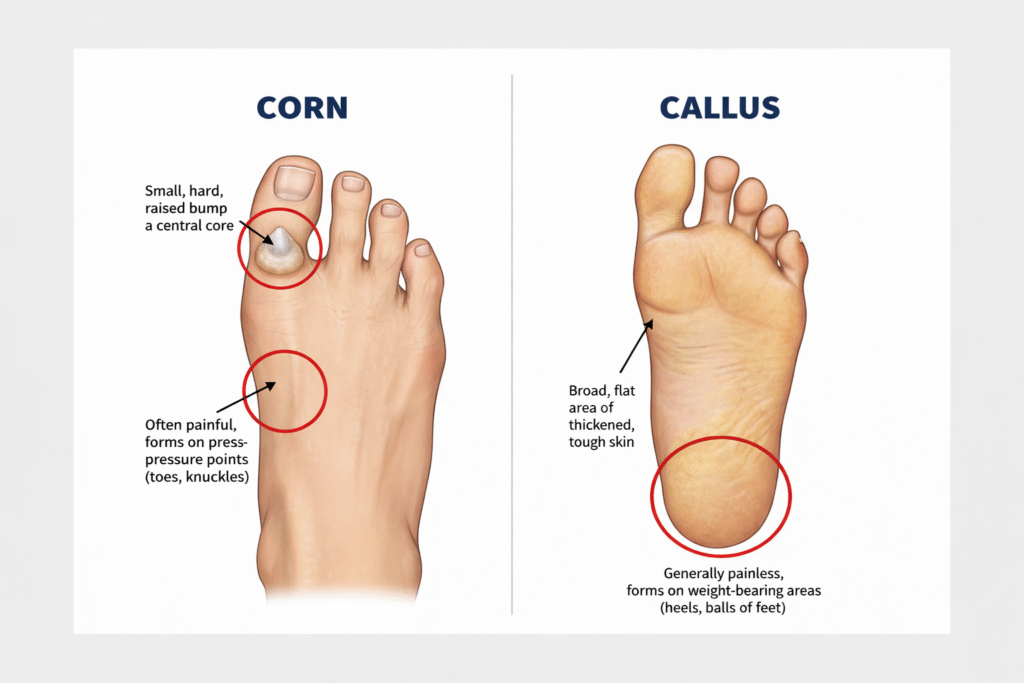
A corn is a small, concentrated area of thickened skin that usually forms over bony parts of the foot, like the tops or sides of toes. What makes it unique is its central core, which can press into deeper layers of skin and cause pain—especially when you walk or apply pressure.
Key Characteristics:
- Hard center (core): Often conical and can press into deeper skin layers
- Surrounding thickened skin: Usually yellowish or pale
- Pain or tenderness: Especially when pressure is applied
- Typical locations: Tops and sides of toes, between toes, and on the soles
Why Corns Form:
Corns develop as the body’s defense mechanism against:
- Tight or ill-fitting footwear
- Repetitive pressure (walking, standing)
- Abnormal foot mechanics (e.g., deformities like hammer toes)
Definition of Calluses
A callus, on the other hand, is a broader, flatter patch of thick skin. It typically forms on weight-bearing areas like the heels, soles, or palms. Unlike corns, calluses are usually not painful, though they can become uncomfortable if they grow too thick.
Unlike corns, calluses are usually larger, have a more diffuse (spread-out) shape, and are not typically painful. They commonly appear on weight-bearing or high-friction areas such as the soles of the feet, heels, palms, or fingers.
Key characteristics of calluses:
- Thick, rough, and hardened skin
- Yellowish or grayish appearance
- Usually painless (may feel tender in severe cases)
- Form over a wide area rather than a small, defined spot
Calluses are commonly seen in people who walk barefoot, wear ill-fitting footwear, or perform repetitive manual tasks.
Corn vs Callus – Quick Comparison Table
| Feature | Corn | Callus |
| Size | Small, round | Large, irregular |
| Pain | Often painful | Rarely painful |
| Location | Toes, bony areas | Heels, soles, hands |
| Shape | Central core | Even thickening |
| Texture | Hard or soft | Thick and rough |
Key Differences Between Corn and Callus
Size and Shape
If you look closely, corns are like tiny targets—small, round, and well-defined. Calluses, however, spread out like a patch, covering a larger surface area. This difference alone can help you identify what you’re dealing with.
Pain Levels
Here’s a simple rule: if it hurts, it’s probably a corn. Corns press into deeper skin layers, which is why they can be painful when touched or walked on. Calluses usually sit on the surface and don’t cause pain unless they crack or become very thick.
Location on the Body
Corns prefer tight, bony areas—especially toes. Calluses show up where pressure is distributed, like the heel or ball of the foot. If you’re a gym-goer or manual worker, you might even get calluses on your hands.
Texture and Appearance
Corns often have a hard center surrounded by inflamed skin. Calluses look more like thick, yellowish, rough skin without a defined center.
Causes of Corns and Calluses
Friction and Pressure
At the core of both conditions lies one culprit: repeated friction and pressure. Whether it’s walking long distances or gripping tools, your skin responds by thickening to protect itself.
Poor Footwear Choices
Ill-fitting shoes are one of the biggest triggers. Tight shoes squeeze your toes, leading to corns, while loose shoes cause rubbing, leading to calluses.
Lifestyle and Activities
- Standing for long hours
- Running or walking frequently
- Manual labor or sports
- Wearing high heels
All these activities increase pressure on specific areas, making corn and callus formation more likely.
Symptoms
Signs of Corns
Corns usually announce themselves with discomfort. You might notice a small, raised bump that feels tender when pressed. The skin around it may appear inflamed, and walking might become slightly painful. Over time, that central core digs deeper, making every step feel like you’re stepping on a tiny pebble.
Signs of Calluses
Calluses are more subtle. They appear as thick, rough, yellowish skin patches that feel hard to the touch. You may not feel pain initially, but if ignored, they can crack and become uncomfortable. In some cases, they can even interfere with walking or gripping objects.
Risk Factors You Should Know
Certain people are more prone to developing corns and calluses:
- People with foot deformities
- Athletes and runners
- Individuals who wear tight or high-heeled shoes
- People with abnormal walking patterns
Treatment Options for Corns and Calluses
Home Remedies
Most cases can be managed at home with simple care routines:
- Soaking your feet in warm water
- Using a pumice stone to gently file the skin
- Applying moisturizing creams with salicylic acid or urea
Consistency is key here. One-time treatment won’t fix the problem if the root cause remains.
Medical Treatments
If the pain persists, it’s time to consult a professional. Treatments may include:
- Trimming thickened skin
- Custom orthotics
- Corrective footwear
Prevention Tips That Actually Work
Preventing corns and calluses is surprisingly simple—if you stay consistent:
- Wear well-fitting, comfortable shoes
- Use cushioned insoles
- Keep your feet moisturized
- Avoid walking barefoot on hard surfaces
When to See a Doctor
If your corn or callus becomes painful, inflamed, or infected, don’t ignore it. This is especially important for people with diabetes, as even minor foot issues can lead to serious complications.
Corn vs Callus in Diabetic Patients
For individuals with diabetes, corns and calluses are more than just skin issues—they can become serious health risks. Reduced blood flow and nerve sensitivity mean even a small lesion can turn into an ulcer. That’s why self-treatment is not recommended in such cases.
Common Myths and Misconceptions
Many people believe that cutting off a corn or callus permanently solves the problem. It doesn’t. If the pressure continues, the skin will simply grow back thicker. Another myth is that they’re infections—they’re not. They’re purely mechanical responses.
Lifestyle Changes for Long-Term Relief
If you want permanent relief, focus on eliminating the cause:
- Upgrade your footwear
- Adjust your walking posture
- Use protective pads
Think of it this way: treating the skin is temporary, fixing the pressure is permanent.
Conclusion
Corns and calluses might seem like minor annoyances, but they tell an important story about how your body handles stress and pressure. While both are protective responses, their differences in size, pain, and location make it essential to identify them correctly. The real solution isn’t just removing thickened skin—it’s addressing the root cause.
Once you understand that, managing them becomes much easier. A simple change in shoes, posture, or daily habits can save you from recurring discomfort.
FAQs
1. How do I know if I have a corn or a callus?
If it’s small, round, and painful, it’s likely a corn. If it’s large, flat, and painless, it’s probably a callus.
2. Can corns and calluses go away on their own?
Yes, if you remove the source of friction or pressure, they often disappear naturally.
3. Are corn caps safe to use?
They can be effective, but should be used cautiously—especially if you have sensitive skin or diabetes.
4. Why do corns hurt more than calluses?
Corns have a central core that presses into deeper skin layers, causing pain.
5. Can I prevent corns and calluses completely?
You can significantly reduce the risk by wearing proper footwear and minimizing repeated pressure.