
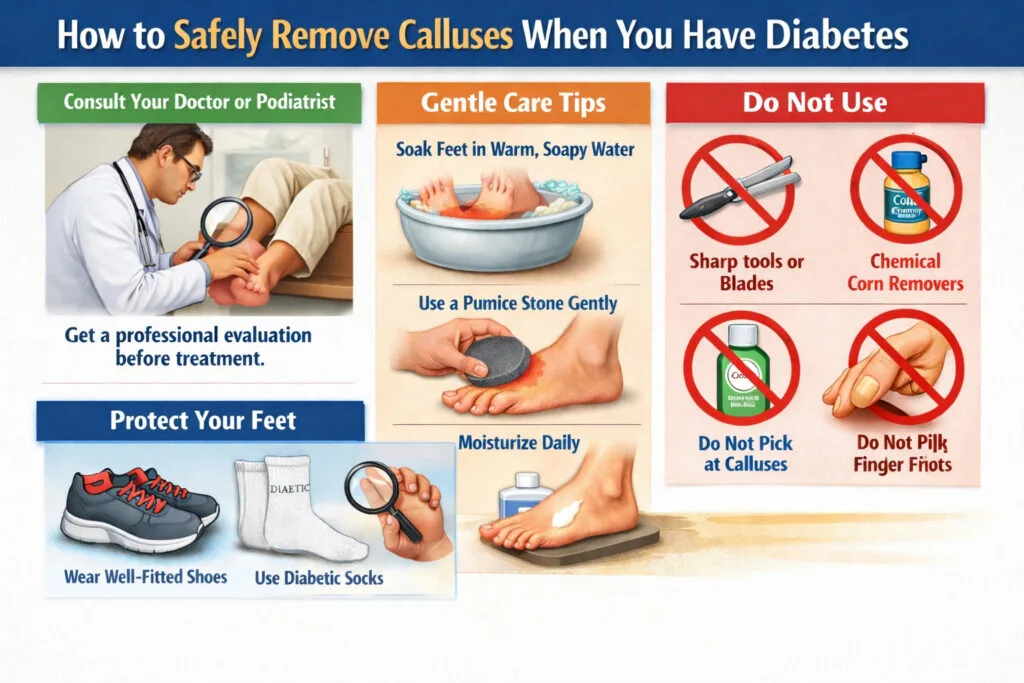
How to Safely Remove Calluses When You Have Diabetes (Without Risking Your Health)
If you have diabetes and notice thickened, rough skin forming on the soles or sides of your feet, you are not alone. Calluses are one of the most common foot problems among people living with diabetes — but they are also one of the most misunderstood. While a non-diabetic person might simply reach for a pumice stone or an over-the-counter callus remover, that approach can be genuinely dangerous for you. The reason? Diabetes changes everything about how your feet heal, feel, and respond to injury.
What Is a Callus — And Why Do Diabetics Get Them More Often?
A callus is a patch of thickened, hardened skin that forms as your body’s natural response to repeated friction or pressure. On the feet, they most commonly develop on the heels, the ball of the foot, and around bony areas like bunions or hammer toes.
For people without diabetes, calluses are mostly a cosmetic nuisance. For people with diabetes, they are a potential gateway to serious complications including:
- Skin breakdown and open wounds beneath the hardened skin
- Foot ulcers that are slow or unable to heal
- Bacterial infections that spread quickly
- In severe, untreated cases, the need for amputation
There are two key reasons why diabetes raises the stakes so dramatically.
Peripheral neuropathy — nerve damage in the feet — is common in people with long-standing diabetes. It reduces or completely eliminates sensation in the feet, meaning you may not feel pain, heat, or pressure the way you should. A callus could be hiding an open wound underneath, and you might have no idea because you cannot feel it.
Poor circulation — is the second factor. Diabetes can narrow and harden blood vessels, reducing blood flow to the feet and lower legs. When circulation is poor, even small wounds heal far more slowly — or they may not heal at all. This makes any break in the skin potentially dangerous.
Can You Remove Calluses at Home If You Have Diabetes?
The short answer is: with caution, and only for mild calluses. If you have neuropathy, active foot ulcers, poor circulation, or any open wounds, home treatment is not appropriate. You should go straight to a podiatrist.
For people with well-controlled diabetes and intact sensation, the following home-care steps are considered reasonably safe — but they should always be done gently and with careful monitoring afterward.
Safe Home Care Steps for Mild Calluses
1. Soak your feet in warm (not hot) water
Fill a basin with lukewarm water — always test the temperature with your elbow or a thermometer first, not your feet, because neuropathy can make your feet unable to detect dangerously hot water. Soak for 10 to 15 minutes to soften the hardened skin.
Never soak for longer than recommended. Prolonged soaking can dry out the skin and cause cracking, which creates new entry points for bacteria.
2. Use a pumice stone — gently
After soaking, gently rub the callused area with a pumice stone using light circular motions. The emphasis here is gentle. Over-scrubbing can break the skin and lead to infection. Stop immediately if you feel any pain, see redness, or notice any change in the skin texture.
After use, rinse the pumice stone thoroughly and let it air-dry to prevent bacterial growth.
3. Apply a urea-based moisturiser
Once the area is dried (pat, do not rub), apply a urea-based foot cream or diabetic foot lotion. Urea is a keratolytic ingredient that helps soften thickened skin gradually and safely. Apply it daily — not just when calluses appear — to keep skin supple and prevent new buildup.
Avoid applying moisturiser between the toes, as this can encourage fungal infections.
4. Use non-medicated cushioning pads
Gel or foam pads placed inside your shoe can redistribute pressure away from callus-prone areas. Look for non-medicated versions specifically. Avoid corn or callus pads that contain salicylic acid.
5. Inspect your feet every single day
This is non-negotiable. Each morning or evening, examine your feet thoroughly — look at the soles, between the toes, and around the heel. Use a mirror or ask a family member to help if you cannot see clearly. Look for any new redness, swelling, skin breakdown, or changes in the existing callus.
What You Should Never Do to a Callus If You Have Diabetes
Just as important as knowing the safe methods is knowing what to avoid entirely.
Never Use Blades, Razors, or Nail Clippers
Attempting to cut, shave, or trim a callus at home with any sharp instrument is extremely dangerous for a diabetic patient. Even a tiny nick can cause a wound that becomes infected. With reduced circulation and slower healing, that small cut can escalate into a serious ulcer within days.
Leave all sharp debridement to a trained podiatrist, who uses sterile instruments under controlled, clinical conditions.
Avoid Medicated Callus Removers (Especially Salicylic Acid)
Many over-the-counter callus treatments — including medicated patches, liquids, and pads — contain salicylic acid. This ingredient works by chemically breaking down skin tissue. For people with diabetes, it cannot distinguish between the callus and the healthy skin surrounding it. It can cause chemical burns, ulceration, and open wounds that become infected quickly.
Salicylic acid products are contraindicated for anyone with diabetes. Check the ingredients label on any foot product before using it.
Do Not Ignore a Callus That Is Growing or Changing
If a callus is getting larger, darker, harder, or if you notice any fluid, bleeding, or unusual smell beneath it, do not wait and see. These are warning signs that something more serious is happening underneath the skin. See a podiatrist as soon as possible — ideally within 24 to 48 hours.
Do Not Walk Barefoot
Walking barefoot increases the risk of stepping on something sharp or developing new friction injuries without noticing. Always wear well-fitting socks and diabetic-friendly footwear, even indoors.
When to See a Podiatrist for Diabetic Callus Removal
For many people with diabetes, professional podiatric care is not just recommended — it is essential. You should book an appointment with a podiatrist if:
- Your callus is large, thick, or covers a wide area
- You have any numbness or reduced sensation in your feet
- You notice any discolouration, darkening, or unusual appearance around the callus
- There is any sign of an open wound, ulcer, or bleeding beneath the skin
- You have had foot complications in the past
- You cannot see the bottom of your feet clearly
- You feel uncertain at any point about home care
What Does a Podiatrist Do for Diabetic Calluses?
A podiatrist provides a level of care that cannot be replicated at home. In a clinical setting, a trained specialist will:
Conduct a full foot assessment — checking circulation, nerve function, skin integrity, and the extent of the callus, including looking for any underlying ulcer that may have formed beneath the thickened skin.
Perform safe debridement — using sterile instruments and precise clinical technique, the podiatrist removes the excess hyperkeratotic (thickened) tissue layer by layer until healthy skin is reached. This procedure is safe, controlled, and significantly reduces the pressure that the callus places on the underlying tissue — which itself reduces ulcer risk.
Identify the root cause — calluses form because of sustained pressure or friction. A good podiatrist does not just treat the callus but investigates why it formed. Are your shoes too tight? Do you have a structural foot issue like a hammer toe or bunion? Do you walk with an abnormal gait? Addressing the cause prevents the callus from returning.
Prescribe custom orthotics or diabetic footwear — custom-made insoles can redistribute pressure away from problem areas, dramatically reducing callus formation over time.
Set up a regular care schedule — most people with diabetes benefit from professional foot checks every 6 to 12 weeks, or more frequently if they have active complications.
The Role of Blood Sugar Control in Foot Health
It is impossible to talk about foot calluses and diabetes without addressing blood sugar management. Poorly controlled blood glucose levels accelerate nerve damage and worsen circulation — both of which increase the risk of callus-related complications. Keeping your HbA1c within your target range, as recommended by your diabetes care team, directly supports your feet’s ability to heal and reduces the frequency and severity of calluses.
If you are struggling with blood sugar management, speak with your endocrinologist or diabetes nurse. Better glucose control is one of the most powerful things you can do for your foot health.
Choosing the Right Footwear to Prevent Calluses
Footwear is one of the single most important factors in callus prevention. Ill-fitting shoes create exactly the kind of sustained pressure and friction that drives callus formation. When choosing footwear:
What to Look For in Diabetic-Friendly Shoes
- Enough width and depth in the toe box to avoid compression
- Soft, seamless inner linings that minimise friction against the skin
- Cushioned soles that absorb impact
- A firm heel counter for good support
- Adjustable fastenings — laces or velcro — to accommodate any foot swelling throughout the day
- Diabetic-specific shoes or extra-depth shoes if you have foot deformities
When to Consider Custom Orthotics
If you have persistent calluses in the same location, have had foot ulcers previously, or have structural foot abnormalities, custom orthotics prescribed and fitted by a podiatrist can make a significant difference. They are designed to redistribute your body weight evenly across the foot, reducing the pressure hotspots that cause calluses.
Daily Foot Care Routine for People with Diabetes
Prevention is always better than treatment. Establishing a daily foot care routine is one of the most effective ways to catch problems early and reduce your risk of callus-related complications.
Your Daily Foot Care Checklist
- Wash your feet daily in lukewarm water and dry them carefully, especially between the toes.
- Inspect every part of your feet — soles, heels, between toes — using a mirror if needed.
- Moisturise with a urea-based or diabetic-approved cream, avoiding between the toes.
- Wear clean, seamless, moisture-wicking diabetic socks.
- Never walk barefoot, even inside the house.
- Check your shoes before putting them on — shake out any debris and run your hand inside to feel for rough seams.
- Note any new calluses, changes in skin colour, swelling, or pain and report them to your healthcare team promptly.
Final Thoughts: Protect Your Feet, Protect Your Health
Calluses may seem like a minor inconvenience, but when you have diabetes, they deserve serious attention. The combination of reduced sensation, slower healing, and poorer circulation means that a small patch of thickened skin can — if ignored or treated incorrectly — become a significant medical problem.
The safest approach is a combination of gentle, consistent daily home care, diabetic-appropriate footwear, and regular professional check-ups with a podiatrist. Never use blades, razors, or salicylic acid products at home. Always inspect your feet daily. And if you notice any warning signs — growing calluses, discolouration, skin breakdown, or any pain — seek professional attention promptly.
FAQ
Can I use a pumice stone on my feet if I have diabetes?
For people with well-controlled diabetes, good circulation, and intact sensation, a pumice stone can be used very gently on softened skin after soaking. However, if you have neuropathy, poor circulation, or any open wounds or ulcers, avoid using a pumice stone entirely and consult a podiatrist instead. When in doubt, professional care is always the safer choice.
Is it safe to use salicylic acid callus removers if I have diabetes?
No. Salicylic acid is contraindicated for people with diabetes. It breaks down skin tissue without being able to distinguish between callused skin and healthy skin, and can lead to chemical burns, open wounds, and serious infections. Always check labels before using any foot product and ask your pharmacist or podiatrist for diabetic-safe alternatives.
How often should a person with diabetes see a podiatrist?
Most diabetes clinical guidelines recommend at least an annual professional foot examination. However, if you have neuropathy, circulation problems, previous foot ulcers, or active calluses, visits every 6 to 12 weeks are typically more appropriate. Your podiatrist will advise on the right schedule for your individual risk profile.
What is the difference between a callus and a diabetic foot ulcer?
A callus is an area of thickened, hardened skin on the surface, caused by repeated pressure or friction. A diabetic foot ulcer is an open wound or sore that forms when skin breaks down — sometimes beneath or around a callus. Because neuropathy reduces pain sensation, an ulcer can develop without you feeling it. This is why inspecting the underside of calluses is important and why professional removal is recommended — a podiatrist can identify if there is an ulcer hiding beneath the surface.
Can calluses in diabetic patients lead to amputation?
In severe, untreated cases, yes. Calluses can mask underlying ulcers. Ulcers that go undetected or untreated can become deeply infected. In people with poor circulation and compromised healing, infection can spread to bone (osteomyelitis) or cause gangrene — situations that may ultimately require amputation. This is why proactive foot care and regular podiatry visits are so critical for anyone living with diabetes.