

Introduction
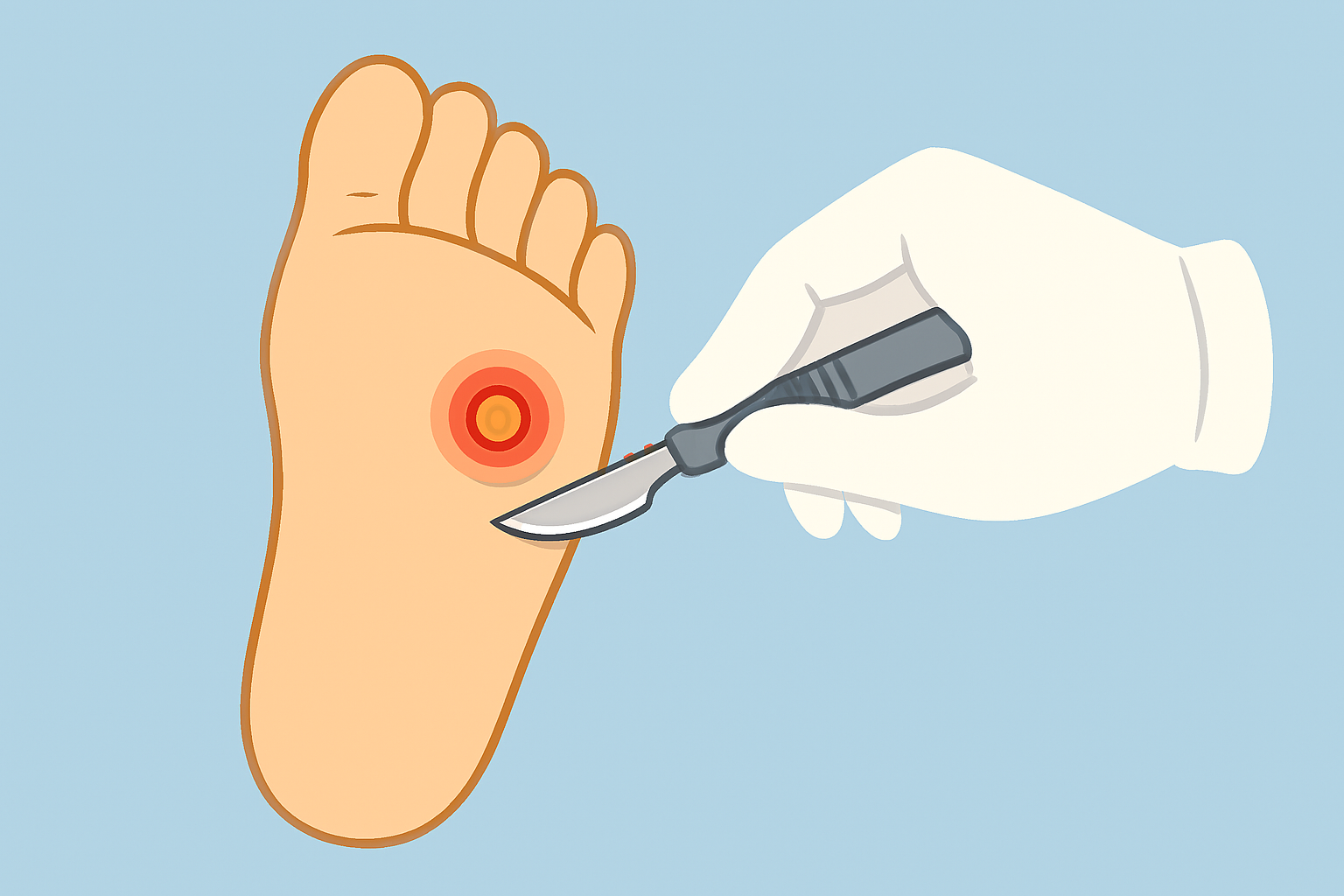
So you’ve noticed a small hardened bump on your foot, and it’s getting painful when you walk barefoot or wear shoes. That, my friend, might be a foot corn.
Foot corns are thickened patches of skin that develop in response to pressure or friction. They’re your body’s way of protecting an area — but sometimes it goes overboard. While corns are common, they can evolve into something serious if not addressed properly, especially in people with diabetes or poor circulation.
In this guide, we’re going deeper than most blogs. You’ll get evidence-based insights, practical doctor-recommended strategies, and clear do’s and don’ts to tackle foot corns safely.
Anatomy of Corns
Hard Corns vs Soft Corns
There is no one-size-fits-all crop. Physicians typically divide them into two categories:
- Hard corns are compact, dense, and usually found on the sides and tops of toes.
- Soft corns are whiter, softer lesions that develop between toes as a result of moisture.
Both are the outcome of repeated pressure, but treatment options are influenced by the differences in texture and location.
Causes at a Cellular Level
Your skin forms corns as a defense mechanism. Repeated friction tells the skin to produce extra keratin (a protein), causing thickened skin layers. This is similar to how calluses form, but corns are usually smaller and more localized.
Who Gets Foot Corns?
Common Risk Factors
- Wearing ill-fitting shoes
- Toe deformities (like hammertoes)
- High-pressure points during walking or standing
- Walking barefoot on hard surfaces
- Foot abnormalities (flat feet or high arches)
Foot Biomechanics and Corn Formation
The way your foot strikes the ground matters. Abnormal gait can put extra pressure on certain spots, leading to corns. That’s why some people are more prone to them even with proper footwear.
Symptoms You Shouldn’t Ignore
Pain Patterns
Corns often start as painless but become painful as they press into deeper skin layers. The pain usually gets worse with pressure — like when walking or wearing tight shoes.
Signs of Infection
Be alert for redness, warmth, swelling, drainage, or fever. These can signal an infection and require professional care, especially in people with compromised immune systems.
How Doctors Diagnose Corns
Physical Exam
Usually, diagnosis is straightforward — a healthcare provider examines the foot visually and by touch.
When Imaging Is Needed
X-rays or other imaging may be ordered if underlying bone deformities or tumors are suspected.
At-Home Treatment Options
Safe Home Approaches
- Warm water soak: Softens the corn, making removal easier.
- Pumice stone: Light, gentle exfoliation — but don’t overdo it.
- Cushioning pads: Relieve pressure and protect the area.
What NOT to Do at Home
- Avoid cutting corns yourself with blades, razors, or sharp tools.
- Over-the-counter medicated corn pads containing salicylic acid can help — but only if used carefully and not on sensitive feet like diabetic patients.
Medical Treatment Options
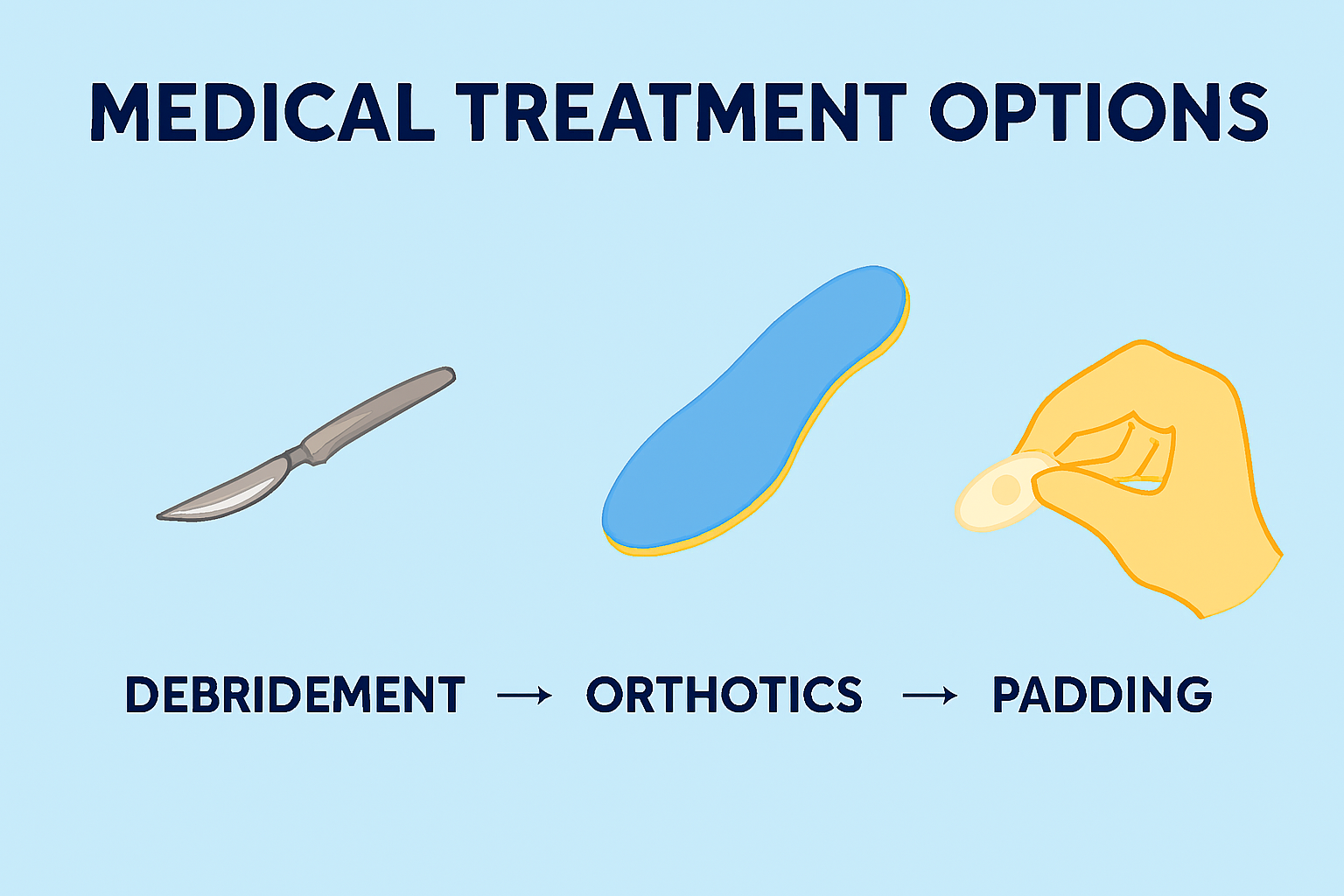
Debridement (Professional Corn Removal)
Doctors often remove corns by trimming the thickened skin. This should only be done by professionals — improper DIY cutting increases infection risk.
Orthotics and Padding
Custom-fitted shoe inserts redistribute pressure and correct gait issues. These change the “root cause” mechanics, not just the symptom.
Surgical Options
When Surgery Is Appropriate
Surgical correction may be advised if corns recur because of bone abnormalities (such as hammertoes). When conservative measures don’t work, it can provide long-term relief, but it’s not the first line of treatment.
Types of Procedures
- Bone reshaping
- Tendon release
- Joint correction
Your surgeon will tailor the approach based on your foot structure.
Preventive Measures
Proper Footwear
Shoes with:
- Adequate toe room
- Soft, flexible uppers
- Good arch support
Avoid narrow, high-heeled, or tight shoes that compress toes.
Custom Orthotics Explained
Orthotics aren’t a “one size fits all.” They are molded to your foot shape and gait pattern. Patients often notice significant pain reduction when they start using professionally fitted orthotics
Lifestyle and Foot Care Tips
Foot Hygiene Essentials
- Wash your feet daily
- Dry thoroughly, especially between toes
- Moisturize dry skin to prevent cracks
Exercises and Stretches
Stretching and strengthening your toes, ankles, and foot arches can reduce excessive pressure points.
Special Situations
Corns in Diabetics
People with diabetes must treat foot issues with extra caution due to nerve damage and reduced circulation. Even minor corns can lead to ulcers — so prompt professional care is essential.
Corns in Athletes
Athletes often get corns from repetitive motion and tight footwear. Custom gear and preventive padding help.
Natural Remedies: What Works?
Evidence-Backed Natural Options
- Epsom salt soaks for softening
- Aloe vera to reduce irritation
- Protective silicone toe sleeves
Myths vs Facts
Myth: Vinegar dissolves corn overnight.
Fact: Vinegar can irritate skin and damage healthy tissue.
When to See a Doctor Immediately
Red Flags
- Sudden swelling or pus
- Severe, unexplained pain
- Fever or spreading redness
Pain Limitations
If the corn impairs walking or daily activities, don’t wait.
Conclusion
Foot corns are more than a cosmetic annoyance — they’re a sign that your feet are under stress. From the doctor’s perspective, they’re both a symptom and an opportunity to improve your foot health. With the right combination of safe home care, professional treatment, proper footwear, and prevention strategies, you can get relief and keep corns from coming back.
Your feet carry you through life — don’t let corns slow you down.
FAQs
1. What is the fastest way to get rid of corns?
Professional trimming combined with pressure relief usually brings the quickest relief.
2. Can corns go away on their own?
If the source of pressure is removed and the skin gets time to heal, mild corns can improve.
3. Are foot corn removals painful?
Professional removal is usually quick and minimally painful; local anesthesia may be used if needed.
4. Can children get foot corns?
Yes — especially if they wear tight shoes or have congenital foot alignment issues.
5. How long does it take for a corn to heal?
With proper care, most corns improve in a few weeks.