


Introduction
Diabetic foot ulcers are one of the most prevalent but worrisome complications I treat as a physician. Diabetic Foot Ulcer If ignored, these wounds could quickly worsen from their initial minor appearance. The good news? Diabetic foot ulcers are very treatable and frequently reversible if detected and treated promptly. From a medical perspective, this blog will walk you through the process of comprehending, identifying, and treating diabetic foot ulcers in their early stages. It will do this in a straightforward manner for everyone.
What Is an Early-Stage Diabetic Foot Ulcer?
An open, shallow sore that develops on the skin, usually under the foot or around the toes, is an early-stage diabetic foot ulcer. It happens when blood vessels and nerves are harmed by elevated blood sugar, which lowers blood flow and sensation. This can lead to a minor cut or blister going unnoticed and getting worse over time.
At this point, the wound could resemble:
- An area of the foot that is red or slightly swollen
- A tiny, open sore that has some fluid or light discharge
- Skin discoloration or a glossy look
- loss of feeling in the vicinity of the injury
Causes of Diabetic Foot Ulcers
1.Poor Circulation
Elevated blood sugar damages blood vessels, which lowers the feet’s oxygen supply. Even small cuts take longer to heal when oxygen levels are low.
2.Neuropathy (Nerve Damage)
Patients who have nerve damage may not experience pressure, heat, or pain. Unnoticed blisters, tight shoes, or a stone in the shoe can all quickly develop into ulcers.
3.Infection and Trauma
Due to the body’s compromised immune system, diabetic feet can become infected from minor wounds, scratches, or even incorrect nail cutting.
Early Signs and Symptoms
Early detection of an ulcer can have a significant impact. Be wary of:
- Patches of darkened skin or redness
- Blisters that swell or are filled with fluid
- Bad smell or drainage
- Tingling or numbness
- Pain that persists
Stages of a Diabetic Foot Ulcer
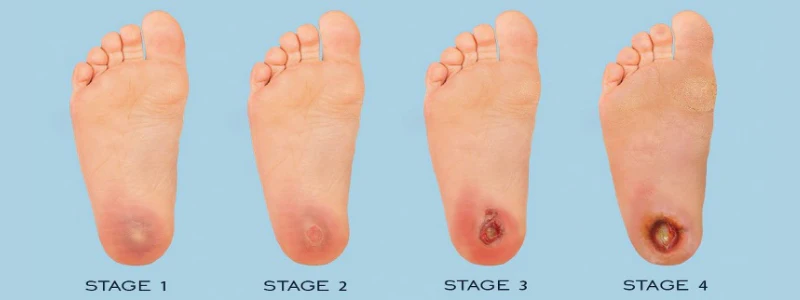
Stage 1: Redness and Irritation
This is the warning stage; there isn’t an open wound yet, only warmth or discoloration.
Stage 2: Shallow Open Wound
A shallow ulcer becomes visible as the skin begins to deteriorate.
Stage 3: Deep Tissue Involvement
At this point, the risk of infection rises as deeper layers of skin and tissue are impacted.
Stage4: Severe Infection
The ulcer is advanced and may necessitate surgery or hospitalization if it spreads to the muscles or bones.
Diagnosis of Early-Stage Diabetic Foot Ulcers
Doctors use a combination of tools to assess foot ulcers:
- Visual inspection to check drainage, color, and depth.
- imaging procedures such as MRIs or X-rays if a more serious infection is thought to be present.
- blood tests to look for infection symptoms and sugar control.
Life and limbs are saved by early diagnosis.
Risk Factors for Developing Ulcers
Some diabetics are more likely to develop ulcers than others. Important risk factors consist of:
- Uncontrolled blood sugar levels
- Diseases of the peripheral arteries
- Putting on shoes that don’t fit
- Smoking and obesity
- Not checking the feet every day
How Doctors Approach Early Stage Diabetic Foot Ulcers
A comprehensive assessment is always the first step. This entails cleaning the wound, assessing the risk of infection, and debridement—the removal of dead tissue.
Wound Care and Cleaning
Sterile dressings must be used to keep the wound dry, clean, and protected.
Antibiotic Therapy
Oral or topical antibiotics are prescribed if an infection is suspected.
Blood Sugar Management
Strict glucose management encourages healing and stops the development of new ulcers.
Preventive Strategies
The best treatment for diabetic foot ulcers is actually prevention. I give my patients the following advice:
- Every day, check your feet for cuts or changes in color.
- Don’t put lotion between your toes, but keep your feet clean and hydrated.
- Put on comfortable, breathable socks and shoes that fit properly.
- Take care when trimming your nails or consult a podiatrist.
Patient Education and Self-Care
Education is as important as medicine. I always instruct my clients to:
- Use a mirror to check your feet every day.
- Even when you are at home, avoid going barefoot.
- Any wound that lasts longer than two days should be treated by a doctor.
Your first defense is awareness.
Treatment Options for Early Stage Ulcers
1.Topical Medications
To keep wounds moist and promote healing, apply hydrogel dressings or antiseptic creams.
2. Offloading
To lessen pressure on the wound site, doctors advise wearing special shoes or casts.
3. Blood Flow Improvement
In order to promote quicker healing, doctors advise specific exercise, quitting smoking, and taking drugs that improve circulation. or casts to lessen the strain on the injured area.
Nursing and Multidisciplinary Care
A team approach involving physicians, nurses, podiatrists, and occasionally dietitians is frequently necessary for the effective management of diabetic foot. Each is essential to maintaining appropriate wound care, glucose regulation, and instruction.
Long-Term Management and Follow-Up
When a wound heals, the work is not finished. Continued education, appropriate footwear, and routine follow-up visits are essential. Every three to six months, patients should have their feet examined.
Preventing Recurrence
To prevent another ulcer:
- Ensure that your blood sugar levels remain steady.
- Put on orthopaedic shoes or customized insoles.
- To increase circulation, continue your physical activity.
Consistency, not perfection, is what prevention demands.
Conclusion
Diabetic foot ulcers in their early stages may appear innocuous, but if left untreated, they can rapidly worsen. As a physician, I can’t stress enough the value of daily foot care, medical supervision, and early detection. Most ulcers heal fully with the correct treatment, enabling you to continue living an active and pain-free life.
FAQS
1. Why do diabetic foot ulcers develop?
They are brought on by inadequate blood flow and nerve damage in the feet as a result of elevated blood sugar.
2. How can I determine the severity of my foot ulcer?
See a doctor right away if you observe pus, redness, swelling, or an unpleasant odor—these are symptoms of an infection.
3. Can ulcers in their early stages go away on their own?
The majority of early ulcers heal without surgery if proper care, hygiene, and medical advice are followed.
4. What kind of footwear is best for avoiding ulcers?
Select closed-toe shoes with cushioned soles that are soft and breathable. Steer clear of shoes that are too tight or pointed.
5.How frequently should people with diabetes examine their feet?
Every single day — major complications can be avoided with early detection.