

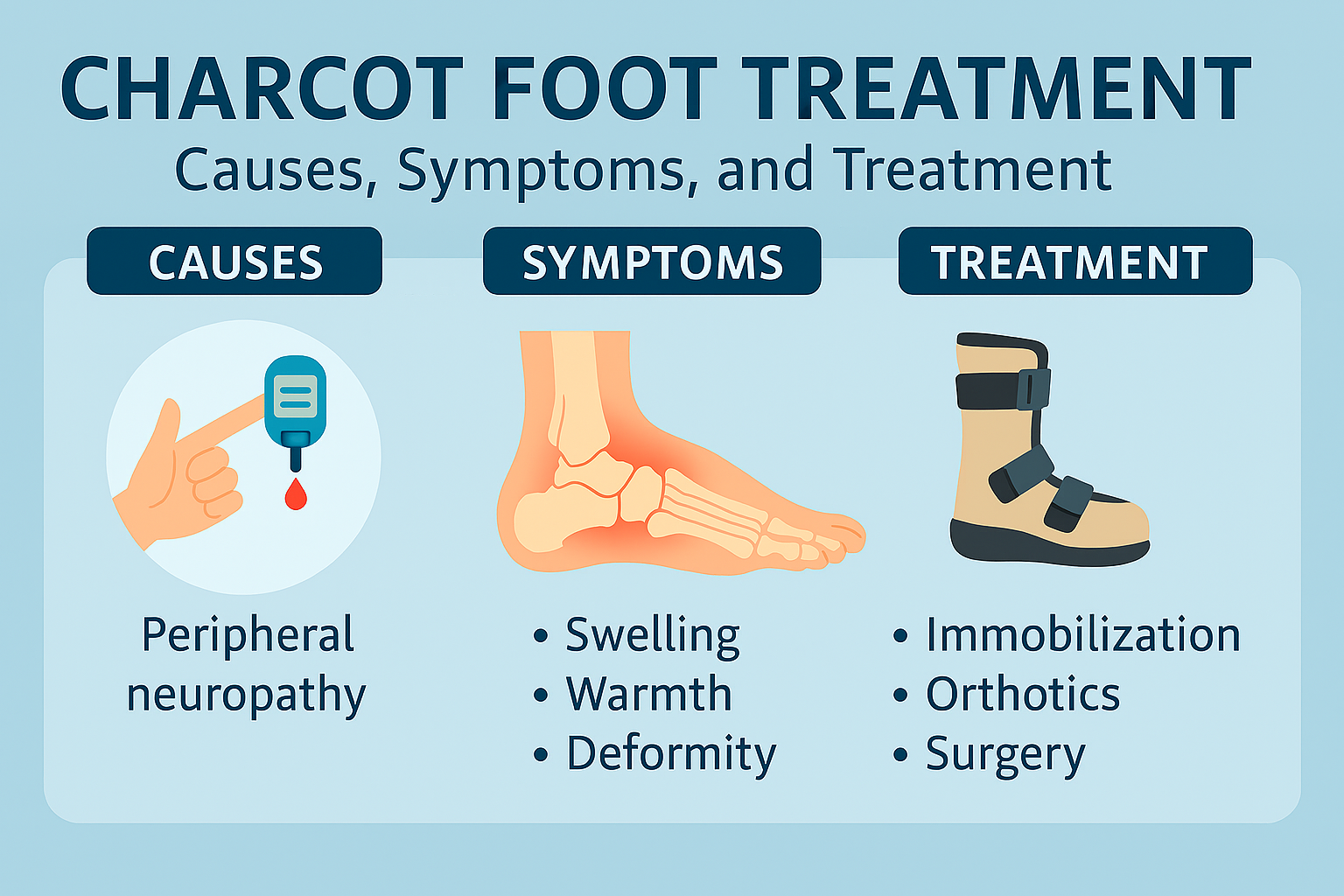
Imagine waking up one morning with your foot red, swollen, and warm to the touch but unable to remember that anything had happened to it. For a person with diabetes, this may signal Charcot foot, a painful yet often unnoticed complication. Charcot foot is a disorder of bones, joints, and soft tissue of the ankle and foot, resulting in fracture, dislocation, and deformity. Early diagnosis and adequate management are essential to avoid permanent disability. Surat Diabetic Foot and Ulcer Clinic has expertise in sophisticated with comprehensive treatment plans individualised for each patient. foot care for diabetics
Understanding Charcot Foot
Charcot foot, or neuropathic arthropathy, mostly happens in people with peripheral neuropathy, a disorder where the nerves lose their capacity to conduct sensations properly. The loss of sensation is such that even small injuries or stresses on the foot may go undetected, causing ongoing damage. With time, this can lead to the weakening of bones and joints, which can become prone to fractures and dislocations. The true etiology of Charcot foot is not clearly known, but it is closely related to diseases such as diabetes, which causes nerve damage. Repetitive trauma to the foot and impaired blood circulation may also be contributory factors. Early detection of the signs and immediate medical care are crucial to avoid the progression of this disabling condition.
Definition
Charcot Foot, also known as Charcot arthropathy, is a progressive condition characterized by the weakening of the bones in the foot due to nerve damage. This damage can lead to a loss of sensation, making individuals unaware of injuries or stress on the foot. As a result, the foot may undergo structural changes, including swelling, redness, and deformity, which can severely impact mobility and overall health.
Infectious/Environmental Causes
While Charcot Foot is primarily associated with neuropathy, certain infectious agents or environmental factors can exacerbate the condition. For instance, infections in the foot can lead to inflammation and further damage to the bones and joints. Environmental factors, such as exposure to extreme temperatures or inappropriate footwear, can also contribute to the development of Charcot Foot.
Genetic/Autoimmune Causes
There is evidence to suggest that genetic predisposition may play a role in the development of Charcot Foot. Some individuals may have a hereditary tendency toward conditions that affect bone density and joint health. Additionally, autoimmune disorders, which cause the body to attack its own tissues, can lead to joint inflammation and increase the risk of Charcot Foot.
Lifestyle and Dietary Factors
Lifestyle choices and dietary habits can significantly influence the risk of developing Charcot Foot. Poor nutrition, particularly a diet lacking in essential vitamins and minerals, can weaken bones and joints. Sedentary lifestyles can also contribute to obesity, which places additional stress on the feet. Furthermore, smoking and excessive alcohol consumption can impair circulation and nerve function, increasing the risk of neuropathy and, consequently, Charcot Foot.
Key Risk Factors
Several key risk factors are associated with Charcot Foot:
- Age: The condition is more common in older adults, particularly those over 50.
- Gender: Men are more likely to develop Charcot Foot than women.
- Geographic Location: Certain regions may have higher incidences of diabetes and related complications, influencing the prevalence of Charcot Foot.
Symptoms and Early Warning Signs
Early detection of Charcot foot can significantly improve treatment outcomes. Common symptoms include:
- Swelling: The foot may appear swollen without any apparent injury.
- Redness: The affected area can become red and warm to the touch.
- Pain or soreness: Despite nerve damage, some individuals might still experience discomfort or pain.
- Instability: The foot may feel unstable or weak, making walking difficult.
Warning Signs
Certain symptoms warrant immediate medical attention, including:
- Severe pain or discomfort in the foot.
- Sudden changes in foot shape or structure.
- Signs of infection, such as fever, increased redness, or discharge.
- Inability to bear weight on the affected foot.
Clinical Evaluation
The diagnosis of Charcot Foot begins with a thorough clinical evaluation. Healthcare providers will take a detailed patient history, focusing on any underlying conditions, previous foot injuries, and symptoms. A physical examination will assess the foot’s appearance, temperature, and range of motion.
Diagnostic Tests
Several diagnostic tests may be employed to confirm the diagnosis:
- Imaging Studies: X-rays are commonly used to visualize bone changes, while MRI or CT scans can provide more detailed images of soft tissues and joints.
- Laboratory Tests: Blood tests may be conducted to rule out infections or other underlying conditions.
- Specialized Procedures: In some cases, a bone scan may be performed to assess bone activity and inflammation.
Differential Diagnosis
It is essential to differentiate Charcot Foot from other conditions that may present with similar symptoms, such as:
- Osteomyelitis (bone infection)
- Gout
- Fractures
- Peripheral vascular disease
Medical Treatments
The management of Charcot Foot typically involves a combination of medical treatments:
- Medications: Nonsteroidal anti-inflammatory drugs (NSAIDs) may be prescribed to manage pain and inflammation. In some cases, corticosteroids may be used to reduce inflammation.
- Surgical Options: In severe cases, surgical intervention may be necessary to correct deformities or stabilize the foot. Procedures may include fusion of joints or reconstruction of the foot’s structure.
Non-Pharmacological Treatments
In addition to medical treatments, non-pharmacological approaches can be beneficial:
- Lifestyle Modifications: Weight management and regular exercise can help reduce stress on the feet.
- Dietary Changes: A balanced diet rich in calcium and vitamin D can support bone health.
- Alternative Therapies: Physical therapy, orthotic devices, and custom footwear can improve mobility and reduce discomfort.
Special Considerations
Different populations may require tailored approaches to treatment:
- Pediatric Patients: Children with Charcot Foot may need specialized care to accommodate their growing bones.
- Geriatric Patients: Older adults may require more conservative management due to comorbidities and the risk of complications.
Diagnosis of Charcot Foot

Diagnosis of Charcot foot is done through a complete clinical evaluation and imaging tests. The foot will be examined by healthcare professionals for swelling, redness, and heat. Imaging methods like X-rays, MRIs, or bone scans can be used to identify bone fractures, dislocations, or other structural alterations. Early Charcot foot may not have any notable changes on X-rays, so advanced imaging methods are essential for proper diagnosis. At Surat Diabetic Foot and Ulcer Clinic, we use the latest diagnostic equipment to provide timely and accurate detection of Charcot foot, allowing us to start proper treatment immediately.
Charcot Foot Treatment Options
Treatment aims to stabilise the foot, prevent further damage, and promote healing. The approach can be categorised into non-surgical and surgical treatments.
Non-Surgical Treatments
- Immobilisation: Using a total contact cast or removable boot to offload weight from the foot, allowing bones to heal properly.
- Custom Orthotics: Specialised Charcot foot shoes or inserts designed to redistribute pressure and provide support.
- Activity Modification: Limiting weight-bearing activities to prevent additional stress on the foot.
Surgical Treatments
- Debridement: Removal of damaged tissue or bone to promote healing.
- Reconstruction: Realigning bones and joints to restore foot stability and function.
- Fusion: Fusing bones together to eliminate movement in damaged joints, providing stability.
Recovery and Rehabilitation
Recovery from Charcot foot requires a comprehensive rehabilitation plan:
- Physical Therapy: Exercises to strengthen the foot and improve mobility.
- Monitoring: Regular follow-ups to assess healing progress and adjust treatment as necessary.
- Footwear Modifications: Transitioning tothat provide adequate support and protection.charcot foot shoes
Complications
If left untreated or poorly managed, Charcot Foot can lead to several complications:
Short-Term Complications
- Infection: Open wounds or ulcers can become infected, leading to serious health issues.
- Increased Pain: As the condition progresses, pain may become more pronounced.
Long-Term Complications
- Chronic Deformity: Permanent changes in foot structure can lead to ongoing mobility issues.
- Amputation: In severe cases, particularly with infections or non-healing ulcers, amputation may be necessary.
Prevention
Preventing Charcot Foot involves a proactive approach to managing risk factors:
- Regular Check-Ups: Individuals with diabetes or neuropathy should have regular foot examinations.
- Foot Care: Proper hygiene, nail care, and appropriate footwear can help prevent injuries.
- Diet and Exercise: Maintaining a healthy diet and engaging in regular physical activity can support overall health and reduce the risk of complications
Prognosis & Long-Term Outlook
The prognosis for individuals with Charcot Foot varies based on several factors:
- Early Diagnosis: Prompt recognition and treatment can significantly improve outcomes.
- Adherence to Treatment: Following medical advice and making lifestyle changes can enhance recovery prospects.
- Underlying Conditions: The presence of other health issues can complicate management and affect long-term outcomes.
Conclusion
Charcot foot disease is a serious and progressive complication of diabetes that requires early detection, accurate diagnosis, and comprehensive treatment. While it can lead to severe deformities and mobility issues if untreated, timely intervention at hospitals like Sparsh can prevent complications and preserve quality of life.
FAQs
1. What is Charcot Foot?
Charcot Foot is a condition characterized by the weakening of bones in the foot due to nerve damage, often associated with diabetes. It can lead to deformity and disability if not treated promptly.
2. What are the symptoms of Charcot Foot?
Common symptoms include swelling, redness, warmth, deformity, and instability of the foot. Some individuals may experience pain, while others may not due to nerve damage.
3. How is Charcot Foot diagnosed?
Diagnosis involves a clinical evaluation, imaging studies (like X-rays or MRIs), and laboratory tests to rule out other conditions.
4. What are the treatment options for Charcot Foot?
Treatment may include medications, surgical options, lifestyle modifications, and physical therapy. Custom footwear and orthotics can also help.
5. Can Charcot Foot be prevented?
Preventive measures include regular foot examinations, proper foot care, maintaining a healthy diet, and managing underlying conditions like diabetes.
6. What complications can arise from Charcot Foot?
Potential complications include infections, chronic deformity, and in severe cases, amputation.
7. Is Charcot Foot more common in certain populations?
Yes, it is more prevalent in older adults, particularly those with diabetes or neuropathy. Men are also at a higher risk than women.