
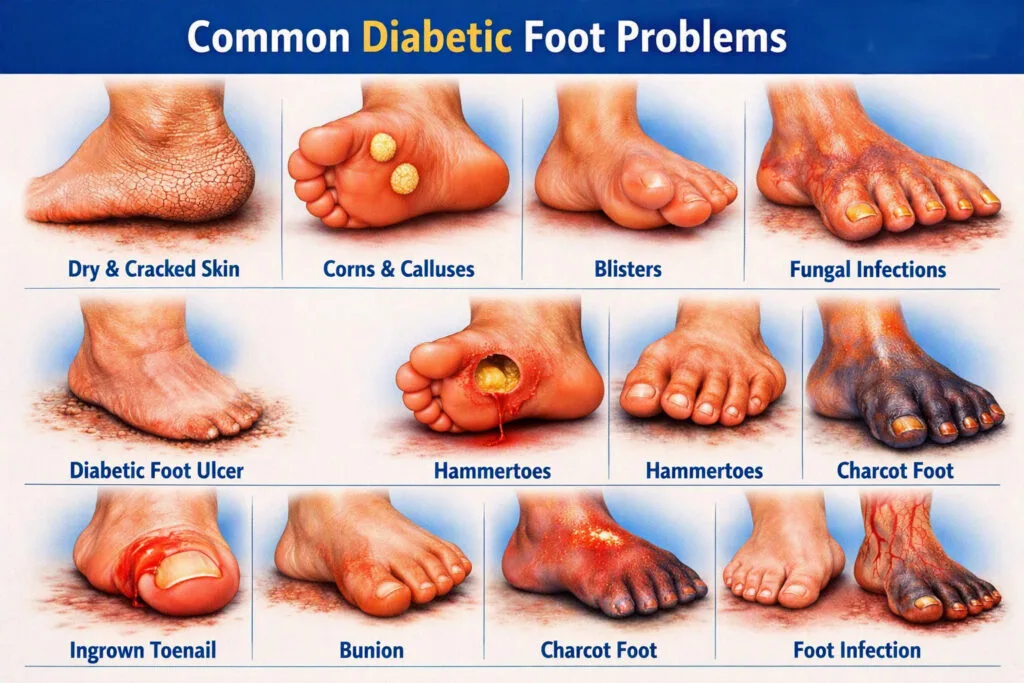
The most common diabetic foot problems are dry and cracked skin, calluses and corns, blisters, fungal infections, ingrown toenails, foot ulcers, bone and shape changes such as Charcot foot, and serious infections that can lead to gangrene. Most start quietly because diabetes dulls sensation and slows healing. This guide shows what each problem typically looks like, which warning signs matter most, and when a small change on your foot needs a specialist’s attention.
Why Diabetes Changes the Way Your Feet Look and Feel
Your feet carry your entire body weight for thousands of steps a day. In a person with diabetes, two things quietly work against them.
Nerve damage (neuropathy)
Long-standing high blood sugar damages the nerves that carry sensation. You may stop feeling pain, heat, cold, or pressure. A stone in your shoe, a tight strap, or a small cut can go unnoticed for days.
Poor blood flow (peripheral vascular disease)
Diabetes also narrows the small and large blood vessels of the leg. Less blood reaching the foot means less oxygen and fewer healing cells, so even a minor wound heals slowly.
Why the combination is dangerous
A foot that cannot feel damage and cannot heal quickly is a foot at risk. That is why doctors treat diabetic foot care as prevention first. The idea behind reconstructive diabetic foot care is to prevent, treat, and manage these problems early enough to avoid ulcers, infections, and amputation.
Quick Visual Reference: What to Look For
Use this table as a fast scan. Colors follow a simple traffic-light idea: green means monitor at home, amber means book a visit soon, red means seek care the same day.
| Problem | What you see | What you may feel | Urgency |
|---|---|---|---|
| Dry, cracked skin | Flaky, rough skin, fissures on heels | Tightness, or nothing at all | 🟢 Monitor and moisturize |
| Corns and calluses | Thick, hard, yellowish patches | Pressure, or numbness | 🟡 Book a visit |
| Blisters | Fluid-filled bubbles from shoe rubbing | Often painless | 🟡 Same or next day |
| Fungal infection | Peeling between toes, thick discolored nails | Itching, odor | 🟡 Book a visit |
| Ingrown toenail | Red, swollen nail edge | Tenderness, or none | 🟡 Book a visit |
| Foot ulcer | Open sore, often on the ball or heel | Frequently painless | 🔴 Urgent |
| Charcot foot | Warm, swollen, red foot; flattened arch | Dull ache, or none | 🔴 Urgent |
| Infection / gangrene | Spreading redness, pus, black tissue, odor | Fever, throbbing, or none | 🔴 Emergency |
The Common Diabetic Foot Problems, Explained
1. Dry and Cracked Skin
What it looks like: Rough, scaly skin, especially on the heels, with lines or splits that may reach the deeper layers.
Why it happens: Nerve damage affects the nerves that control sweating, so the skin loses moisture. Dry skin cracks, and cracks become doorways for bacteria.
What helps: Wash feet daily in lukewarm water, dry thoroughly (especially between toes), and apply a moisturizer to the tops and soles, but not between the toes. If a crack bleeds or looks red, get it checked.
2. Corns and Calluses
What it looks like: Thick, hard, yellowish or grayish skin over pressure points such as the ball of the foot, the heel, or the tops of toes.
Why it matters: A callus is your foot’s response to repeated pressure. In diabetes, the pressure often goes unfelt, and the callus keeps thickening. Underneath, the skin can break down and bleed, forming a hidden ulcer. A callus with dark or reddish discoloration inside it is a warning sign.
What to do: Do not cut or shave calluses at home, and avoid medicated corn plasters or acid-based removers. Have a clinician trim them safely and identify the pressure pattern that caused them.
3. Blisters
What it looks like: A fluid-filled bubble, often from new shoes, thick seams, or socks that bunch up.
Why it matters: A person without sensation may walk on a blister for a whole day. Once it bursts, it becomes an open wound.
What to do: Do not pop it. Cover it with a clean, dry dressing, remove the pressure source, and have it looked at promptly, since blisters heal slowly and can become infected.
4. Fungal Infections (Athlete’s Foot and Nail Fungus)
What it looks like: Peeling, white or red skin between the toes, itching, and a musty smell. Toenails may turn yellow, brown, thick, or crumbly.
Why it matters: Warm, damp spaces between toes are ideal for fungus, and the skin cracks that follow let bacteria in. Thickened nails can also press on the toe below and cause sores.
What to do: Keep feet dry, change socks daily, and seek treatment early. Fungal problems that keep coming back deserve a proper evaluation.
5. Ingrown Toenails
What it looks like: The side of the nail digs into the skin, causing redness, swelling, and sometimes pus.
Why it matters: In diabetes, an ingrown nail can quickly turn into an infected wound. Cutting the nail yourself, or “digging it out,” often makes things worse.
What to do: Trim nails straight across, not curved, and do not cut into the corners. If the edge is already red or swollen, see a doctor rather than treating it at home.
6. Bunions, Hammertoes, and Other Shape Changes
What it looks like: A bony bump at the base of the big toe, or toes that curl downward like claws.
Why it matters: Nerve and muscle changes can shift how the toes and joints sit. These bumps rub against shoes and create pressure points where calluses and ulcers form.
What to do: Extra-depth footwear, custom insoles, and in some cases corrective procedures can reduce pressure.
7. Diabetic Foot Ulcers
What it looks like: An open sore, often round, on the sole, the ball of the foot, the heel, or the tip of a toe. It may look red, pink, or have yellow tissue in the base, and it can drain fluid.
Why it matters: Ulcers are the central problem in diabetic foot disease. They typically begin as a callus, blister, or small cut, and many are painless. They are also the most important step on the road to amputation, which is why any wound on a diabetic foot needs professional attention.
Warning signs it is getting worse: Increasing size or depth, redness around the edges, warmth, swelling, a bad smell, or drainage. Stages progress from a superficial wound to deeper involvement of fat, tendon, and bone.
What to do: Do not wait. A wound that has been there for weeks and “doesn’t bother you” still needs to be examined. Treatment goes beyond simple dressings and includes finding the cause, cleaning away dead tissue (debridement), taking pressure off the area (offloading), and advanced wound care techniques.
8. Charcot Foot
What it looks like: A foot that becomes red, warm, and swollen, often looking like an infection but with no obvious wound. As it progresses, the arch may collapse, leaving a rounded “rocker-bottom” shape.
Why it matters: Numb feet can suffer tiny fractures without the person realizing. Continued walking damages the bones and joints, causing deformity. It is less common than calluses or fungus, but it is serious.
What to do: A warm, swollen foot in a person with neuropathy should be evaluated urgently. Early treatment with immobilization and pressure relief can protect the foot’s shape.
9. Foot Infections, Abscess, and Gangrene
What it looks like: Spreading redness, swelling, pus, a foul smell, blackened or dead-looking tissue, or skin that turns pale, cold, or bluish.
Why it matters: Infection can spread quickly through the soft tissue and into the bone. When blood flow is very poor, tissue can die (gangrene), which may threaten the limb.
What to do: Treat this as an emergency. Fever, chills, rapid swelling, black skin, or a foul-smelling wound mean you should go to a hospital the same day.
10. Poor Circulation (Peripheral Artery Disease)
What it looks like: Cool, shiny, hairless skin, pale or bluish color, weak or absent foot pulses, and wounds that will not heal.
Why it matters: Poor circulation is both a problem by itself and a barrier to healing every other problem on this list.
What to do: Cramping in the calves when walking that eases with rest, or cold feet that change color, should be assessed with a vascular examination.
Early Warning Signs You Should Never Ignore
Many diabetic foot problems announce themselves subtly. Watch for:
- New numbness, tingling, or burning
- Shoes or slippers slipping off without you noticing
- Changes in skin color, temperature, or shape
- Hard skin that is getting thicker
- Swelling that doesn’t go down overnight
- Any wound, however small, that is not clearly improving within a few days
- Unusual odor from a foot or shoe
RDFC’s own guidance is clear: a wound that is non-bothersome is not a wound that is harmless. Early evaluation is the best way to prevent infection, repeated surgeries, prolonged hospital stays, and amputation.
5-Minute Daily Foot Check
The simplest habit in diabetic foot care is looking at your feet every day.
- Look at the tops, soles, heels, and between the toes. Use a mirror or ask a family member if you cannot see the soles.
- Feel for warm spots, swelling, or hard patches.
- Check your shoes before wearing them: run a hand inside for stones, rough seams, or nail tips.
- Wash and dry thoroughly, especially between the toes.
- Moisturize the tops and soles, not between the toes.
- Never walk barefoot, even at home.
- Wear well-fitting, protective footwear and clean, seamless socks.
Footwear and Socks: Your First Line of Defense
Most diabetic foot wounds are caused by something external, and shoes are the most common culprit. A well-chosen pair of shoes is not a luxury for a person with neuropathy; it is protective equipment.
What to look for in diabetic-friendly footwear
- Enough room: A wide toe box so toes are not squeezed or overlapping.
- Depth: Extra depth to accommodate hammertoes, bunions, and insoles.
- Soft, seamless interior: No rough stitching or hard edges that can rub.
- Cushioned, firm-but-flexible sole: Absorbs shock while protecting from sharp objects.
- Adjustable closure: Laces or Velcro allow adjustment when your feet swell during the day.
- Breathable material: Leather, mesh, or soft fabric rather than plastic.
Fitting tips that make a real difference
- Shop for shoes in the afternoon or evening, when feet are at their largest.
- Have both feet measured, since sizes often differ.
- Wear the socks you will actually use when trying shoes on.
- Break new shoes in slowly, for an hour or two at first, and check your feet afterward.
- Never buy shoes expecting them to “stretch.”
Socks matter too
Choose clean, seamless, moisture-wicking socks. Avoid tight elastic bands that restrict circulation, and change socks daily, or more often if your feet sweat. Light-colored socks help you spot drainage or blood from a wound you cannot feel.
Footwear to avoid
- Walking barefoot, even indoors or on the terrace
- Pointed-toe shoes and high heels
- Flip-flops or thong-style sandals, where a strap sits between the toes
- Shoes with worn-out soles or damaged insides
- Ill-fitting hand-me-down slippers
Caring for Your Feet in Climate
Living on the coast brings its own foot-care challenges. Humid weather, heavy monsoon rain, and long commutes all affect diabetic feet.
- Humidity and sweat create the damp conditions fungus loves. Dry between your toes carefully after every wash, and rotate your footwear so shoes can air out.
- Monsoon puddles and wet roads soak shoes and hide sharp objects. Avoid wading through water, and never walk barefoot on flooded streets, where cuts and contaminated water are a dangerous mix.
- Hot pavement and sand can burn soles that cannot feel heat. This is especially relevant at the beach, temples with hot floors, and during summer. Always wear protective footwear, and test surfaces carefully.
- Temple visits and religious customs that involve removing footwear are a real risk. Discuss safe options with your doctor, such as clean, thin-soled protective socks where permitted, and inspect your feet right after.
- Long travel and standing can cause swelling. Take breaks, move your ankles, and check your feet at the end of the day.
Diabetic Foot Myths vs. Facts
| Myth | Fact |
|---|---|
| “If it doesn’t hurt, it’s not serious.” | Neuropathy can hide pain. Painless wounds can still be deep and infected. |
| “I’ll wait for the sore to heal on its own.” | Diabetic wounds often heal slowly or not at all without proper care, and delay raises the risk of infection. |
| “Soaking feet for a long time keeps them healthy.” | Long soaks can macerate skin and burn numb feet. Short, lukewarm washes are better. |
| “Cutting off a corn myself is fine if I’m careful.” | Numb skin means you may cut too deep without noticing. Leave it to a clinician. |
| “Only people with very high sugar have foot problems.” | Risk depends on duration of diabetes, nerve and circulation status, and past history, not just current readings. |
| “Amputation is always inevitable once I get an ulcer.” | Most ulcers can heal with timely, appropriate care, and amputation is often preventable. |
| “Heating pads and hot water bottles help cold feet.” | They can cause burns you will not feel. Use warm socks instead. |
How Blood Sugar Control Protects Your Feet
Foot care and glucose control work as a pair. Good control slows the nerve and blood vessel damage that sets the stage for everything in this guide.
What better control does for your feet
- Helps slow the progression of neuropathy
- Supports circulation and the body’s healing response
- Lowers infection risk, since high glucose weakens immune defenses
- Improves outcomes after any foot procedure
Habits that support both
- Take medications as prescribed, and keep follow-up appointments with your physician or endocrinologist.
- Track your readings and share trends with your care team.
- Eat balanced meals with consistent portions of carbohydrates.
- Stay physically active in a way that is safe for your feet. Your doctor can advise on suitable activities if you already have neuropathy or a wound.
- Quit smoking, since it damages blood vessels and greatly reduces healing.
- Manage blood pressure and cholesterol, which also affect circulation.
How Doctors Assess and Treat Diabetic Foot Problems
The foot examination
A thorough exam looks at structure, sensation, and blood supply. Pressure patterns caused by joint or bone changes, and muscle changes from diabetes, are assessed as well. These tests help prevent wounds and foot pain and guide the treatment plan, including offloading approaches when needed.
Wound care beyond dressings
Each wound needs care that matches its cause. Options can include specialized ointments and dressings, topical oxygen therapy, and negative pressure therapy, along with removal of dead tissue when required. To learn more, read our guides on diabetic foot ulcer stages and debridement of the foot.
Reconstructive and surgical options
When deformity, chronic ulcers, or exposed structures are involved, surgical care may include pressure-relieving procedures and reconstruction to close wounds and restore a foot that can bear weight safely. In cases of infection that need drainage, surgery can be an important step in controlling the infection. Blood sugar control and coordination with your physician or endocrinologist help decide the right timing.
Understanding the “why”
For a deeper look at how ulcers form, see our explanation of the pathophysiology of diabetic foot ulcers.
What to Expect at Your First Foot Examination
Many people delay a visit because they are unsure what will happen. A diabetic foot examination is typically simple, painless, and thorough.
- History: Your doctor asks about how long you have had diabetes, your sugar control, symptoms such as numbness or burning, past wounds, and current footwear.
- Visual inspection: Both feet are checked for skin changes, calluses, nail problems, deformities, and any wounds.
- Sensation testing: Simple tests, such as light touch with a fine filament, check whether you can feel pressure.
- Circulation check: Foot pulses and skin temperature are assessed, and further vascular tests may be suggested if needed.
- Pressure and structure assessment: The way you stand and walk, and areas of high pressure, are evaluated.
- Plan: You receive clear guidance on footwear, home care, treatment of any problem found, and how often to return.
Helpful things to bring
- Your current medications and recent blood sugar or HbA1c reports
- The shoes and slippers you wear most often
- A list of questions or changes you have noticed
- A family member, if you find it hard to remember instructions
Questions worth asking your doctor
- What is my personal risk level for foot problems?
- How often should I have my feet examined?
- Is my current footwear suitable, or do I need special shoes or insoles?
- What should I do at home if I notice a new mark, blister, or swelling?
- Which signs mean I should come in the same day?
Who Is at the Highest Risk?
You should be especially vigilant if you have:
- Diabetes for many years, or persistently high blood sugar
- Known neuropathy or reduced foot sensation
- Poor circulation or a history of leg or foot artery disease
- A previous foot ulcer or amputation
- Foot deformities such as bunions, hammertoes, or a collapsed arch
- Kidney disease, vision problems, or smoking habits
Even if you have no symptoms, yearly foot check-ups are recommended. If you have any of the risk factors above, more frequent checks may be advised by your doctor.
Treatment Options in More Detail
Treatment depends on what is wrong, how deep it goes, and the state of your circulation and sugar control. Here is how the main approaches fit together.
Offloading (taking pressure off)
Pressure is the engine of most diabetic ulcers. Offloading redirects weight away from the wound using special footwear, casts, or protective devices. Without it, even the best dressing cannot work, because the wound keeps being re-injured with every step.
Wound cleaning and debridement
Dead or infected tissue slows healing and feeds bacteria. Careful removal of that tissue creates a healthier wound bed, and regular debridement is associated with a lower risk of complications.
Advanced dressings and therapies
Modern wound care goes far beyond a simple bandage. Depending on the wound, options may include:
- Specialized dressings and ointments chosen to keep the wound moist but not soaked
- Negative pressure therapy, which uses gentle suction to draw fluid away and encourage healthy tissue growth
- Topical oxygen therapy, which delivers oxygen directly to the wound surface
Treating infection
Diabetic foot infections often need antibiotics, guided by the severity and, in many cases, by culture results. Deeper infections may need imaging such as X-ray or MRI to check the bone, and drainage or surgical cleaning to control the spread.
Improving blood flow
If circulation is poor, your doctor may recommend vascular assessment and, when needed, a procedure to restore flow. Without adequate blood supply, wounds can stall no matter how well they are dressed.
Reconstructive surgery
When wounds are large or chronic, when deformity keeps creating pressure points, or when structures are exposed, reconstruction can help. The aim is to close the defect, reshape the foot so it bears weight safely, and reduce the chance of the problem coming back.
Team-based care
The best outcomes come from coordination: surgeon, physician or endocrinologist, wound-care nurses, vascular specialists, and the patient and family working together.
FAQs
1. What are the most common foot problems in people with diabetes?
The most common are dry and cracked skin, corns and calluses, blisters, fungal infections, and ingrown toenails. Less frequent but more serious problems include foot ulcers, Charcot foot, infections, and gangrene. Early detection of the minor problems prevents many of the major ones.
2. How do I know if a foot sore is serious?
Any open sore on a diabetic foot deserves professional review. It is more concerning if it is getting larger or deeper, has redness or warmth around it, drains fluid, smells bad, or is accompanied by fever. Sores can be painless, so lack of pain does not mean it is safe.
3. Can diabetes affect my feet even if I have no symptoms?
Yes. Nerve damage and reduced blood flow can develop silently, causing loss of sensation and delayed healing. That is why regular foot screening matters even when your feet feel fine.
4. Can I treat corns, calluses, or ingrown toenails at home?
It is safest not to. Cutting, shaving, or using chemical removers can injure skin you cannot feel. Let a clinician handle them and show you how to reduce the pressure that caused them.
5. When should I see a diabetic foot specialist?
See one at least once a year, and sooner if you notice pain, reduced sensation, tingling, a change in foot or toe shape, hard skin, swelling, or any wound. Seek same-day care for spreading redness, pus, black skin, or fever.
6. What is the difference between a diabetic foot ulcer and a regular wound?
A regular cut usually heals within a couple of weeks. A diabetic foot ulcer sits on a foot with reduced sensation and often reduced circulation, so it heals slowly, is easily infected, and may go unnoticed. That is why the same-size wound demands more urgency in a person with diabetes.
7. Are swollen feet always a sign of a serious diabetic foot problem?
Not always. Swelling can result from circulation, kidney, heart, or medication issues, as well as from infection. But sudden swelling, especially in one foot, or swelling with warmth and redness should be examined promptly, because it can signal infection or Charcot foot.
8. Can diabetic nerve damage be reversed?
Existing nerve damage generally cannot be fully repaired, but it can often be stopped from getting worse with good blood sugar control, appropriate treatment, and careful foot protection. This is why early screening is so valuable.
9. Is it safe to walk or exercise if I have diabetic foot problems?
Regular activity is usually beneficial, but the type and amount depend on your foot’s condition. If you have an open wound or deformity, ask your doctor which activities are safe, and always wear protective footwear.
10. How often should I check my feet at home?
Every day. A quick daily look takes only a few minutes and is the easiest way to catch small problems before they become serious.