
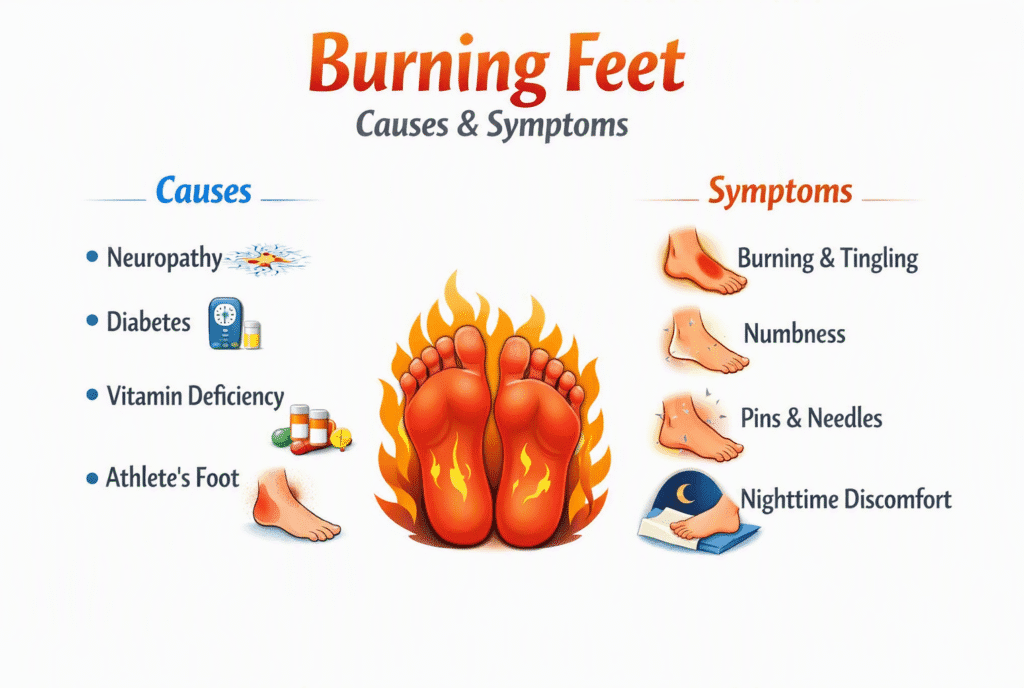
If your feet burn, tingle, or feel like they’re on fire once you lie down at night, the most common cause is nerve damage from diabetes, called diabetic peripheral neuropathy. Poor blood circulation, vitamin deficiencies, and certain medications can also trigger it. The burning usually worsens at night because nerves are more sensitive when the body is at rest and blood sugar swings go unnoticed. The good news: many cases improve significantly with the right combination of at-home care, blood sugar control, and, when needed, medical treatment from a diabetic foot specialist.
Below, we break down exactly why this happens, what you can do tonight for relief, and when it’s time to see a doctor.
What Causes Burning Feet at Night?
Burning feet at night rarely comes from a single source. Understanding the root cause is the first step to treating it correctly instead of just masking the discomfort.
Diabetic Peripheral Neuropathy
For people living with diabetes, prolonged high blood sugar damages the small nerve fibers in the feet over time. This nerve damage, known as diabetic peripheral neuropathy, is the leading cause of nighttime burning, tingling, and “pins and needles” sensations in the feet. It typically starts in the toes and spreads upward, and symptoms are often worse at night because there are fewer distractions and the nerves become more active during rest. If you’ve also noticed numbness, reduced sensation, or difficulty feeling hot and cold, it’s worth reading our detailed guide on dangerous-causes-warning-signs whether foot numbness is dangerous and what its warning signs mean.
Poor Blood Circulation
Diabetes can also affect the small blood vessels supplying the feet, reducing circulation. When your feet don’t get enough oxygen-rich blood, nerve tissue is starved and becomes more prone to irritation, which shows up as burning, heaviness, or cramping, especially when you’re lying flat and circulation naturally slows down.
Other Non-Diabetic Causes
Not everyone with burning feet has diabetes. Other common triggers include:
- Vitamin deficiencies, particularly B1, B6, B12, and folate, which are essential for nerve health
- Alcohol use, which can damage peripheral nerves over time
- Kidney disease, which allows toxins to build up and irritate nerves
- Thyroid disorders, which can slow nerve function
- Certain medications, including some chemotherapy drugs
- Tight or ill-fitting footwear worn during the day, which compresses nerves and blood vessels
If you don’t have diabetes but experience regular nighttime burning, it’s still worth getting checked, since untreated nerve or circulation issues tend to worsen gradually.
For residents of Visakhapatnam, warmer, humid nights can also make burning sensations feel more intense, since heat naturally dilates blood vessels and heightens nerve sensitivity. This is one reason many patients notice their symptoms flare up more during the hotter months of the year.
Immediate Relief Tips for Burning Feet at Night
While the underlying cause needs proper medical attention, these steps can meaningfully reduce discomfort tonight and going forward.
Cooling and Soaking Techniques
A short lukewarm foot soak (never ice-cold, which can further reduce circulation) for 10–15 minutes before bed can calm irritated nerves. Follow it with a gentle pat-dry, making sure to dry carefully between the toes to prevent fungal infections, which are a real risk for anyone with reduced sensation.
Foot Positioning and Bedding Adjustments
Elevating your feet slightly on a pillow can improve circulation overnight. Keeping bedsheets and blankets loose around the feet also helps, since even light pressure from tucked-in sheets can aggravate sensitive nerves. Some people find relief from letting feet stay uncovered or resting them outside the blanket.
Footwear and Daily Habits
Burning feet at night is often the after-effect of what happened to your feet during the day. Wearing supportive, well-cushioned, and properly fitted shoes reduces nerve irritation and pressure points. Avoid standing for long, unbroken stretches, and check your feet daily for redness, blisters, or cuts you may not have felt due to reduced sensation.
A few other habits that consistently help:
- Keep your feet clean and moisturized (avoiding the area between toes) to prevent skin cracking
- Wear breathable cotton socks at night if you prefer some coverage
- Avoid direct heat sources like heating pads or hot water bottles, which can cause burns without you realizing it, especially if sensation is reduced
- Stay well hydrated and limit alcohol, which can worsen nerve symptoms
When Burning Feet Signal a Bigger Problem
Occasional mild burning after a long day is common and usually harmless. But persistent or worsening nighttime burning is often your body’s way of flagging a problem that needs medical attention.
Warning Signs You Shouldn’t Ignore
Speak to a diabetic foot specialist promptly if you notice:
- Burning that disrupts your sleep on a regular basis
- Numbness or tingling alongside the burning sensation
- Wounds, cuts, or blisters that heal slowly or not at all
- Changes in foot color, temperature, or shape
- Loss of balance or increased stumbling, which can indicate advancing nerve damage
Left unmanaged, diabetic neuropathy can progress to the point where you lose protective sensation entirely, meaning you might not notice an injury until it becomes a serious wound or ulcer.
Why Blood Sugar Control Matters
The single biggest factor in slowing or reversing neuropathy progression is consistent blood sugar management. Studies consistently show that people who keep their blood glucose within target range experience fewer and milder nerve symptoms over time. If your burning feet have been getting worse despite home care, it’s often a sign that blood sugar levels need closer monitoring and adjustment, in coordination with your physician.
It also helps to track when the burning tends to flare up. Some patients notice a pattern tied to meals, missed medication doses, or periods of poor sleep, all of which affect blood sugar stability. Keeping a simple daily log of your symptoms alongside your glucose readings can give your doctor valuable information for fine-tuning your treatment plan, rather than adjusting medications based on guesswork.
Long-Term Management and Treatment Options
Managing burning feet effectively usually combines medical treatment with sustainable daily habits.
Medical Treatments for Diabetic Neuropathy
A diabetic foot specialist can offer several options depending on the severity and cause of your symptoms, including:
- Prescription medications specifically for nerve pain
- Topical treatments to reduce localized burning
- Nerve conduction studies to measure the extent of nerve damage
- Vascular assessments to check circulation and blood flow
- Customized offloading footwear or orthotics to reduce pressure on sensitive areas
At Divyam Rdfc -Reconstructive Diabetic Foot Care, Dr. Sumitra Gantayet and her team combine sensory testing, vascular assessment, and personalized treatment plans to identify exactly what’s driving your symptoms rather than treating burning feet as a one-size-fits-all problem. Explore our full range of diabetic foot care services to see how a comprehensive evaluation works.
Lifestyle Changes That Help
Alongside professional treatment, small daily changes add up:
- Regular, moderate exercise (like walking) to support circulation
- A balanced diet rich in B vitamins
- Routine foot checks, ideally daily, especially if sensation is reduced
- Scheduled foot exams with a specialist, even without visible symptoms
- Quitting smoking, which significantly worsens circulation problems
Diabetic Foot Self-Check: A Simple Nightly Routine
Because reduced sensation means you may not feel small injuries as they happen, a short nightly foot check is one of the most protective habits you can build, especially if burning feet has already become a pattern.
Step-by-Step Self-Check
- Look at the top and bottom of both feet in good light, using a mirror for the soles if needed
- Check between every toe for redness, cracking, or moisture that could signal a fungal infection
- Feel for temperature differences between feet, or between different areas of the same foot
- Press gently along the sole and heel to check for any tender spots, swelling, or hard callused areas
- Inspect nails for ingrown edges, discoloration, or thickening
- Note anything unusual in a simple log with the date, so patterns are easy to spot at your next appointment
What to Do If You Find Something
Any cut, blister, or area of redness that doesn’t improve within a day or two should be checked by a specialist, even if it seems minor. For someone with reduced sensation or poor circulation, small wounds can progress quickly without the usual pain response to warn you. Catching issues early is almost always the difference between a simple treatment and a complicated one.
Common Myths About Burning Feet
There’s a lot of conflicting advice online about burning feet, and some of it can actually delay proper treatment. Here’s what’s worth setting straight.
Myth: “It’s just poor circulation, nothing to worry about”
Poor circulation is a genuine contributor, but it’s rarely the whole picture, especially in people with diabetes. Treating burning feet as a purely circulatory issue can mean missing underlying nerve damage that needs its own targeted management.
Myth: “Ice packs will cool the burning down faster”
Ice or very cold water can feel briefly satisfying, but it further constricts blood vessels and can reduce circulation to already-compromised tissue. Lukewarm water is safer and more effective for calming the sensation without added risk.
Myth: “If there’s no pain, there’s no problem”
This is one of the more dangerous misconceptions. Advanced neuropathy often reduces pain sensation even as burning or tingling persists, which means the absence of sharp pain doesn’t rule out significant nerve or tissue damage. Regular specialist checks matter even when day-to-day symptoms feel manageable.
How Divyam Diabetic Foot Care Can Help
If burning feet at night have become a regular part of your routine, it’s time for a proper evaluation rather than continued guesswork. Our Vizag-based clinic specializes in diagnosing and treating diabetic foot complications, from early nerve damage to advanced wound care, with the goal of protecting your mobility and preventing complications before they escalate.
What to Expect at Your First Visit
A first consultation typically includes a detailed history of your symptoms, a sensory test to check how well your feet detect touch, temperature, and vibration, and a vascular assessment to evaluate blood flow. Depending on the findings, Dr. Sumitra Gantayet will recommend a personalized plan that may include medication, footwear adjustments, or further diagnostic testing, so you leave with a clear next step rather than a list of generic advice.
FAQ
1. Why do my feet burn more at night than during the day?
At night, your body is at rest and there are fewer distractions, so nerve signals, including abnormal ones from damaged nerves, become more noticeable. Blood sugar fluctuations that go unmanaged during sleep can also intensify nerve irritation.
2. Is burning feet at night always a sign of diabetes?
No. While diabetic peripheral neuropathy is the most common cause, vitamin deficiencies, poor circulation, thyroid issues, kidney disease, and certain medications can also cause burning feet. A proper evaluation helps identify the exact cause.
3. Can burning feet from neuropathy be reversed?
Early-stage nerve damage can often be improved significantly with consistent blood sugar control, targeted treatment, and lifestyle changes. Advanced nerve damage may not fully reverse, but symptoms can usually still be managed effectively.
4. What home remedies actually help with burning feet at night?
A lukewarm foot soak, elevating your feet, wearing loose bedding, avoiding direct heat sources, and wearing supportive daytime footwear can all reduce nighttime burning. These help manage symptoms but don’t replace a medical evaluation if the burning is persistent.
5. When should I see a doctor about burning feet?
See a specialist if the burning disrupts your sleep regularly, is accompanied by numbness or slow-healing wounds, or has been getting progressively worse. Early evaluation prevents small nerve or circulation issues from becoming serious complications.
6. Does diet affect burning feet at night?
Yes. Diets low in B vitamins can contribute to nerve irritation, and diets high in sugar can worsen blood glucose control, which directly affects neuropathy symptoms. A balanced diet, alongside medical treatment, supports better nerve health over time.
7. Can burning feet at night affect just one foot, or is it always both?
Diabetic neuropathy typically affects both feet, often starting symmetrically in the toes. If burning is isolated to just one foot or one specific area, it may point to a localized issue like nerve compression, injury, or infection rather than generalized neuropathy, and should be evaluated separately.
8. Is it safe to keep managing burning feet with over-the-counter creams alone?
Over-the-counter creams can offer short-term comfort, but they don’t address the underlying cause. Relying on them alone, especially for ongoing symptoms, risks delaying diagnosis of a progressing condition. They’re best used alongside, not instead of, a proper medical evaluation.
Take the Next Step Toward Pain-Free Nights
You don’t have to keep losing sleep to burning feet. If nighttime discomfort has become a regular pattern, a proper diabetic foot evaluation can identify the cause and put you on a path toward real relief. Book a consultation with Dr. Sumitra Gantayet at Divyam Reconstructive Diabetic Foot Care in Vizag and take the first step toward healthier, pain-free feet.