
What Is a Foot Corn?
A foot corn is a small, thickened area of skin that develops due to repeated pressure or friction on the feet. Think of it as your body’s natural defense mechanism—your skin tries to protect itself by becoming harder and thicker in specific spots. While this may sound helpful, the reality is quite the opposite. Corns can become painful, irritating, and sometimes even interfere with your ability to walk comfortably.
Unlike other skin conditions, corns are usually localized and have a central core that presses into the deeper layers of the skin. This is what makes them particularly painful compared to calluses. You’ll often find them on the tops and sides of toes or on weight-bearing areas of the foot. The discomfort can range from mild irritation to sharp pain, especially when wearing tight shoes or walking long distances.
The formation of corns is not random it’s directly linked to how your feet interact with external surfaces. Whether it’s your footwear, walking style, or daily activities, each factor contributes to their development. Understanding this connection is crucial if you want to prevent or treat corns effectively.
Types of Foot Corns
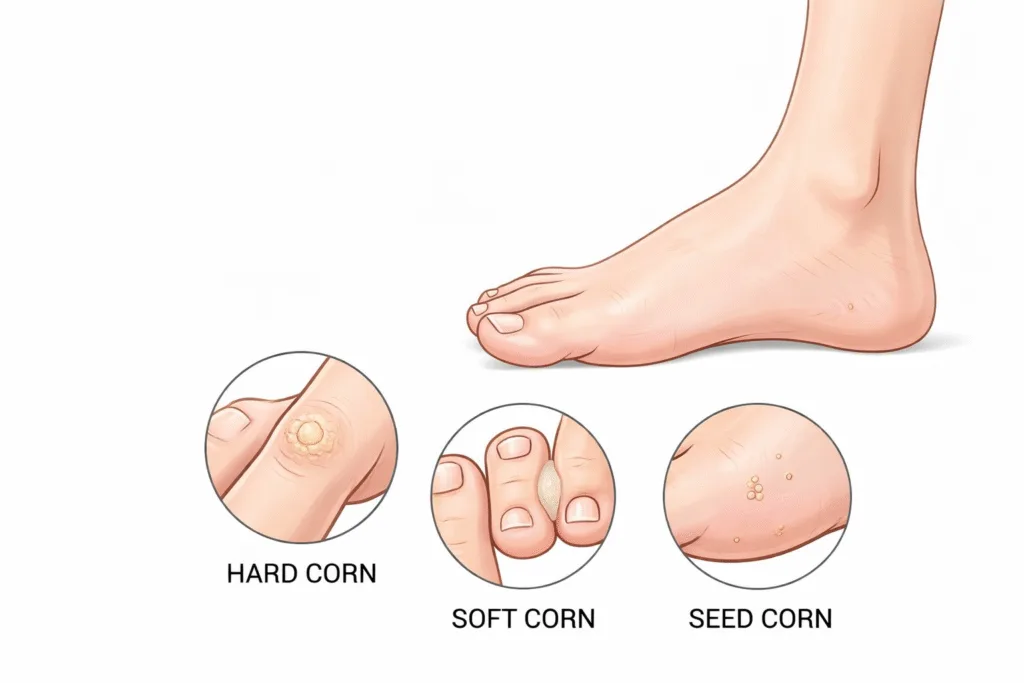
Foot corns are not all the same, and recognizing the type you have can help in choosing the right treatment. There are primarily three types of corns:
- Hard corns: These are the most common and appear as small, dense patches of thick skin. They usually develop on the top of toes or areas exposed to pressure.
- Soft corns: Found between the toes, these are softer due to moisture and can sometimes become infected.
- Seed corns: Tiny and often painless, these typically appear on the sole of the foot.
Each type forms due to similar reasons but differs in location and severity. Identifying the type helps determine whether simple home care is enough or medical attention is needed.
How Corns Differ from Calluses
Many people confuse corns with calluses, but they are not the same. While both result from friction and pressure, the key difference lies in their structure and symptoms. Corns are smaller, deeper, and often painful, whereas calluses are larger, flatter, and usually painless.
Calluses tend to spread over a broader area, like the heel or ball of the foot. Corns, on the other hand, have a concentrated core that presses inward, causing discomfort. This distinction is important because the treatment approach varies for each condition.
Main Foot Corn Reasons
Understanding the foot corn reason is the first step toward prevention and effective treatment. Corns don’t just appear overnight—they are the result of repeated stress on specific areas of the foot.
Ill-Fitting Footwear
One of the most common causes of foot corns is wearing shoes that don’t fit properly. Tight shoes squeeze your toes together, creating pressure points that lead to corn formation. On the flip side, loose shoes can cause your feet to slide, leading to friction.
High heels are particularly notorious for causing corns. They shift your body weight forward, increasing pressure on the toes and the ball of the foot. Over time, this constant stress causes the skin to thicken as a protective response.
Even something as simple as wearing shoes without socks can increase friction. The repeated rubbing between your skin and the shoe material creates the perfect environment for corns to develop.
Excessive Pressure and Friction
Friction is the silent culprit behind most foot problems, including corns. Every step you take generates pressure, especially if you walk long distances or stand for extended periods.
Activities like running, dancing, or manual labor can amplify this effect. When certain areas of your feet bear more pressure than others, the skin responds by thickening. Over time, this leads to corn formation.
The problem becomes worse if the pressure is concentrated in a small area. That’s why corns often appear on bony parts of the foot, where there is less cushioning.
Walking Patterns and Foot Deformities
Your walking style, or gait, plays a significant role in the development of corns. If you walk unevenly or put more weight on one part of your foot, it creates uneven pressure distribution.
Foot deformities like flat feet or high arches can also contribute. These conditions alter the way your weight is distributed, leading to excessive pressure on certain areas.
Role of Bunions and Hammertoes
Conditions like bunions and hammertoes further increase the risk of corns. These deformities cause abnormal friction between toes or between the toes and shoes.
For example, a hammertoe bends abnormally, causing the top of the toe to rub against the shoe. This repeated friction leads to corn formation. Similarly, bunions push the big toe inward, creating pressure points that can result in corns.
Who Is More Prone to Foot Corns?
Not everyone develops corns, which raises an interesting question—why do some people suffer more than others? The answer lies in a combination of lifestyle, occupation, and physical factors.
Lifestyle and Occupation Factors
People who spend long hours on their feet are more likely to develop corns. This includes professionals like teachers, construction workers, athletes, and retail staff. The constant pressure and friction increase the risk significantly.
Age is another factor. As we get older, our skin loses elasticity and natural cushioning, making it more vulnerable to damage. This is why older adults often experience more foot problems, including corns.
Additionally, individuals who prefer fashion over comfort—such as wearing tight or high-heeled shoes are at a higher risk. It’s a classic case of style versus health, and unfortunately, the feet often pay the price.
Symptoms of Foot Corns
Recognizing the symptoms early can prevent complications and make treatment easier. Corns don’t just appear suddenly; they develop gradually, often starting with mild discomfort.
Hard, Thickened Skin
One of the most common signs is a raised, hardened bump on the foot. This thickened skin develops as a protective response to pressure.
Pain or Tenderness
Corns can cause pain when walking or standing, especially if pressure is applied directly on the affected area.
Rough or Dry Texture
The skin over a corn often feels rough, dry, and sometimes flaky compared to the surrounding skin.
Central Core
A typical corn has a hard center (core) that presses into deeper layers of the skin, which can cause sharp pain.
Redness and Inflammation
The surrounding skin may appear red or slightly swollen, particularly if the corn is irritated.
Sensitivity to Touch
Even light pressure or touch may cause discomfort in the affected area.
Location-Specific Symptoms
Corns usually develop on:
- Tops and sides of toes
- Between toes (soft corns)
- Soles of the feet
Soft corns (between toes) may appear white or rubbery due to moisture.
Difficulty Walking
In severe cases, corns can make walking uncomfortable, leading to changes in posture or gait.
Complications of Untreated Corns
Leaving corns untreated might seem harmless at first, but it can lead to serious issues over time.
Infection Risks
When a corn becomes too thick or irritated, the skin can break, creating an entry point for bacteria. This can lead to infections, especially in people with diabetes or poor circulation.
In severe cases, the infection can spread to deeper tissues, causing significant pain and requiring medical intervention. This is why it’s crucial to treat corns promptly rather than ignoring them.
How to Diagnose Foot Corns
Diagnosing a foot corn is usually straightforward. A healthcare professional will examine the affected area and may ask about your footwear and daily activities.
In some cases, they might trim the thickened skin to confirm the diagnosis. This helps differentiate corns from other conditions like warts or cysts.
Effective Treatments for Foot Corns
Treating corns involves reducing pressure and removing the thickened skin.
Home Remedies
Simple home treatments can be very effective, especially in the early stages:
- Soaking your feet in warm water to soften the skin
- Using a pumice stone to gently remove dead skin
- Applying moisturizing creams to keep the skin soft
These methods help reduce the thickness of the corn and relieve discomfort.
Medical Treatments
For more severe cases, medical treatment may be necessary. This can include:
- Medicated corn pads
- Professional trimming by a doctor
- Orthotic devices to redistribute pressure
These treatments address both the symptoms and the underlying cause.
Prevention Tips for Foot Corns
Preventing corns is much easier than treating them.
Choosing the Right Footwear
Always choose shoes that fit well and provide adequate support. Avoid tight or high-heeled shoes for long periods. Wearing socks can also reduce friction and protect your skin.
Best Lifestyle Changes for Healthy Feet
Small changes can make a big difference. Regular foot care, maintaining a healthy weight, and staying active can all help prevent corns. Paying attention to how your feet feel after a long day can also provide early warning signs.
When to See a Doctor
If the corn becomes very painful, shows signs of infection, or doesn’t improve with home treatment, it’s time to consult a doctor. People with diabetes should seek medical advice immediately, as foot problems can lead to serious complications.
Conclusion
Understanding the foot corn reason is key to preventing and managing this common foot problem. From ill-fitting shoes to walking patterns, multiple factors contribute to their development. The good news is that with proper care, awareness, and lifestyle adjustments, corns can be effectively treated and even prevented. Taking care of your feet isn’t just about comfort it’s about maintaining your overall health and mobility.
FAQs
1. What is the main reason for foot corns?
The primary reason is repeated pressure and friction, often caused by tight or ill-fitting shoes.
2. Are foot corns dangerous?
They are usually harmless but can become painful or infected if left untreated.
3. Can foot corns go away naturally?
Yes, mild corns may disappear if the source of pressure is removed.
4. Is it safe to remove corns at home?
Yes, but only with gentle methods like soaking and using a pumice stone. Avoid cutting them yourself.
5. How can I prevent foot corns permanently?
Wear properly fitting shoes, maintain good foot hygiene, and reduce pressure on your feet.