Understanding Corns on the Skin
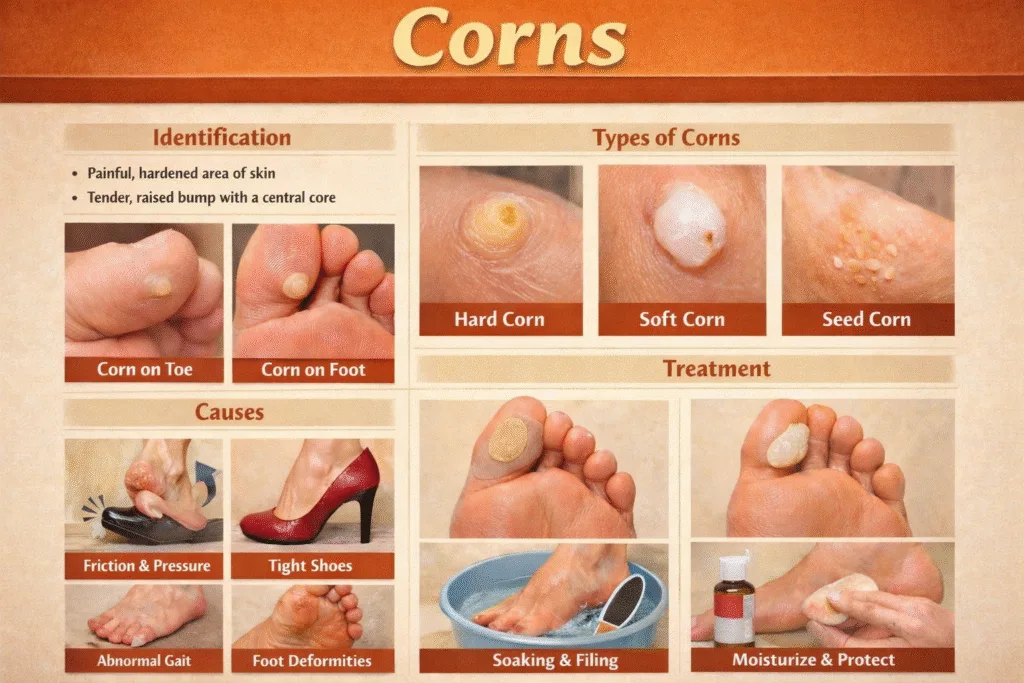
Corns are one of the most common foot problems people experience, yet many individuals struggle to recognize them when they first appear. Looking at pictures of corns can make a huge difference in identifying the condition early and preventing unnecessary discomfort. Corns are essentially thickened areas of skin that form when the body tries to protect itself from repeated friction or pressure. Instead of being a disease, they are actually a protective reaction by the skin. When your skin constantly rubs against something—such as tight shoes or rough surfaces—it responds by building layers of hardened skin to guard the deeper tissues.
According to medical studies, corns commonly develop on the feet and toes, particularly in areas where bones press against footwear. Research estimates that between 14% and 48% of people experience corns at some point, especially older adults or individuals who wear narrow shoes regularly. This means that if you notice a small, hardened bump on your toe or foot, you are definitely not alone. Corns often appear yellowish, round, and raised, with a hard central core surrounded by thicker skin.
Pictures of corns also reveal how varied they can look depending on the location and cause. Some appear dry and hard, while others look soft and white, especially when they form between toes where moisture collects. Seeing these images helps people distinguish corns from other skin conditions like warts, blisters, or calluses. When recognized early, corns are usually manageable with simple lifestyle changes such as wearing better-fitting shoes or reducing friction on the affected area.
What Are Corns and Why Do They Form?
Corns form due to continuous friction, pressure, or irritation on a specific area of the skin. Think of them as your body’s natural armor. When the skin experiences repeated rubbing—like when your toe constantly presses against a shoe—the body responds by producing extra keratin, a tough protein that strengthens skin cells. Over time, this buildup forms the thick, hardened bump we recognize as a corn.
Most corns develop on parts of the foot that bear pressure during walking or standing. The top of the toes, sides of the feet, and soles are the most common locations. This is why people who spend long hours walking, running, or standing are more likely to experience them. Even something as simple as wearing shoes without socks can create enough friction to trigger corn formation.
Pictures of corns often highlight a defining feature: the central core. This core presses into deeper layers of the skin, which is why corns can sometimes feel painful when you walk or apply pressure. Unlike calluses—which tend to spread over a larger area—corns are usually smaller and more localized. They look like tiny circular bumps with a dense center and slightly raised edges.
Another interesting aspect revealed by corn images is how different activities can influence their appearance. Athletes, dancers, and workers who spend long hours on their feet frequently develop corns because of repetitive movement. In some cases, foot deformities such as bunions or hammertoes can increase pressure on certain areas, making corn formation more likely. Over time, the skin thickens to shield itself, but unfortunately that protective layer can also become uncomfortable.
How Corns Differ From Calluses
When people search online for pictures of corns, they often confuse them with calluses, since both conditions involve thickened skin. While they share similar causes, their appearance and symptoms are quite different. Understanding this distinction is essential for choosing the right treatment and preventing unnecessary worry.
Corns are typically smaller, deeper, and more concentrated, whereas calluses spread across larger areas of skin. In pictures, corns usually appear as round bumps with a hardened center, sometimes surrounded by inflamed or swollen skin. Calluses, on the other hand, tend to look like wide patches of thick, rough skin without a defined core. They are also usually less painful than corns.
Another key difference lies in their location. Corns commonly form on toes or between toes, where pressure from shoes is strongest. Calluses are more likely to appear on heels, palms, or the balls of the feet, areas that endure constant pressure during daily activities. Medical experts explain that corns are often painful because their central core presses inward toward nerve endings beneath the skin.
Pictures of Corns and What They Reveal
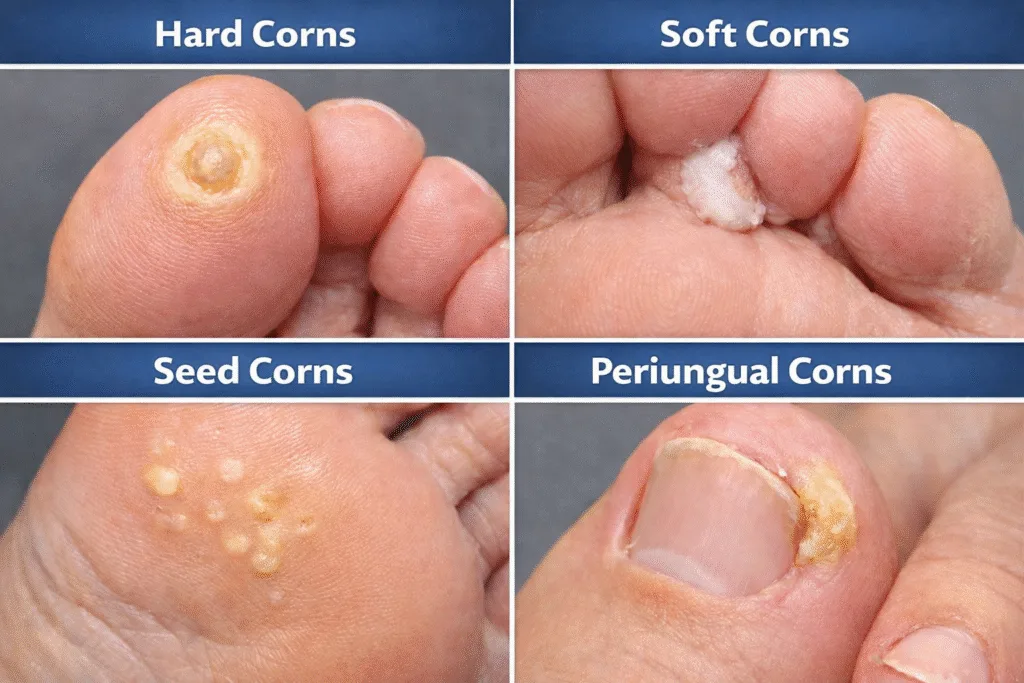
One of the most effective ways to identify a corn is by examining clear images or pictures of corns. Visual references show how these skin growths vary depending on their type and location. Dermatologists and podiatrists often rely on these visual patterns to determine the exact classification of a corn and the best treatment approach.
Corns typically fall into several categories, each with its own distinctive appearance. By studying images of these types, people can better understand what they are dealing with and decide whether home treatment or medical care is necessary. These visual differences also explain why some corns are painless while others can make walking extremely uncomfortable.
Hard Corns (Heloma Durum)
Hard corns are the most common type seen in pictures and medical illustrations. They appear as small, dense circles of hardened skin with a yellowish center. Usually, they form on the tops or sides of toes where shoes apply the most pressure. Because of their dense core, they can feel like a tiny pebble stuck under the skin.
Images of hard corns often show clearly defined edges and a dry surface. They are typically firm to the touch and may feel tender when pressed. People who wear tight or narrow shoes are particularly prone to developing this type of corn because their toes constantly rub against the inside of footwear.
Soft Corns (Heloma Molle)
Soft corns look quite different in pictures. Instead of appearing dry and thick, they often look white, rubbery, and slightly swollen. These corns develop between the toes where moisture collects, creating a softer texture. Friction between adjacent toes is usually the main cause.
Because of the moist environment, soft corns may feel more sensitive and painful than hard corns. Images frequently show them as pale patches of skin that appear slightly mushy or sponge-like. They can become irritated easily, especially if tight shoes squeeze the toes together.
Seed Corns
Seed corns are smaller and less common, but pictures reveal that they appear as tiny clusters of hardened bumps on the soles of the feet. They often resemble small grains of sand embedded in the skin. While each bump is small, the grouped appearance can create a rough, uneven texture.
Unlike other corns, seed corns may develop due to dry skin rather than friction alone. They are often painless, but when they grow thicker they may cause discomfort while walking. Visual identification is helpful because these corns can easily be mistaken for plantar warts.
Periungual Corns
Periungual corns appear around the edges of toenails or fingernails. Pictures of this type show hardened skin forming near the nail bed where pressure or abnormal nail growth occurs. They can develop if nails grow incorrectly or if footwear constantly presses against the nail area.
Where Corns Usually Appear on the Body
Pictures of corns show that they tend to develop in specific areas of the body, primarily where pressure and friction occur most often. The feet are by far the most common location, since they support the body’s weight and endure continuous movement throughout the day. However, corns can also appear on the hands, especially in people who use tools or play musical instruments frequently.
Corns on Toes
Toe corns are extremely common and usually appear on the top or side of a toe joint. Pictures often show them forming where the toe bends, especially in people with hammertoes or bunions. In these cases, the joint protrudes slightly and rubs against footwear.
Corns on the Sole of the Foot
Corns can also appear on the bottom of the foot, especially under areas that bear heavy pressure. These images often reveal small, hardened circles embedded within thicker skin. They can sometimes feel like stepping on a tiny stone.
Corns Between Toes
Pictures of corns between toes typically show soft, white patches of thickened skin. Because the area remains moist, these corns look softer than those on the outer foot. They are usually caused by tight shoes that squeeze the toes together.
Causes of Corns on Feet
Corns rarely appear randomly. In most cases, they are the direct result of repeated friction or pressure on the skin. Understanding the causes can help prevent them from developing in the first place.
Tight or Ill-Fitting Shoes
Shoes that are too tight are the most common cause of corns. When footwear squeezes the toes or rubs against the foot, it creates constant friction that eventually leads to thickened skin.
Repeated Pressure and Friction
Standing, walking, or running for long periods can also trigger corn formation. Activities that repeatedly stress certain areas of the foot increase the likelihood of skin thickening over time.
Foot Deformities and Walking Patterns
Conditions such as bunions, hammertoes, or abnormal walking patterns can concentrate pressure on specific areas of the foot. This uneven distribution of weight often leads to corn formation.
Symptoms You Can Notice in Corn Pictures
Pictures of corns typically display several recognizable symptoms:
- Thickened, hardened skin
- A raised bump with a central core
- Yellowish or waxy appearance
- Pain or tenderness when pressed
Who Is Most Likely to Get Corns?
Certain people are more prone to corns than others. Age, lifestyle, footwear choices, and foot structure all play significant roles. Older adults often develop corns more easily because the protective fat layer on the foot gradually thins over time, increasing pressure on bones and joints.
People who wear tight or high-heeled shoes regularly are also at higher risk because these shoes concentrate pressure on specific areas of the foot. Athletes, runners, and workers who spend long hours standing may also develop corns due to repetitive stress.
Treatments for Corns
Treating corns usually involves reducing the friction or pressure that caused them in the first place. Many cases can be managed with simple home remedies, while more severe cases may require medical treatment.
Home Remedies
Common at-home solutions include soaking the feet in warm water, gently filing thick skin with a pumice stone, and applying moisturizing creams. Wearing comfortable shoes and protective pads can also reduce pressure on the affected area.
Medical Treatments
Doctors may remove hardened skin using specialized tools or prescribe medicated patches containing salicylic acid. In rare cases where foot deformities cause recurring corns, surgery may be recommended to correct the underlying issue.
Preventing Corns in the Future
Prevention often comes down to reducing friction and protecting the skin. Wearing properly fitting shoes, using cushioned insoles, and keeping feet moisturized can significantly lower the risk of corn formation. Regular foot care and early treatment are key to preventing them from becoming painful.
Conclusion
Pictures of corns provide valuable insight into how these common skin conditions look and develop. By examining images and understanding the differences between various types, individuals can identify corns early and take steps to treat them effectively. While corns are usually harmless, they can become uncomfortable if ignored. Paying attention to footwear, reducing friction, and maintaining proper foot care can go a long way in preventing them from returning.
FAQs
1. What do corns look like on the feet?
Corns usually appear as small, round areas of thickened skin with a hard center. They often look yellowish and raised and may feel painful when pressure is applied.
2. Are corns dangerous?
Corns are generally harmless, but they can cause pain or discomfort if they grow thicker. People with diabetes should consult a doctor before treating them.
3. Can corns disappear on their own?
Yes. If the friction or pressure causing the corn is removed—such as by changing footwear—the corn may gradually disappear.
4. How can I tell if it is a corn or a wart?
Corns have a hard center and maintain normal skin lines, while warts often show small black dots and disrupt the skin pattern.
5. What is the fastest way to remove a corn?
The quickest solution is usually professional treatment by a podiatrist who can safely remove the hardened skin and address the underlying cause.