

Introduction
One of the most common problems in clinical foot care is foot corn treatment, yet it’s often ignored or ignored until the pain becomes unbearable. As a doctor, I frequently meet patients who’ve tried sharp blades, chemical pads, or home hacks that only made things worse. The good news? With the right foot corn treatment approach, relief is not only possible—it’s predictable.
In simple terms, foot corns develop due to repeated pressure or friction. In order to defend itself, the skin thickens over time. Although this reaction is normal, improper management can result in pain, discomfort, and even infection. This is why it’s important to treat foot corn as soon as possible.
This guide is written from a medical, evidence-based perspective but explained in clear, Grade-7 friendly language. Let’s break it down step by step.
Understanding Foot Corns from a Doctor’s Perspective
What Is a Foot Corn?
A foot corn is a localized thickening of skin that forms when the foot is exposed to repeated pressure or rubbing. Unlike calluses, corns are smaller and often have a hard central core that presses into deeper layers of skin, causing pain.
From a clinical standpoint, foot corn treatment focuses on removing pressure first, not just removing skin.
Types of Foot Corns
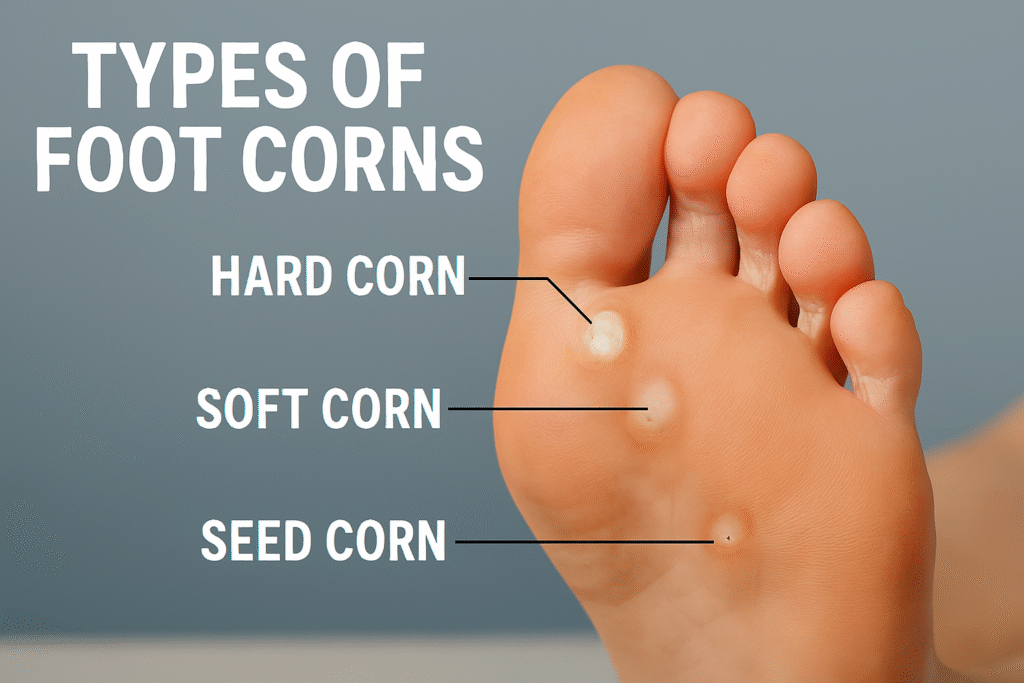
Doctors generally classify corns into three types:
- Hard corns – Common on the tops or sides of toes
- Soft corns – Found between toes, often moist
- Seed corns – Tiny, multiple corns on the sole
Each type requires a slightly different foot corn treatment strategy.
Why Foot Corn Treatment Matters
Ignoring corns can lead to:
- Chronic pain
- Skin breakdown
- Infection
- Difficulty walking
For patients with diabetes or poor circulation, untreated corns can become dangerous. That’s why doctors emphasize early foot corn treatment rather than temporary fixes.
Common Causes That Lead to Foot Corns
Footwear-Related Causes
In my practice, nearly 70% of foot corn treatment cases start with improper footwear. Common culprits include:
- Tight shoes
- High heels
- Narrow toe boxes
- Hard inner shoe seams
These cause repeated friction, triggering skin thickening.
Structural Foot Problems
Certain foot shapes increase risk:
- Hammertoes
- Bunions
- Flat feet
- High arches
In such cases, foot corn treatment must address biomechanics, not just surface skin.
Lifestyle and Occupational Factors
people who:
- Stand for a long period of time.
- Often walk barefoot
- Perform repetitive foot movements.
are more likely to require foot corn treatment from a professional.
Symptoms and Early Warning Signs
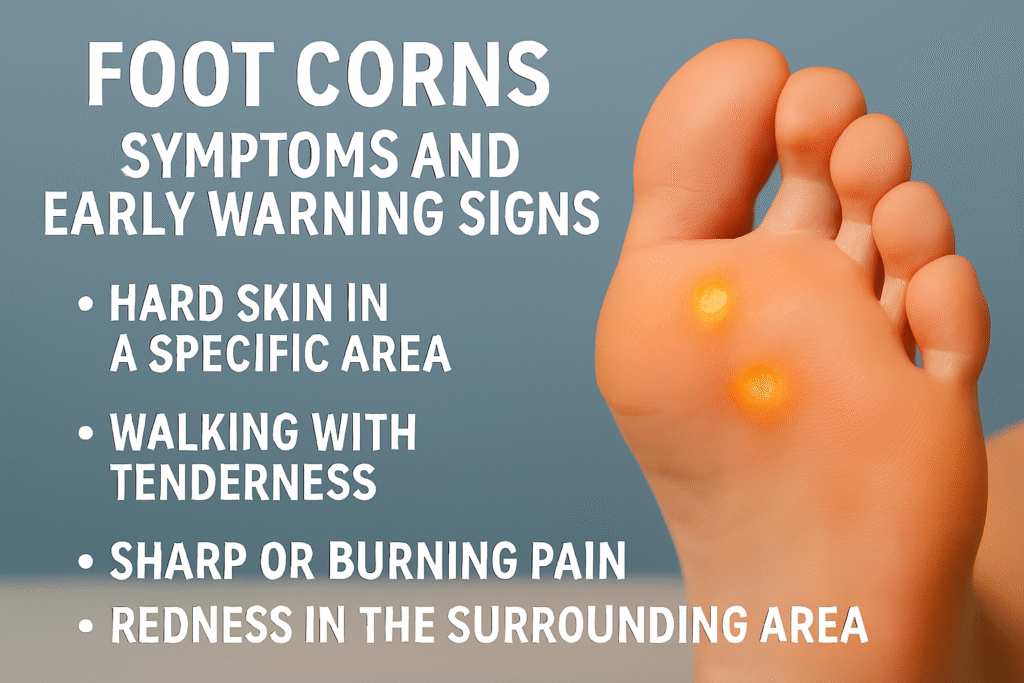
Early signs consist of:
- Hard skin in a specific area
- Walking with tenderness
- Sharp or burning pain
- redness in the surrounding area
once pain begins to interfere with day-to-day activities, proper foot corn treatment should be considered instead of do-it-yourself fixes.
Accurate Diagnosis of Foot Corns
Self-Assessment vs Medical Diagnosis
While corns may look obvious, they’re often confused with:
- Plantar warts
- Calluses
- Foreign body reactions
A doctor confirms the diagnosis through visual exam and pressure testing. Correct diagnosis ensures correct foot corn treatment.
When to See a Doctor
Seek medical care if:
- Pain persists beyond 1–2 weeks
- There’s redness, swelling, or discharge
- You have diabetes or nerve problems
Early medical foot corn treatment prevents complications
Foot Corn Treatment Options: Medical and Home-Based
Doctor-Recommended Foot Corn Treatment
Debridement and Clinical Care
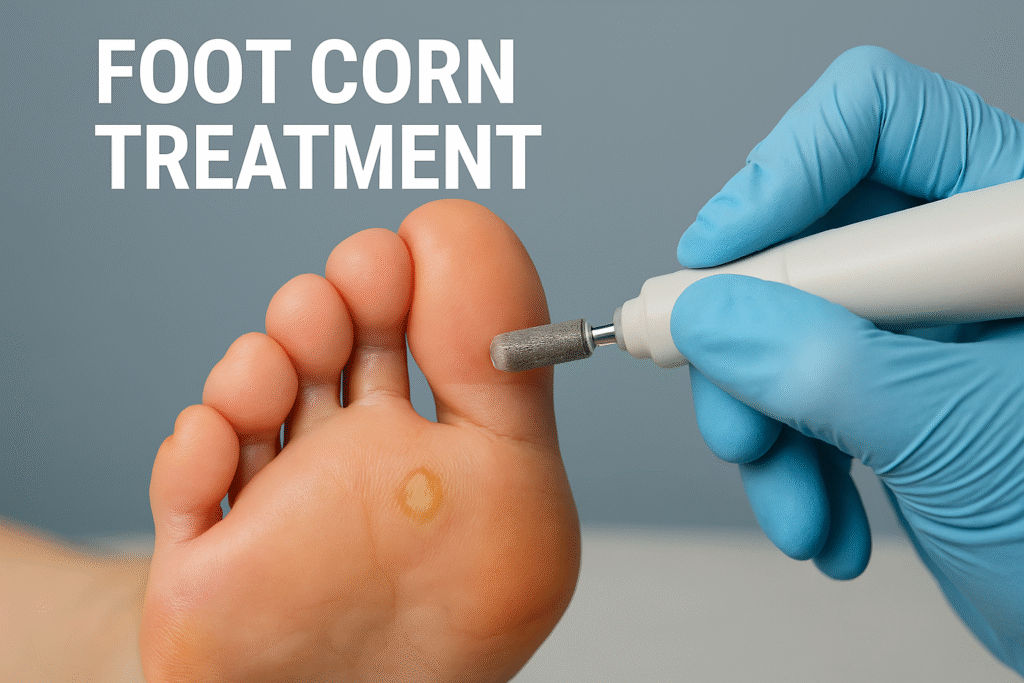
This is the gold standard. A doctor carefully removes the thickened skin using sterile instruments. It’s painless when done correctly and provides immediate relief.
Medicated Corn Caps
Salicylic acid pads are sometimes prescribed. However, doctors use them cautiously, especially in diabetics, because misuse can burn healthy skin.
Safe Home Remedies for Foot Corn Treatment
Soaking and Moisturizing
- Warm water soak for 10–15 minutes
- Gentle pumice stone use
- Urea-based moisturizer
This supports ongoing foot corn treatment but doesn’t replace medical care.
Padding and Offloading Pressure
- Silicone toe caps
- Foam pads
- Gel sleeves
Reducing pressure is a core principle of effective foot corn treatment.
Advanced Foot Corn Treatment Procedures
Orthotics and Biomechanical Correction
Custom orthotics redistribute pressure. In recurring cases, this is one of the most effective long-term foot corn treatment solutions.
Surgical Options (Rare Cases)
If bone structure causes constant friction, minor surgery may be considered. This is rare but sometimes necessary for permanent foot corn treatment.
Prevention Tips Doctors Recommend
Footwear and Daily Care
- Choose wide-toe shoes
- Avoid high heels daily
- Keep feet dry and clean
- Trim nails properly
Prevention is the most overlooked part of foot corn treatment.
Long-Term Foot Health Strategies
- Annual foot exams
- Early correction of deformities
- Regular moisturizing
Foot Corn Treatment for Special Populations
Diabetic Patients
For diabetics, foot corn treatment must always be supervised by a doctor. Even minor skin damage can escalate quickly.
Elderly Individuals
Aging skin is thinner and heals slower. Gentle, professional foot corn treatment is safest.
Conclusion
Understanding pressure, posture, and prevention are all important aspects of treating foot corn, not just getting rid of thick skin. From a doctor’s perspective, the most successful outcomes come from early diagnosis, safe clinical care, and long-term lifestyle changes. If pain keeps returning, it’s not stubborn skin—it’s a signal your feet need professional attention.
Healthy feet support your entire body. Treat them well.
FAQs
1. Is medicating foot corn pain?
No. Foot corn treatment is usually painless and provides immediate relief when administered by a doctor.
2. Can I cut a corn at home?
Doctors strongly advise against it. Home cutting increases infection risk.
3. How long does foot corn treatment take?
There is instant relief at first. Resolving the causes of pressure is essential for long-term treatment.
4. After treatment, do corns return?
They can, if footwear or foot mechanics aren’t corrected.
5. Are corn plasters safe?
Only under medical advice, especially if you have diabetes.
5. What is the most effective way to prevent?
wearing appropriate footwear and treating foot corn as soon as possible.