
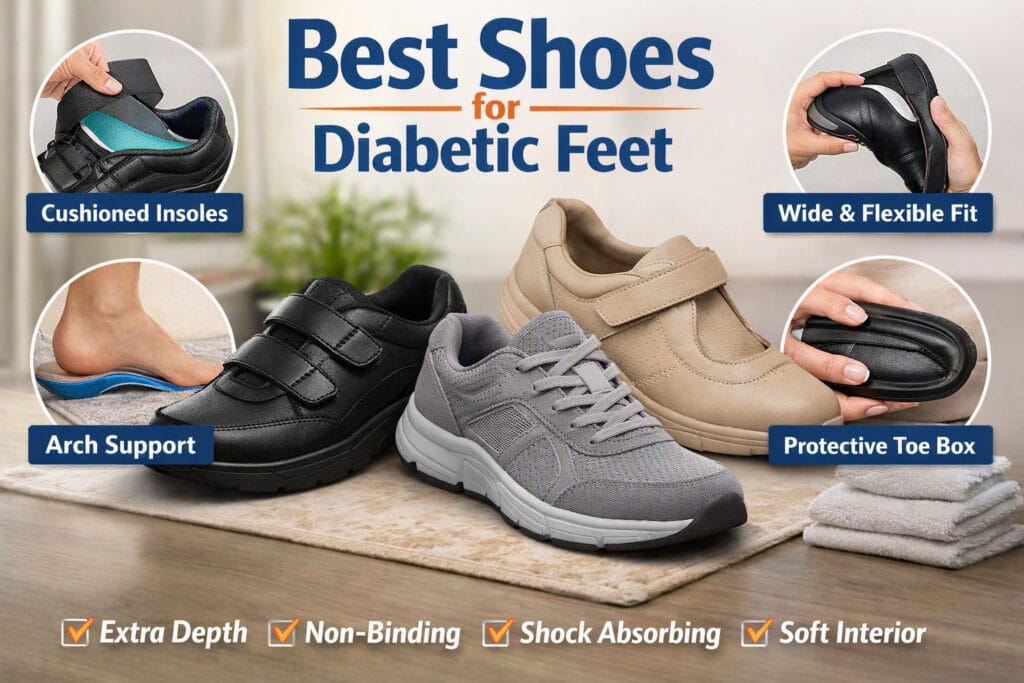
Introduction: Protect Your Feet, Protect Your Health
Choosing the right shoes when you have diabetes isn’t just about comfort—it’s about preventing serious complications that can threaten your mobility and quality of life. Diabetic neuropathy, reduced blood circulation, and fragile skin make your feet vulnerable to ulcers, infections, and even amputation. The difference between the wrong shoe and the right shoe can literally be the difference between healing and hospitalization.
If you have diabetes, the best shoes for your feet are extra-depth, seamless, cushioned shoes with a wide toe box and a firm, non-slip sole — not just any “comfortable” pair off the shelf. Diabetes reduces sensation and blood flow in the feet, so a shoe that feels fine to someone else can silently cause a blister, callus, or ulcer on a diabetic foot before you even notice pain. The right footwear won’t cure diabetes-related foot problems, but it’s one of the simplest, most effective ways to prevent them. Below, we break down exactly what to look for, what to avoid, and when a specialist visit matters more than any shoe on the shelf.
Why Diabetic Feet Need Special Footwear
Ordinary shoes are designed for feet that can feel pressure, heat, and friction and react accordingly. Diabetic feet often can’t do that as reliably, which changes the entire risk calculation.
How Diabetes Affects Feet: Neuropathy and Poor Circulation
Over time, high blood sugar can damage the nerves in the feet, a condition called peripheral neuropathy. This causes numbness or tingling, meaning small injuries — a pebble in the shoe, a seam rubbing against a toe — can go completely unnoticed. Diabetes can also narrow blood vessels and reduce circulation to the feet, which slows healing dramatically. A minor scrape that would heal in days for most people can take weeks for a diabetic patient, and in that time, infection risk climbs.
Why Regular Shoes Are Risky
Most regular shoes are built with narrow toe boxes, internal seams, and stiff materials that assume the wearer will feel discomfort and adjust. For a diabetic foot, a shoe that’s slightly too tight, has a rough interior seam, or lacks cushioning can create constant, unnoticed pressure points. Left unaddressed, this is one of the most common paths to diabetic foot ulcers — and ulcers are the leading precursor to diabetes-related amputations.
Key Features to Look for in Diabetic Shoes
Not every shoe labeled “comfort” or “orthopedic” is actually built for diabetic feet. Here’s what genuinely matters.
Extra Depth and a Wide Toe Box
Diabetic feet often develop changes in shape over time — bunions, hammertoes, or swelling (edema) — and may also need room for custom insoles or orthopedics. Extra-depth shoes (typically ¼” to ½” deeper than standard shoes) and a wide, rounded toe box prevent crowding and reduce pressure on the toes.
Seamless or Smooth Interior
Internal seams, especially over the toe box, are a common cause of friction blisters. Look for shoes explicitly marketed as “seamless interior” or that have soft, seam-free linings.
Cushioned, Non-Removable Insoles
A thick, shock-absorbing insole reduces pressure on the sole of the foot with every step. Ideally, this insole should be removable so it can be swapped for a custom orthotic if your doctor recommends one, while still offering good cushioning on its own.
Firm, Rocker-Bottom or Non-Slip Soles
A firm sole with a slight “rocker” shape helps the foot roll forward naturally during walking, reducing pressure under the ball of the foot and heel. Non-slip, textured outsoles also reduce fall risk, which matters more for diabetic patients who may have some loss of balance or sensation.
Breathable, Moisture-Wicking Materials
Excess moisture inside a shoe softens skin and increases the risk of fungal infections and blisters. Leather, mesh, and other breathable materials help keep feet dry throughout the day.
Adjustable Closures
Laces, Velcro straps, or adjustable buckles allow you to fine-tune fit as foot swelling changes throughout the day — something a slip-on or rigid-strap shoe can’t accommodate.
Best Types of Shoes for Diabetic Feet
Diabetic-Certified Therapeutic Shoes
In many countries, therapeutic shoes for diabetics are a recognized medical device category, built specifically to the specifications above. These are the safest default choice for daily wear, especially if you already have some nerve damage, past ulcers, or foot deformities.
Orthopedic Sandals for Indoor Use
Walking barefoot at home is one of the most common (and preventable) causes of diabetic foot injury. A well-cushioned, closed-toe or structured orthopedic sandal for indoor use protects feet from stubbed toes, dropped objects, and cold floors while still being breathable.
Custom-Molded Shoes for Foot Deformities
If you have significant deformities — Charcot foot, prior amputations, severe bunions — off-the-shelf shoes, even diabetic ones, may not fit safely. Custom-molded shoes, made from an impression of your specific foot, redistribute pressure away from vulnerable areas. This is typically prescribed after an assessment by a foot specialist.
What to Avoid
- Flip-flops and open-back sandals (no protection, poor stability)
- High heels or narrow pointed-toe shoes (concentrate pressure on the toes)
- Shoes with rough internal seams or stitching over the toe box
- Worn-out shoes with flattened, unsupportive soles
- Tight socks or shoes bought without trying them on later in the day
How to Choose the Right Fit
Get Your Feet Measured Professionally
Foot size and shape can change with age, weight, and diabetes-related swelling. Don’t assume your size from ten years ago is accurate — get measured (both feet, they’re often slightly different) each time you buy new shoes.
Shop Later in the Day
Feet swell slightly over the course of the day. Trying shoes on in the afternoon or evening, rather than first thing in the morning, gives a more realistic sense of fit.
Break In New Shoes Gradually
Even well-fitted diabetic shoes should be introduced gradually — an hour or two on the first day, checking your feet afterward for red marks or pressure points, and increasing wear time slowly over one to two weeks.
Understanding Your Diabetic Foot Risk Category
Not every diabetic patient needs the same level of footwear intervention. Doctors typically classify diabetic feet into risk categories, and knowing yours helps you choose footwear that actually matches your needs instead of over- or under-investing.
Low Risk: Normal Sensation, Good Circulation
If you have diabetes but no signs of nerve damage or circulation problems, you’re at low risk. A well-fitted, extra-depth shoe with good cushioning and a wide toe box is usually sufficient, along with annual foot check-ups.
Moderate Risk: Some Neuropathy or Reduced Pulses
If you have early signs of numbness, tingling, or your doctor notes reduced foot pulses, you’re at moderate risk. Purpose-built diabetic or therapeutic shoes become important here, along with more frequent self-checks and check-ups every three to six months.
High Risk: Past Ulcers, Deformity, or Amputation
If you’ve had a foot ulcer before, have visible foot deformities like Charcot foot or bunions, or have had a prior amputation (even a toe), you’re in the highest risk category. Custom-molded shoes or orthopedics prescribed after a specialist assessment are strongly recommended, along with much more frequent monitoring — sometimes monthly.
Knowing your category isn’t something you have to guess at home. A podiatrist or diabetic foot specialist can assess sensation (often with a simple monofilament test), circulation, and foot structure in a single visit and tell you exactly where you stand.
Don’t Forget Socks: The Overlooked Half of Diabetic Foot Protection
Even the best diabetic shoes can’t fully do their job if they’re paired with the wrong socks. Socks sit directly against the skin, and the wrong pair can undo a lot of the protection your shoes provide.
Seamless, Non-Constricting Socks
Look for socks with smooth, seam-free toe closures and no tight elastic band at the top. A sock that leaves an indentation around your calf or ankle is restricting circulation, which is exactly what diabetic feet don’t need.
Moisture-Wicking, Cushioned Fabric
Cotton retains moisture, which softens skin and raises infection risk. Diabetic-specific socks are usually made from moisture-wicking blends (bamboo, acrylic, or specialized synthetic fibers) with extra cushioning at the heel and ball of the foot.
Light-Colored Socks Help You Spot Problems Early
White or light-colored socks make it easier to notice blood, discharge, or drainage from a wound you might not otherwise feel — a small but genuinely useful detail for anyone with reduced sensation.
Change Socks Daily (or More Often If Needed)
Fresh socks every day reduce moisture buildup and bacterial growth. If you’re active or your feet sweat more, changing socks midday can make a meaningful difference.
Common Myths About Diabetic Footwear
Myth: “My feet don’t hurt, so my shoes are fine.” Reduced sensation is exactly why pain isn’t a reliable warning sign for diabetic feet. Shoes need to be evaluated on fit and design, not on whether they feel uncomfortable.
Myth: “Expensive shoes are automatically diabetic-safe.” Price doesn’t guarantee the right features. A shoe needs extra depth, a wide toe box, a seamless interior, and a supportive sole regardless of brand or cost — always check the actual construction, not just the price tag or marketing.
Myth: “I only need special shoes if I already have a wound.” As covered earlier, diabetic footwear is preventive. Waiting until after an ulcer develops means you’re treating a problem that better shoes might have helped avoid in the first place.
Myth: “Any shoe feels fine after a short break-in period.” For diabetic feet, a shoe that still causes pressure points after breaking in isn’t “almost right” — it’s the wrong shoe. Persistent redness or marks after wear mean it’s time to reassess the fit, not push through it.
Daily Foot Care Tips Alongside the Right Shoes
The right shoes are half the equation. Daily habits matter just as much.
Inspect Your Feet Every Day
Check the tops, soles, heels, and between the toes for redness, cuts, blisters, or swelling. Use a mirror or ask a family member to help if you can’t see the soles clearly. Catching a problem on day one, rather than day ten, is often the difference between a minor treatment and a serious complication.
Moisturize and Manage Nails Carefully
Keep skin moisturized to prevent cracking, but avoid applying lotion between the toes, where excess moisture can encourage fungal growth. Trim nails straight across and avoid cutting cuticles, which can create entry points for infection.
Know When to See a Specialist
Any wound, no matter how small or painless, deserves prompt medical attention if you’re diabetic. So does persistent numbness, changes in foot shape, skin discoloration, or a shoe that suddenly doesn’t fit the way it used to. A comprehensive foot examination can catch structural or circulation issues long before they turn into ulcers.
Common Diabetic Foot Problems and How Shoes Help Prevent Them
Diabetic Neuropathy and Loss of Sensation
Diabetic neuropathy damages the nerves in your feet, causing loss of sensation. This means you could have a small cut, blister, or pressure ulcer forming without even knowing it. Proper diabetic shoes protect against injuries you can’t feel.
How the right shoes help:
- Seamless construction eliminates irritation sources
- Protective padding prevents direct pressure on sensitive areas
- Smooth interiors prevent rubbing that causes micro-injuries
Peripheral Vascular Disease (Poor Circulation)
Diabetes damages blood vessels, reducing blood flow to your feet. Poor circulation slows healing and increases infection risk.
How the right shoes help:
- Non-restrictive design ensures blood can flow freely
- Wide toe box and loose fitting prevents circulation compression
- Breathable materials prevent moisture buildup that restricts flow
Diabetic Foot Ulcers
Ulcers are the most serious complication, affecting 15% of people with diabetes at some point. They develop when:
- Pressure builds in one spot (often from ill-fitting shoes)
- Skin breaks down
- Infection sets in
- Healing is delayed by poor circulation
A Stage 1 ulcer that could be prevented by proper shoes becomes a Stage 4 amputation risk if left untreated.
How the right shoes help:
- Distribute pressure evenly across the entire foot
- Reduce peak pressure points by up to 40%
- Provide extra depth for existing ulcers to heal without shoe contact
Fungal and Bacterial Infections
Warm, moist environments inside shoes create perfect conditions for infections.
How the right shoes help:
- Breathable materials keep feet dry
- Moisture-wicking properties reduce sweat buildup
- Seamless design prevents bacteria-trapping friction points
Charcot Foot (Diabetic Neuropathic Arthropathy)
In severe neuropathy, repeated unnoticed injuries cause progressive joint destruction—even without fractures. This condition develops insidiously.
How the right shoes help:
- Support and cushioning reduce repetitive trauma
- Proper alignment prevents abnormal stress on joints
- Custom orthotics can slow or prevent progression
Key Features to Look For in Diabetic Shoes
Extra Depth and Roomy Toe Box
Diabetic shoes must have extra depth to accommodate swelling, moisture-wicking insoles, and custom orthotics. The toe box should be rounded or square, not pointed. Your toes need space to lie flat without pressure, which reduces circulation restriction and prevents ulcer formation.
What to check: When standing, there should be approximately 1 cm of space between the tip of your longest toe and the end of the shoe. This measurement prevents toe pressure while maintaining a secure fit.
Why this matters: Even 2-3mm of excess pressure sustained over hours creates the environment for ulcer formation. The extra depth also accommodates natural foot swelling that occurs throughout the day (feet swell up to 1 cm by evening).
Seamless Interior Construction
Exposed seams are the enemy. Look for diabetic shoes with:
- Fully lined interiors with smooth fabric
- No rough edges or stitching that contacts skin
- Seamless toe designs that eliminate irritation points
- Soft, cushioned linings that prevent blisters
- Welded or glued seams rather than stitched seams
Quality indicator: Run your finger inside the shoe. A truly diabetic-appropriate shoe should feel as smooth as a glove interior.
Excellent Cushioning and Support
Proper cushioning distributes pressure evenly across your foot, reducing peak pressure points that lead to ulcers.
Essential features:
- Memory foam or gel insoles that conform to your foot shape
- Extra cushioning under the heel and ball of the foot (high-pressure areas)
- Shock-absorbing midsoles that reduce impact during walking
- Rigid heel counter for stability and proper alignment
Technical detail: High-risk pressure zones experience forces 2-3x normal body weight with each step. Quality diabetic shoes reduce these peak pressures by 25-40%, which is clinically significant for ulcer prevention.
Lightweight and Flexible Design
Heavy shoes increase fatigue and can cause pressure issues. The best diabetic shoes are lightweight yet supportive. The shoe should bend naturally at the ball of the foot where your foot naturally flexes.
Why it matters: A heavy shoe (300g+) forces you to use more energy to walk, increases pressure on the ball of the foot, and can contribute to compensatory gait changes that stress vulnerable areas.
Breathable, Moisture-Wicking Materials
Moisture trapped inside shoes creates the perfect environment for fungal infections and accelerates skin breakdown. Look for:
- Breathable uppers (leather, mesh, or specialized diabetic materials)
- Moisture-wicking socks specifically designed for diabetic feet
- Perforated designs that allow air circulation
- Materials that prevent excessive sweating
The science: A single hour of walking can create 10-15ml of sweat in an enclosed shoe. Without moisture-wicking, this creates a 95%+ humidity environment—ideal for fungal and bacterial growth.
Removable Insoles for Custom Orthotics
Many diabetic patients need custom orthotic insoles prescribed by their podiatrist. The shoe must have a removable insole so you can insert your custom insert without added pressure from bulky stock insoles.
FAQS
1. Can I wear regular sports shoes if I have diabetes?
Some sports shoes with a wide toe box, good cushioning, and no internal seams can work, but they’re not designed with diabetic feet in mind. If you have any neuropathy, poor circulation, or a history of foot ulcers, purpose-built diabetic or extra-depth shoes are a safer choice.
2. How often should diabetic patients replace their shoes?
Most diabetic shoes should be replaced every 8–12 months, or sooner if the soles are visibly worn, the cushioning has flattened, or your foot shape has changed. Inspect the interior regularly for developing rough spots too.
3. Are diabetic shoes only for people who already have foot ulcers?
No. Diabetic shoes are a preventive measure, not just a treatment for existing wounds. Anyone with diabetes, especially those with any degree of neuropathy or circulation issues, benefits from wearing them before problems develop.
4. Can custom orthopedics be used with any diabetic shoe?
Not always. Look specifically for shoes with removable insoles and adequate depth, since custom orthopedics need extra room. A specialist can advise on shoe-orthotic combinations that fit your foot correctly.
5. What’s the biggest mistake diabetic patients make with footwear?
Walking barefoot or in flip-flops at home. Because reduced sensation means minor injuries go unnoticed, indoor floors — not outdoor walking — are one of the most common places diabetic foot injuries actually happen