
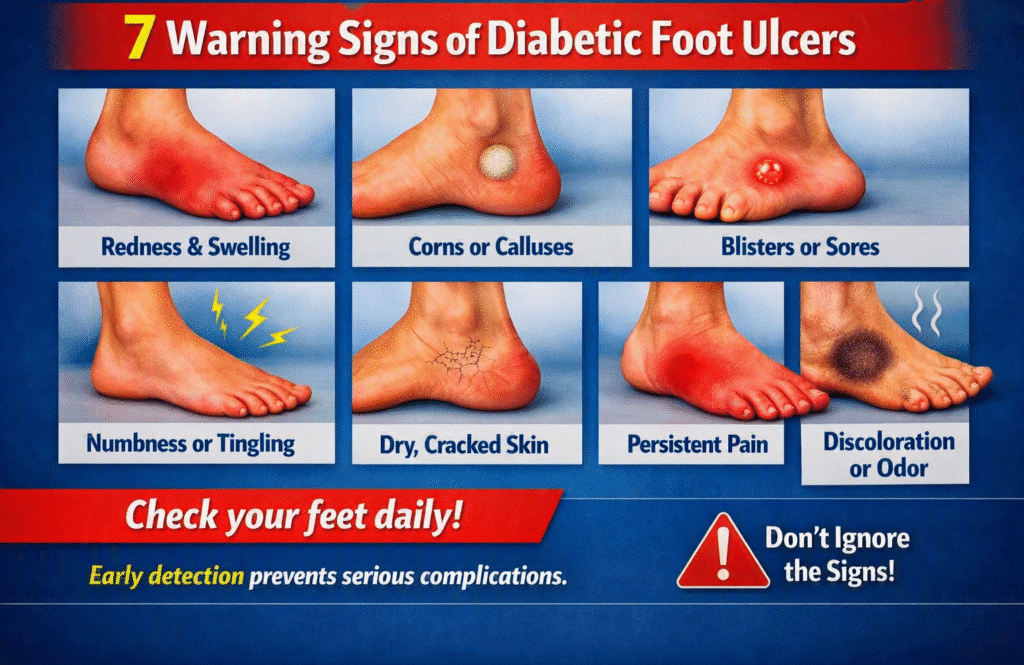
Understanding Diabetic Foot Ulcers: Why Early Detection Matters
Diabetic foot ulcers are one of the most serious complications of uncontrolled diabetes, affecting nearly 1 in 4 people with diabetes at some point in their lives. What makes them particularly dangerous isn’t always the ulcer itself—it’s how quickly they can develop into infections, tissue damage, and in severe cases, amputation. The key to preventing this downward spiral? Recognizing the warning signs before an ulcer forms.
At RDFC (Divyam Reconstructive Diabetic Foot Care Clinic) in Visakhapatnam, we’ve seen hundreds of patients where early intervention—catching problems at the warning sign stage—has prevented serious complications. This guide walks you through the signs your feet are sending, what causes diabetic foot ulcers, and exactly what steps to take if you notice any of these red flags.
What Are Diabetic Foot Ulcers? A Quick Overview
A diabetic foot ulcer is an open sore or wound on the foot, most commonly on the sole or between the toes. They develop because diabetes damages nerves (neuropathy) and reduces blood circulation—meaning your feet lose sensation and healing capacity. You might not feel a blister, small cut, or pressure point, and your body can’t repair minor damage efficiently. What starts as a tiny issue becomes a crater-sized wound within days.
The statistics are sobering: diabetic ulcers are the leading cause of non-traumatic amputations in India, yet most are preventable with vigilant monitoring and early medical attention.
The 7 Warning Signs Your Feet Are at Risk
1. Persistent Numbness or Tingling Sensations
What to notice: Lack of feeling in your feet, or an “pins and needles” sensation that doesn’t go away.
Neuropathy (nerve damage) is the sneaky culprit behind most diabetic foot ulcers. If you can’t feel your feet properly, you won’t notice when you’ve stepped on something sharp, developed a blister, or gotten a pressure sore. This is why many patients arrive at our Vizag clinic with advanced ulcers they didn’t even know they had.
Action: Do the self-test at home—close your eyes and have someone touch different parts of your foot with a light object (tissue, cotton). Can you feel it? If feeling is dulled or absent, schedule a diabetic foot screening immediately.
2. Changes in Skin Color or Temperature
What to notice: Red, purple, or darkened patches on your feet; or one foot feeling noticeably cooler than the other.
Discoloration signals inflammation or poor blood circulation. Your feet rely on constant blood flow to heal and stay healthy. When circulation drops (a condition called peripheral arterial disease), tissues become vulnerable.
Action: Check both feet daily in good lighting. Compare them side-by-side. If you see unusual redness, darkening, or if one foot is consistently colder to the touch, this warrants a circulation assessment from a specialist.
3. Swelling or Puffiness That Won’t Go Down
What to notice: Swollen ankles, feet, or toes that persist even after resting with your legs elevated.
Swelling combined with diabetes is often a sign of poor circulation, infection beginning, or fluid retention related to kidney function. It’s your body’s distress signal.
Action: Elevate your feet above heart level for 15–20 minutes daily and monitor whether swelling reduces. Persistent swelling needs medical evaluation.
4. Cracks, Calluses, or Dry Skin That’s Worsening
What to notice: Deep cracks (especially around heels), thickened calluses that are yellowing, or extremely dry skin despite moisturizing.
Diabetic neuropathy affects sweat gland function, drying out skin. Dry, cracked skin is an open invitation for bacteria and fungi. Calluses under pressure points can mask underlying tissue damage. We frequently see patients at RDFC where a “simple” callus turned into a deep ulcer underneath because the pressure wasn’t relieved.
Action: Moisturize daily with fragrance-free lotion (avoid between toes to prevent fungal growth). Use a pumice stone gently on calluses; never pick or cut at them. If cracks are deep or spreading, get them professionally evaluated.
5. Slow-Healing Cuts, Sores, or Blisters
What to notice: Wounds that aren’t improving after 2–3 weeks, no matter how well you care for them.
This is a major red flag. Healthy people heal cuts within days to a week. If your wound is still open, not shrinking, or getting worse, your healing capacity is compromised—classic for diabetes.
Action: Never ignore a wound. Clean it with mild soap and water, apply antibiotic ointment, and cover it. If it’s not smaller or closing within 5–7 days, see a foot care specialist. Early intervention can prevent escalation.
6. Discharge, Odor, or Signs of Infection
What to notice: Pus or fluid leaking from your foot; a foul smell; increasing redness or warmth around a wound; or red streaks moving up your leg.
Infection is serious. It spreads quickly in diabetic tissue and can lead to systemic complications.
Action: This is urgent. Contact your doctor or visit an urgent care facility immediately. Infections require professional wound care and possibly antibiotics to prevent severe complications.
7. Unexplained Pain, Burning, or Cramping
What to notice: Foot pain that doesn’t match any obvious injury; burning sensations, especially at night; or cramping that wakes you up.
Pain signals nerve damage (neuropathy) or poor circulation. Some patients describe it as “burning feet” or a constant ache. Others feel sharp, shooting pains.
Action: Keep a pain journal—note when it happens, what it feels like, and what makes it better or worse. Share this with your doctor. Pain management and circulation improvement are both important.
Why These Warning Signs Matter: The Timeline to Ulcers
Understanding the progression helps you act faster:
- Week 1: Small pressure sore or blister forms (you don’t notice due to neuropathy)
- Week 2–3: Area becomes inflamed; skin breaks down
- Week 4+: Wound deepens, bacteria colonize, infection sets in
- Without intervention: Deep tissue damage, bone involvement, amputation risk
The takeaway: Catching warning signs at weeks 1–2 prevents the catastrophe of week 4+
Understanding Diabetic Neuropathy vs. Vascular Issues: Two Pathways to Ulcers
Not all diabetic foot problems develop the same way. Understanding whether your risk comes from nerve damage (neuropathy) or poor circulation (vascular disease) helps you know what to prioritize:
Diabetic Neuropathy (Nerve Damage)
What happens: High blood sugar damages the nerves in your feet, causing loss of sensation, reduced sweat gland function, and abnormal pressure distribution when you walk.
Warning signs specific to neuropathy:
- Tingling or “pins and needles” sensations
- Numbness that progresses from toes upward
- Uneven callus formation (thick skin on pressure points)
- Difficulty sensing hot/cold temperatures
- Feet that feel numb but are still painful (paradoxical pain)
Why it’s dangerous: You step on a tack, develop a blister, or get a pressure sore—but you don’t feel it. Meanwhile, bacteria colonize the wound. By the time you notice, it’s a serious ulcer.
Peripheral Arterial Disease (Poor Circulation)
What happens: Diabetes accelerates plaque buildup in arteries, narrowing blood vessels. Your feet get less oxygen-rich blood, making healing extremely slow.
Warning signs specific to vascular issues:
- Feet that are consistently cold despite being warm elsewhere
- Shiny, thin, or hairless skin on lower legs and feet
- Delayed color return when you press the skin (capillary refill)
- Pain that worsens when you elevate your feet
- Claudication (cramping in calves when walking)
Why it’s dangerous: Even a tiny wound can’t heal because your tissues aren’t getting enough blood supply. Small problems become big ones quickly.
The reality: Many diabetic patients have both neuropathy and vascular disease, which compounds the risk exponentially. This is why comprehensive foot assessment at RDFC includes both a neuropathy screening (monofilament test, vibration testing) and a circulation assessment (ankle-brachial index, doppler ultrasound if needed).
Risk Factors: Who’s Most Vulnerable?
Not every person with diabetes will develop foot ulcers. Knowing your risk level helps you decide how aggressively to monitor and prevent:
High-Risk Categories
Duration of Diabetes (15+ years)
- The longer you’ve had diabetes, the more cumulative nerve and vascular damage
- Patients diagnosed in their 30s face higher risk by their 50s
Poor Blood Sugar Control
- HbA1c above 8% dramatically increases ulcer risk
- Uncontrolled blood sugar accelerates neuropathy and vascular damage
- One patient we saw at RDFC had an HbA1c of 11% and developed an ulcer within months
Previous History of Foot Ulcers
- Once you’ve had one ulcer, you’re at 30-40% risk of another within one year
- The foot that healed isn’t “fixed”—it’s vulnerable
Kidney Disease (Nephropathy)
- Diabetic kidney disease reduces your body’s ability to regulate fluid and electrolytes
- This contributes to swelling, poor circulation, and delayed healing
Age 60+
- Older patients often have reduced circulation and slower skin healing
- Mobility issues make daily foot inspection harder
- Vision problems can complicate self-monitoring
Smoking
- Smoking constricts blood vessels, worsening circulation
- Smokers with diabetes have ulcer rates 2-3x higher than non-smokers
- If you smoke and have diabetes, quitting is one of the highest-impact actions you can take
The Complication Timeline: How Ulcers Escalate
Understanding the progression from warning sign to serious complication shows why early action is critical:
Stage 1: The Warning Sign (Days 1-7)
What’s happening:
- Pressure point, small cut, or blister appears (often unnoticed)
- Inflammation begins
- Bacteria start colonizing the area
- Patient may have no symptoms due to neuropathy
What you should do:
- Inspect feet daily and catch this stage
- Remove pressure immediately (custom orthotics, shoe adjustment)
- Clean wound gently
- Monitor closely
Outcome if caught: Heals completely within 2-3 weeks
Stage 2: The Shallow Ulcer (Weeks 2-4)
What’s happening:
- Wound deepens to involve upper skin layers only
- Tissue around the ulcer becomes inflamed and swollen
- Odor may develop as bacteria multiply
- Discharge (clear or yellow) may appear
What you should do:
- Seek professional wound care immediately
- Start off-loading the pressure (special shoes, crutches if needed)
- Debridement (removal of dead tissue) by a healthcare provider
- Antibiotic ointment if no signs of deep infection
Outcome if caught: Heals in 4-8 weeks with aggressive care
Outcome if missed: Progresses to deeper stages.
Stage 3: The Deep Ulcer (Weeks 4-8+)
What’s happening:
- Wound extends through skin into subcutaneous tissue
- Muscle or tendon may be visible
- Infection risk is high
- Systemic symptoms may appear (fever, fatigue, malaise)
- Surrounding tissue develops significant swelling and redness
What you should do:
- Hospitalization or intensive clinic-based care is often needed
- Regular debridement (sometimes multiple times per week)
- Imaging (X-ray, MRI) to rule out bone involvement
- Systemic antibiotics if infection is present
- Severe off-loading (complete bed rest, specialized boots)
Outcome if caught: Heals in 8-16 weeks; high risk of complications
Outcome if missed: Risk of osteomyelitis (bone infection), sepsis, amputation
Stage 4: Bone Infection or Necrosis (Weeks 8+)
What’s happening:
- Bacteria have invaded bone (osteomyelitis)
- Dead tissue (necrosis) spreads
- Systemic infection (sepsis) becomes a risk
- Amputation may become necessary to save the patient’s life
Outcome: Amputation, extended recovery, significant disability
The critical insight: The difference between Stage 1 (heals in weeks) and Stage 4 (amputation risk) is often just 4-6 weeks of missed early intervention. This is why the warning signs in this guide are literally life-changing to recognize.
Daily Diabetic Foot Care Routine: Prevention in Action
If you have any of these warning signs, a proactive daily routine is non-negotiable:
Morning Inspection (5-10 minutes)
- Time: Right after waking, in natural light or bright bathroom lighting
- Technique: Sit on edge of bed with one foot on opposite knee; use a handheld mirror for sole examination
- What to check:
- Color changes (red, purple, dark spots, pale areas)
- Swelling or puffiness (compare left to right)
- Cuts, cracks, blisters, or sores (look between toes carefully)
- Skin texture changes (shiny, thin, or unusually dry patches)
- Temperature differences (touch both feet—should be similar warmth)
- Odor (unusual smell can indicate early infection)
- Document: If you notice changes, take a photo with date/time for your doctor’s records
- Red flag: If you find any wound or unusual spot, inspect it again before bed and monitor it closely
Hygiene: The 5-Step Wash
- Water temperature: Use warm water (test with elbow—should feel comfortable, not hot). Hot water can burn numb feet without you realizing it.
- Gentle cleansing: Wash with mild soap (fragrance-free if possible). Avoid aggressive scrubbing.
- Thorough drying: Dry completely, including between all toes. Moisture trapped between toes creates a breeding ground for fungal infections.
- Timing: Wash feet once daily in the evening (easier to inspect if you notice issues) or after any activity where feet got sweaty/dirty.
- Nail care:
- Cut nails straight across (avoid curved cuts which cause ingrown nails)
- Keep them short (level with fingertip, no longer)
- Use nail clippers, never scissors or razors
- If nails are thick or difficult to cut, ask a podiatrist to handle it
- Never use nail files to file the corners sharp—this creates entry points for infection
Moisturizing: The Right Way
- Product choice: Fragrance-free creams or lotions (Cetaphil, CeraVe, Eucerin are good options)
- Avoid: Thick petroleum-based products that can trap moisture between toes
- Application: Apply to tops of feet, heels, and sides; skip the area between toes entirely
- Timing: Apply right after drying feet, when skin is slightly damp—this helps absorption
- Frequency: Daily, typically in the evening
- Why it matters: Diabetic skin loses natural oils quickly; dry skin cracks, and cracks become entry points for infection
Protection: Footwear Strategy
Shoe requirements for diabetic feet:
- Extra depth: At least 1/2 inch deeper than regular shoes to prevent pressure on toes
- Wide toe box: Allows toes to spread naturally without crowding
- Soft, padded insoles: Cushioning reduces pressure points
- Rocker sole or curved sole: Reduces pressure on the ball of the foot (where most ulcers form)
- Seamless interior: Internal seams can create pressure points; look for smooth lining
- Breathable material: Leather or mesh, never plastic or synthetic that traps moisture
- Custom orthotics if needed: If you have abnormal foot pressure (assessed by your podiatrist), custom-made orthotics redistribute pressure away from ulcer-prone areas
Brands that work well for diabetic feet:
- New Balance (available in wide widths with diabetic-approved styles)
- Hoka (excellent cushioning and rocker soles)
- Asics Gel series (supportive and shock-absorbent)
- Orthofeet (specifically designed for diabetic neuropathy)
- Saucony (accommodating toe box, good cushioning)
Socks: The foundation of foot protection
- Material: Moisture-wicking synthetic blends (acrylic, merino wool) NOT cotton
- Why not cotton: Cotton absorbs sweat and holds moisture against skin, creating maceration and fungal growth
- Thickness: Diabetic socks have extra padding in pressure areas
- Seams: Look for flat seams or seamless designs to prevent irritation
- Change daily: Wear fresh socks every day; moisture-wicking only works if socks aren’t already damp
- Avoid: Tight elastic bands that restrict circulation; go for looser fit socks
Barefoot rule: NEVER
- Even at home, wear socks and shoes
- You’re at constant risk of stepping on something small (pin, splinter, Lego if you have grandkids)
- Without sensation, you won’t feel it
- Wear house shoes or slippers with closed toes and soles
Circulation Enhancement: Targeted Strategies
Walking program:
- Frequency: 5-6 days per week minimum
- Duration: Start with 20 minutes; work up to 30-45 minutes
- Intensity: Brisk walking (you can talk but not sing) gets your heart rate up
- Benefit: Improves blood flow to feet, strengthens muscles, helps control blood sugar
- Precaution: Wear proper diabetic shoes; inspect feet after every walk for new blisters
- Track: Use a step counter to make it tangible; aim for 6,000-8,000 steps daily
Elevation routine:
- When: Multiple times throughout the day, especially in evening
- How: Sit with feet elevated above heart level (on footstool, pillows, or couch armrest)
- Duration: 15-20 minutes at a time, 3-4 times daily if possible
- Benefit: Reduces swelling, improves circulation
- Note: If elevation increases pain, you may have vascular disease—mention this to your doctor
Avoid circulation killers:
- ❌ Prolonged sitting (stand and move every 30-45 minutes)
- ❌ Leg-crossing (restricts blood flow in crossed leg)
- ❌ Tight socks or elastic bands around ankles
- ❌ Smoking (instantly constricts blood vessels)
- ❌ Extreme cold exposure (use warm socks/blankets, not heat—can burn numb skin)
Blood Sugar Management: The Foundation
Here’s the hard truth: all the foot care in the world won’t prevent ulcers if your blood sugar is out of control.
Why HbA1c matters:
- HbA1c under 7% = moderate ulcer risk reduction
- HbA1c 7-8% = moderate risk
- HbA1c 8-9% = high risk
- HbA1c over 9% = very high risk; ulcers can develop rapidly
Actions to lower HbA1c:
- Take diabetes medications exactly as prescribed (don’t skip doses)
- Check blood sugar as recommended by your doctor
- Keep a food diary if blood sugar is hard to control
- Reduce refined carbs and sugar
- Increase fiber (whole grains, vegetables, legumes)
- Reduce portion sizes
- Exercise consistently (walking helps, as mentioned above)
- Manage stress (stress hormones elevate blood sugar)
- Get adequate sleep (poor sleep affects blood sugar control)
Lifestyle Modifications That Protect Your Feet
Weight Management
Why it matters: Extra weight means extra pressure on your feet, especially when walking. Your feet carry 1.5x your body weight with each step; excess weight multiplies this pressure dramatically.
- Losing even 5-10% of body weight reduces foot pressure significantly
- Speak with your doctor about safe, diabetes-friendly weight loss strategies
- Combine dietary changes (focus on portions and types of food) with walking exercise
Smoking Cessation
The impact: Smoking is perhaps the single strongest modifiable risk factor for foot ulcers in diabetics.
- Smoking constricts blood vessels, reducing circulation by 10-20%
- Combined with diabetes-induced vascular disease, smoking nearly guarantees poor foot health
- Smokers with diabetes have 2-3x higher ulcer rates
- Quitting reduces your risk significantly within weeks to months
- Talk to your doctor about nicotine replacement, medication (varenicline, bupropion), or counseling programs
Stress and Sleep Management
The connection: Stress elevates cortisol, which raises blood sugar and slows wound healing. Poor sleep disrupts blood sugar regulation.
- Aim for 7-9 hours of quality sleep nightly
- Create a bedtime routine (avoid screens 1 hour before bed)
- Manage stress through meditation, yoga, deep breathing, or therapy
- High stress + poor sleep = higher blood sugar = increased ulcer risk
Hydration and Nutrition
Good nutrition supports healing:
- Protein (25-30% of calories): Essential for tissue repair. Include lean meats, fish, beans, eggs, Greek yogurt
- Vitamin C (citrus, berries, leafy greens): Critical for collagen formation and wound healing
- Zinc (meat, shellfish, seeds, nuts): Essential for immune function and wound closure
- Vitamin B12 (meat, fish, dairy, fortified cereals): Important for nerve health (if neuropathy is present)
- Adequate fluids (6-8 glasses of water daily): Keeps skin hydrated and supports circulation
- Limit sugar and refined carbs: Spiking blood sugar damages blood vessels and nerves
Seasonal Foot Care: Protecting Your Feet Year-Round
Summer (Hot, humid season)
Challenges:
- Heat increases swelling
- Moisture between toes increases fungal infection risk
- Feet get exposed (sandals risk foreign objects/cuts)
What to do:
- Wear closed-toe shoes even in summer (look for mesh, breathable styles)
- If you must wear sandals, wear protective sandals with straps, not flip-flops
- Change socks if they get damp from sweat
- Inspect feet twice daily (morning and evening) as swelling changes
- Keep toenails trimmed short to prevent ingrown nails
- Use antifungal powder if you’re prone to fungal infections (between toes only)
Winter (Cool, dry season)
Challenges:
- Cold constricts blood vessels (bad for circulation)
- Dry heating indoors dries out skin severely
- Boots and layers can hide foot problems for days
What to do:
- Keep feet warm with thick socks and closed shoes (avoid direct heat from heaters/fireplaces, which can burn numb skin)
- Moisturize more frequently (skin gets extremely dry)
- Inspect feet more carefully—they’re hidden under socks/boots and easy to forget
- Use a humidifier to keep indoor air from drying out skin
- Be extra careful with holiday eating (blood sugar spikes stress the feet)
Monsoon (High humidity)
Challenges:
- Extreme moisture increases fungal/bacterial growth
- Wet conditions make foot inspection harder
- Waterlogged feet are vulnerable
What to do:
- Wear waterproof shoes if possible; avoid wading in floodwaters
- Change wet socks immediately
- Dry feet thoroughly after any exposure to moisture
- Use antifungal powder liberally
- Inspect feet after exposure and watch closely for emerging infections
- Keep toenails trimmed to prevent nail bed infections
How to Handle Minor Wounds at Home (And When to Seek Help)
The 48-Hour Rule
If you discover a cut, blister, or wound:
Hours 0-24:
- Clean with mild soap and lukewarm water
- Pat dry (don’t rub)
- Apply antibiotic ointment (Neosporin, Polysporin)
- Cover with sterile bandage
- Monitor closely; inspect 2-3 times daily
- Wear proper diabetic shoes (off-load pressure from wound area)
Hours 24-48:
- If wound is smaller, less red, no discharge → Continue home care, monitor closely
- If wound hasn’t changed, is same size, minimal discharge → Still okay, but check every few hours
- If wound is larger, more red, has increased discharge or odor → Contact your doctor immediately
After 48 hours:
- If wound is clearly closing/improving → Continue home care; it should be noticeably smaller by day 5-7
- If wound hasn’t improved, is same or larger → Seek professional care
- If wound is worsening → Urgent care needed
When Home Care Isn’t Enough: Seek Professional Help Immediately If You Notice:
- Increasing redness extending beyond the wound
- Pus or foul-smelling discharge
- Warmth around the area (sign of infection)
- Swelling that’s getting worse
- Red streaks moving up your leg (sign of spreading infection)
- Fever or chills (systemic infection)
- Wound that’s deeper than you can see (extends beyond the skin surface)
- Any wound that’s not improving after 5-7 days
- Black or purple tissue around the wound (necrosis)
Advanced Wound Care: What Professionals Do
If you reach RDFC Visakhapatnam or another diabetic foot specialist with an existing ulcer, here’s what professional care involves:
Debridement (Dead Tissue Removal)
- Dead tissue can’t heal and provides a breeding ground for bacteria
- Your doctor removes this tissue with specialized instruments or ultrasound
- May need to be done multiple times per week for deeper ulcers
- Doesn’t hurt (tissue is already dead) but the area can be sensitive
Offloading (Pressure Relief)
- Total Contact Cast (TCC): Custom cast that redistributes pressure away from ulcer; allows continued walking
- Diabetic walker boot: Air-filled boot that supports the foot and reduces pressure
- Specialized orthotics: Custom shoe inserts redistribute pressure to healthy areas
- Crutches or walker: Complete off-loading if ulcer is severe; allows healing without bearing weight
Infection Management
- Wound cultures: If infection is suspected, a sample identifies the bacteria and guides antibiotic choice
- Systemic antibiotics: If bacteria have spread, IV antibiotics may be needed
- Local antibiotics: Antibiotic-impregnated gauze or ointments applied directly to wound
- Hyperbaric oxygen: Increases oxygen availability to wound for enhanced healing (available at select centers)
Vascular Assessment and Treatment
If poor circulation is limiting healing:
- Ankle-Brachial Index (ABI): Simple test comparing blood pressure in arms vs. legs
- Doppler ultrasound: Visualizes blood flow in leg vessels
- Angiography: Images blood vessels to identify blockages
- Vascular intervention: In some cases, a vascular surgeon can open blocked vessels (angioplasty) or place a stent to restore circulation
Wound Dressings
Modern wound dressings do far more than absorb fluid:
- Hydrogel dressings: Keep wounds moist (optimal for healing) while absorbing excess fluid
- Foam dressings: Absorb drainage while maintaining moisture balance
- Antimicrobial dressings: Impregnated with agents that prevent bacterial growth
- Growth factor dressings: Contain proteins that stimulate tissue regeneration
- Collagen dressings: Provide a scaffold for new tissue formation
Your doctor chooses the right dressing based on wound characteristics.
When to See Different Types of Specialists
Endocrinologist (Diabetes specialist)
- When: If blood sugar is hard to control
- Why: Better blood sugar control prevents ulcer progression and aids healing
- What they do: Adjust medications, provide diabetes education, manage other diabetes complications
Podiatrist (Foot specialist)
- When: Any foot concern, preventive screening, callus/nail care
- Why: Specialized training in diabetic foot problems
- What they do: Nail care, callus management, orthotic fitting, wound care, early identification of problems
Vascular surgeon
- When: If circulation tests show significant blockages
- Why: Can restore blood flow through procedures
- What they do: Angiography, angioplasty, stent placement, bypass surgery if needed
Wound care specialist / Hyperbaric medicine doctor
- When: Ulcers that aren’t healing despite standard care
- Why: Advanced treatments like hyperbaric oxygen, growth factors, specialized dressings
- What they do: Intensive wound management, advanced therapies, coordination with other specialists
Infectious disease specialist
- When: Serious or recurring infections
- Why: Expertise in complex infections, especially those resistant to standard antibiotics
- What they do: Culture-guided antibiotic selection, systemic infection management
Prevention Success: Real Outcomes at RDFC
At our Vizag clinic, we’ve seen remarkable outcomes when patients catch warning signs early:
Case Pattern 1: Early Detection (Week 1-2)
- Patient noticed persistent callus thickening
- Came in for screening
- We identified abnormal pressure distribution; provided custom orthotics and education
- Outcome: No ulcer formed; patient continued normal activities with modified footwear
- Time to resolution: 2-4 weeks
Case Pattern 2: Small Wound (Week 2-3)
- Patient found a small blister while inspecting feet
- Came in immediately
- Professional debridement, pressure offloading, specialized dressing
- Outcome: Healed in 3-4 weeks; no infection
- Prevention: Avoided a potentially complicated ulcer
Case Pattern 3: Missed Early Signs (Week 4+)
- Patient noticed swelling but delayed appointment
- By visit, wound was deep with signs of infection
- Required twice-weekly visits, antibiotic treatment, cast immobilization
- Outcome: Healed in 10-12 weeks; risk of scarring/recurrence
- Lesson: Early action changes everything
Why: Many problems are silent until they’re serious. Routine screening catches issues at the warning sign stage.
At RDFC Visakhapatnam: Expert Diabetic Foot Care
Dr. Sumitra Gantayet and the team at RDFC (Divyam Reconstructive Diabetic Foot Care Clinic) specialize in diabetic foot complications. We offer:
- Comprehensive Neuropathy Screening
- Monofilament testing (can you feel light touch?)
- Vibration testing (can you feel vibration?)
- Pain and temperature sensation testing
- Identifies neuropathy severity and patterns
- Advanced Circulation Assessment
- Ankle-Brachial Index (ABI) testing
- Doppler ultrasound if needed
- Identifies vascular disease and predicts healing capacity
- Coordination with vascular specialists if intervention is needed
- Professional Wound Care
- Expert debridement of infected/necrotic tissue
- Advanced dressing selection based on wound type
- Regular monitoring and measurement
- Pressure offloading customization
- Personalized Prevention Protocols
- Risk stratification (how high is your ulcer risk?)
- Custom orthotic design and fitting
- Footwear recommendations specific to your foot type
- Detailed home care education tailored to your situation
- Follow-up scheduling based on your risk level
- Infection Management
- Identification and treatment of early infections
- Coordination with infectious disease if needed
- Antibiotic selection based on culture when indicated
- Systemic infection prevention
Early intervention at the warning sign stage can save your feet and your quality of life.
Your Feet Deserve Attention: Take Action Today
Diabetic foot ulcers are preventable. The difference between a patient who ends up in our clinic with a simple wound care need versus one facing amputation often boils down to one thing: how quickly they recognized the warning signs and acted.
If you’ve noticed any of the 7 warning signs in this guide, don’t wait. Your feet are sending you a message. The good news? That message, caught early, is completely actionable.
The Bottom Line: What You Need to Do Right Now
If You Have Diabetes, These Are Your Action Items:
1. Start inspecting your feet daily (tonight)
- Set a daily reminder on your phone (same time every day)
- Use a mirror to see the soles; use good lighting
- Look for the 7 warning signs in this guide
- Document changes (photo + note)
2. Implement the daily foot care routine today
- Wash feet gently daily
- Moisturize (not between toes)
- Wear proper diabetic shoes and socks
- Keep your feet protected
3. Schedule a preventive foot screening this month
- Call your podiatrist or RDFC and book an appointment
- Mention you have diabetes and want a comprehensive screening
- Even if you feel fine, a baseline assessment is important
- This is preventive—you’re investing in keeping your feet
4. If you notice any of the 7 warning signs, don’t wait
- Call your doctor for an appointment within 1-2 weeks (or urgently if wounds are present)
- Bring any photos or notes you’ve made
- Be specific about what you noticed and when
5. Control your blood sugar aggressively
- Work with your endocrinologist or primary care doctor
- Check your HbA1c regularly (goal: under 7%)
- Take medications as prescribed
- This is the foundation everything else is built on
6. Stop smoking if you smoke
- This is the single highest-impact change you can make
- Talk to your doctor about cessation support
- Your feet depend on good circulation, and smoking destroys it
Don’t Let Diabetic Foot Problems Sneak Up on You
The progression from warning sign to serious complication is predictable:
- Week 1-2: Small problem appears (you may not notice)
- Week 3-4: Wound develops (now it’s obvious)
- Week 5-8: Infection sets in (urgent care needed)
- Week 8+: Serious complications (amputation risk increases)
But here’s the empowering part: If you catch this at Week 1-2, you can prevent the entire progression. You can stop a problem before it starts.
That’s what the warning signs in this guide are for. They’re your early-warning system. Your feet are talking to you. Listen to them, and act.
FAQS
1. Can I feel my feet getting worse gradually, or does it happen suddenly?
It varies. Some patients experience gradual nerve loss; others develop an ulcer overnight because they didn’t feel a blister or pressure sore. This unpredictability is why consistent self-checks are critical, not just when something feels wrong. The dangerous part: you might not notice the deterioration happening until it’s advanced.
2. Does everyone with diabetes develop foot ulcers?
No. About 1 in 4 people with diabetes experience ulcers in their lifetime, but this number is much lower for those who maintain good blood sugar control, inspect their feet daily, and seek preventive care. Your actions directly influence your risk. We’ve had patients with 20+ years of diabetes who never developed an ulcer because they were diligent about monitoring and care.
3. If I find an ulcer, is amputation inevitable?
Absolutely not. Most diabetic foot ulcers heal well with aggressive early treatment, professional wound care, infection control, and circulation improvement. Amputation is a last resort for severe, neglected cases—especially those with advanced bone infection or extensive tissue death. Early detection changes the entire outcome. We’ve seen patients go from deep ulcers to full healing without amputation by catching problems early and being aggressive with treatment.
4. How often should I see a foot specialist if I’m at high risk?
It depends on your specific risk factors:
- No neuropathy, good circulation, no ulcer history: Annual screening
- Early neuropathy, no ulcer history: Every 6 months
- Advanced neuropathy or poor circulation: Every 3 months (quarterly)
- History of ulcers: Every 1-2 months (monthly or bi-weekly depending on healing stage)
- Active ulcer: Every week or twice-weekly until significant improvement Your specialist will recommend the right frequency based on your individual risk level.
5. What should I do if I accidentally cut my foot?
Clean it gently with mild soap and warm water, pat dry (don’t rub), apply antibiotic ointment, and cover it with a clean bandage. Monitor it closely—check it 2–3 times daily for changes. Document it (photo with date is helpful). If it’s not improving within 5–7 days, shows signs of infection, is deeper than a surface cut, or is spreading, contact your doctor immediately. Never ignore a diabetic foot wound—what seems minor can become serious quickly.
6. Is it okay to use a pumice stone on my calluses?
Use very carefully, and ideally, let a professional handle thick calluses. Here’s why: calluses are thickened dead skin, but they can mask pressure ulcers forming underneath. If you use a pumice stone too aggressively, you can create open wounds without realizing it. If you do use one at home: use it gently on softened skin (after soaking feet), go in one direction only (never back-and-forth scrubbing), and stop if you see redness. Better option: see a podiatrist every 4-6 weeks for professional callus management. They remove the callus while checking for hidden damage underneath.
7. My feet don’t hurt, so I don’t think I have neuropathy. Can I still get ulcers?
A: Yes—in fact, this is the dangerous situation. Neuropathy comes in two types: painful (burning, stabbing sensations) and painless (numbness, loss of feeling). The painless version is actually MORE dangerous because you don’t get warning signals. You can have severe neuropathy and feel nothing at all, which means you won’t notice wounds forming. This is why self-inspection is so critical—you have to look even if you can’t feel.
8. Can diabetes-related foot problems be reversed?
Unfortunately, neuropathy (nerve damage) is mostly irreversible once it develops—the goal is to prevent further damage. However, vascular disease (poor circulation) can improve with treatment (medication, interventions) and lifestyle changes. The key is preventing ulcers from forming in the first place, which is absolutely doable with vigilance and good diabetes management.
9. I wear compression socks for other reasons—are these okay for diabetic feet?
Standard compression socks can be problematic for diabetic feet because they restrict blood flow, which is already compromised. However, diabetic-specific compression socks that are looser and designed differently are available. If you need compression for other reasons, talk to your podiatrist or vascular specialist about what’s safe for your specific situation. Never self-prescribe tight compression if you have diabetes—the risks often outweigh benefits.
10. How can I tell if a wound is infected versus just slow-healing?
Key signs of infection include:
- Increased redness extending beyond the wound margins
- Pus or yellowish discharge (may smell foul)
- Increasing warmth around the wound (not just where the wound is, but the surrounding area)
- Increased swelling despite home care
- Red streaks extending up your leg
- Fever or chills (systemic infection spreading) A slow-healing wound looks stable but isn’t getting noticeably smaller. An infected wound is actively worsening. When in doubt, see a doctor—infections in diabetic feet escalate quickly.
11. Can I go to a regular podiatrist, or do I need a specialist in diabetic feet?
general podiatrist can handle routine nail and callus care. However, for comprehensive diabetic foot care, neuropathy assessment, circulation testing, and ulcer management, a podiatrist or physician with diabetic foot specialty training is better. At RDFC, Dr. Sumitra Gantayet has specialized expertise in diabetic complications. If your regular podiatrist isn’t familiar with diabetic neuropathy and vascular disease, ask for a referral to someone who is.
12. I have Type 1 diabetes and my friend has Type 2—are foot complications the same?
Yes, the risk is similar for both types. Both Type 1 and Type 2 diabetes can cause neuropathy and vascular disease. The difference is that Type 1 often appears earlier in life, so complications may develop over a longer timeline, but the warning signs, prevention strategies, and treatment are identical. Regardless of your diabetes type, the same vigilant foot care applies.
13. My medications made me gain weight—is that making my feet worse?
Possibly yes. Extra weight increases pressure on your feet (which bear your body weight), especially during walking. This is why weight management is part of diabetic foot care. Talk to your doctor about medication side effects and weight gain—there may be alternatives that work as well without this effect. In the meantime, focus on gentle, consistent activity (walking) and nutrition to prevent further weight gain while protecting your feet.
14. If I have an ulcer that’s healing, how long before I’m “back to normal”?
Even after an ulcer heals, your foot isn’t “back to normal”—it’s scarred tissue that’s more vulnerable to re-ulceration. This is why patients with a history of ulcers need ongoing monitoring and preventive care:
- Recurrence rate within 1 year of healing: 30-40%
- Continued vigilance is essential (self-checks, proper footwear, specialist visits)
- Your doctor will recommend specific precautions based on your ulcer history Think of it as managed vulnerability, not cure. Your foot heals, but the underlying risk factors (neuropathy, poor circulation) don’t disappear.